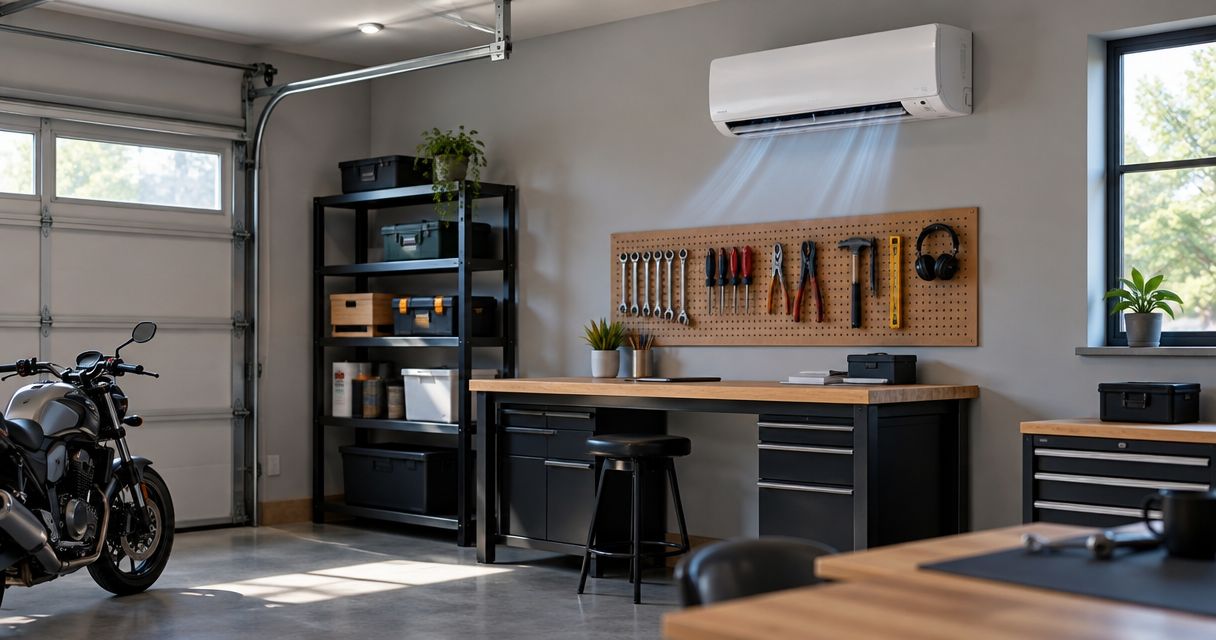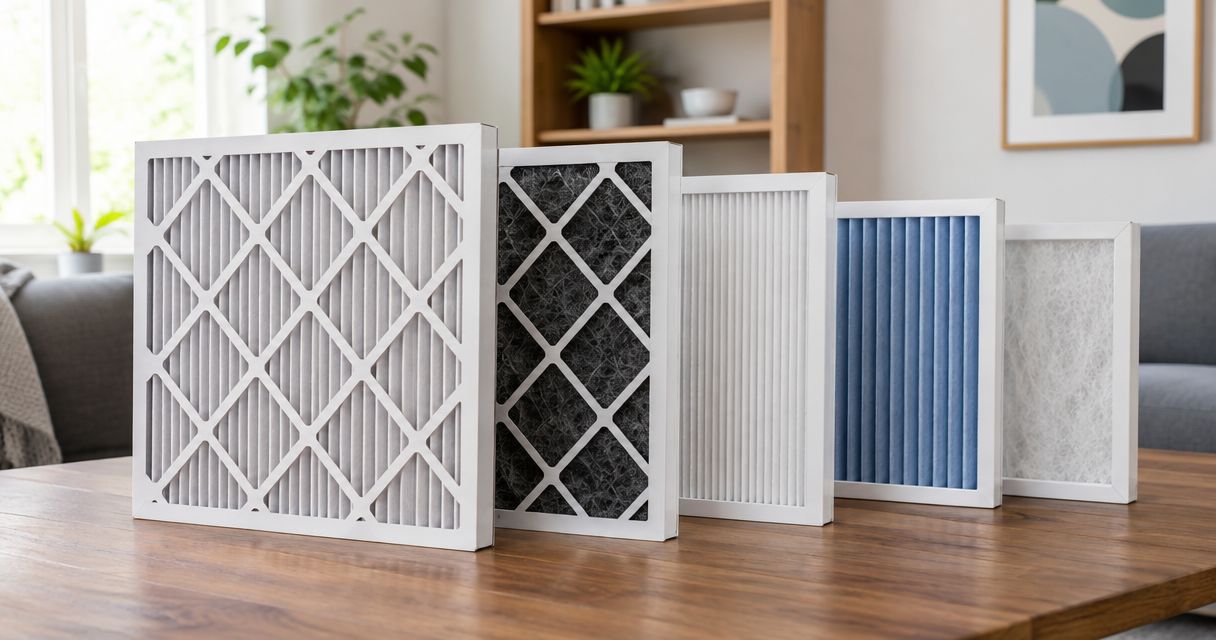

Best overall for whole-home noise control: variable-speed central air. Best for a bedroom without ducts: a ductless mini-split. Best for keeping an existing system: a noise diagnosis before replacement. This 2026 guide to air conditioners ranked by noise level compares system types and explains what to check with West Heating & Cooling before choosing equipment.
- For air conditioners ranked by noise level, compare matching sound measurements—not unrelated indoor and outdoor ratings.
- Variable-speed central air is the first whole-home option to evaluate when quiet operation matters.
- Ductless mini-splits suit bedrooms without ducts, but indoor fan sound still needs checking.
- West Heating & Cooling provides AC installation, repair, and maintenance for Lake of the Ozarks customers.
Why this matters
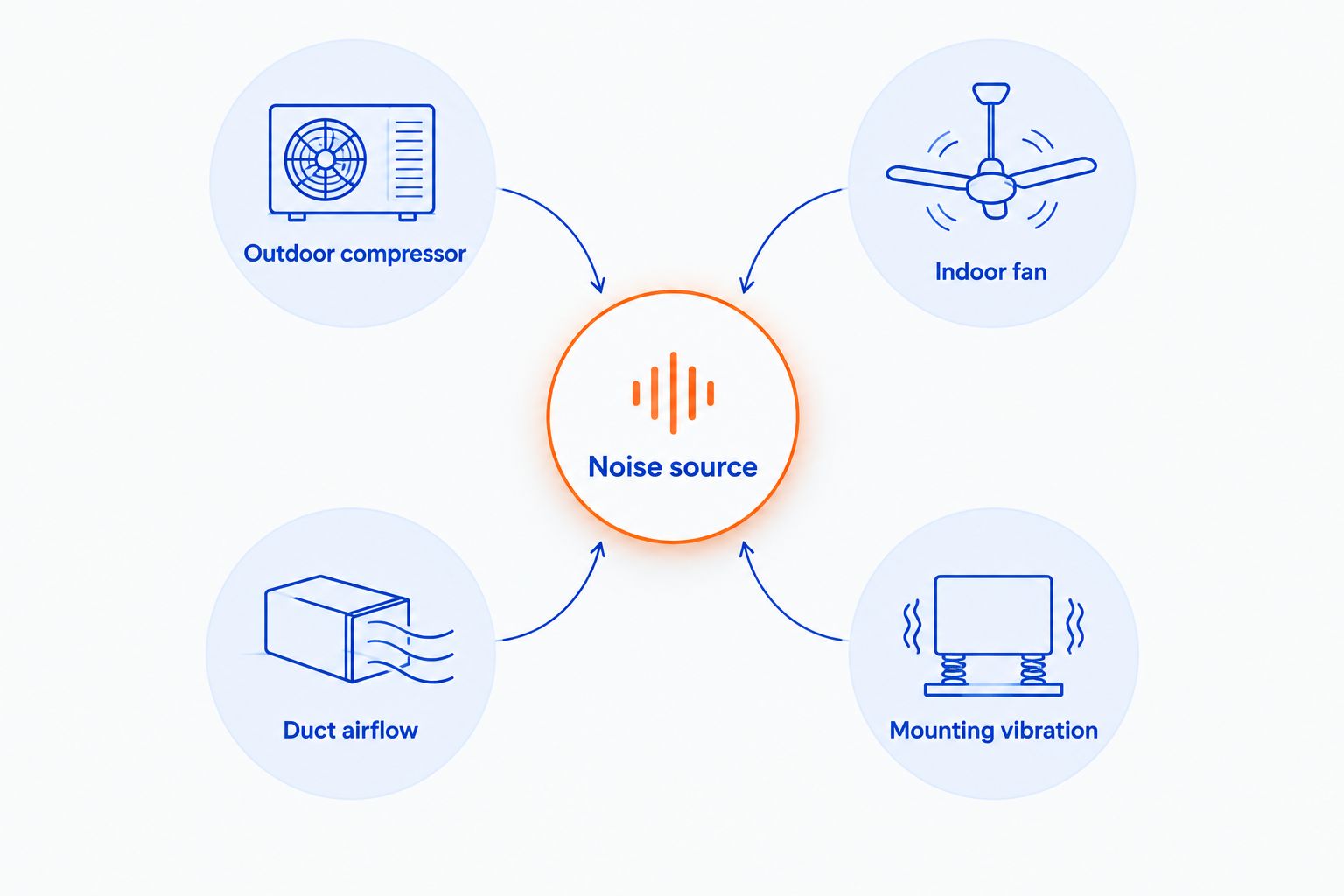
The quietest air conditioner on paper is not automatically the quietest system in your home. Outdoor compressor noise, indoor fan noise, vibrating supports, and air moving through ducts reach you in different ways.
Start with the place where noise bothers you: the bedroom, the living room, or the patio. A quiet outdoor unit does not fix a whistling return grille, and a low indoor fan rating does not describe the condenser beside your deck.
For a 2026 replacement, choose the system and its installation together. West Heating & Cooling is a practical choice for Lake of the Ozarks customers who need AC installation, repair, or maintenance rather than a stand-alone equipment comparison.
What makes the best quiet air conditioner?
Use these criteria before comparing equipment. A rating is useful only when you understand what it measures.
- Matching measurements: Compare indoor sound with indoor sound and outdoor sound with outdoor sound. Sound power and sound pressure are different measurements.
- Operating range: Check low-speed and higher-output operation, not just the quietest setting. Your system must still cool the space when demand increases.
- Noise location: Identify whether the compressor, indoor fan, ductwork, or mounting surface produces the objectionable sound.
- Correct sizing: Ask for a cooling-load calculation. Equipment capacity should match the building, not simply repeat the old unit's size.
- Installation details: Review unit placement, clearances, support, piping contact, and duct airflow before approving the installation.
- Serviceability: Choose equipment that can be maintained and repaired locally. A quiet specification does not replace a workable service plan.
For whole-home cooling, begin with the variable-speed air conditioner guide. Then compare the exact proposed model's sound documentation and the installation plan.
Air conditioners ranked by noise level: at a glance
This is a buying-priority ranking by application, not a measured decibel leaderboard. System types overlap: a well-installed conventional system can be less intrusive than a poorly placed variable-speed unit.
| Rank and option | Best for | Standout feature | Key limitation |
|---|---|---|---|
| 1. Variable-speed central air | Whole-home cooling with existing ducts | Adjusts compressor output across an operating range | Indoor ducts and blower noise still matter |
| 2. Ductless mini-split | A bedroom or addition without ducts | Keeps the compressor outside the room | Indoor fan and mounting location affect comfort |
| 3. Two-stage central air | Whole-home cooling with staged output | Offers lower and higher cooling stages | Less output flexibility than variable-speed equipment |
| 4. Existing central air with noise repairs | A working system with a specific noise complaint | Addresses the actual source before replacement | Repairs cannot change every operating characteristic |
| 5. Window air conditioner | Cooling one room through a suitable window | Provides room cooling without ductwork | Fan and compressor sound remain near the occupied space |
| 6. Portable air conditioner | Temporary cooling where a window unit will not fit | Uses a floor-standing unit and exhaust hose | Compressor sound stays inside the room |
1. Variable-speed central air: best for whole-home noise control
Variable-speed central air adjusts compressor output instead of operating only at a single fixed output. Lower-output operation can reduce outdoor sound when the cooling load allows it. The indoor blower and duct system remain separate parts of the noise problem.
Best for: A whole-home replacement where you have usable ducts and want to evaluate quieter operation across changing cooling demand.
Variable-speed central air pros:
- Provides an operating range rather than one fixed compressor output.
- Keeps the compressor outside occupied rooms.
- Lets you compare sound at different operating conditions.
Variable-speed central air cons:
- A low-speed sound claim does not describe maximum-output operation.
- Restricted ducts or noisy grilles can undermine indoor comfort.
- Outdoor placement still matters near bedrooms and patios.
For a 2026 quote, ask which indoor unit matches the outdoor equipment. Request the sound documentation for the exact combination and ask how existing duct restrictions will be handled. Do not accept a quiet outdoor-unit rating as the entire noise plan.
Verdict: Buy for a whole-home replacement when the load calculation, duct condition, and sound documentation support the choice.
2. Ductless mini-split: best for a bedroom without ducts
A ductless mini-split places the compressor outdoors and delivers cooling through an indoor unit. That separates compressor noise from the room without adding a conventional duct system. You still hear the indoor fan, and its location affects how noticeable it is.
Best for: A bedroom, addition, or other individual space where installing ducts is not the preferred approach.
Ductless mini-split pros:
- Keeps the compressor outside the cooled room.
- Avoids duct-generated noise in a ductless application.
- Provides room-level control with a suitable system design.
Ductless mini-split cons:
- The indoor fan operates in the occupied space.
- Mounting and piping contact can transmit vibration.
- A quiet setting does not establish sound at higher fan speeds.
For bedroom cooling in 2026, compare the indoor unit's normal cooling settings—not just a special quiet mode. Discuss placement relative to the bed, seating, and exterior condenser. A quiet fan directly above your pillow can be more noticeable than the same fan farther away.
Verdict: Buy for a room without ducts after checking indoor fan sound and both unit locations.
3. Two-stage central air: best for staged whole-home cooling
Two-stage central air provides lower and higher compressor output. It offers an alternative to single-stage operation without the same output range as variable-speed equipment. Its noise performance depends on the exact model, operating stage, and installation.
Best for: A whole-home replacement where staged operation fits the cooling requirements and proposed equipment combination.
Two-stage central air pros:
- Offers a lower-output cooling stage.
- Keeps the compressor outdoors.
- Works with a compatible central indoor system.
Two-stage central air cons:
- Has fewer output adjustments than variable-speed equipment.
- Higher-stage sound needs a separate comparison.
- Indoor airflow problems remain possible with existing ducts.
Compare two-stage and variable-speed proposals using equivalent sound measurements. The technology label alone does not establish which specific unit is quieter. Ask the contractor to explain the operating conditions behind each figure.
Verdict: Buy when the exact model's sound data and system design meet your needs; do not choose it solely for the two-stage label.
4. Existing central air with repairs: best for a new noise complaint
A functioning central system does not automatically need replacement because it becomes louder. Loose panels, worn components, airflow restrictions, and vibration deserve diagnosis. Repair addresses a fault; replacement changes the equipment.
Best for: A system that still cools but has developed rattling, whistling, scraping, or other unfamiliar sound.
Existing-system repair pros:
- Targets the source instead of guessing from equipment age.
- Separates mechanical faults from duct and mounting problems.
- Helps establish whether replacement is actually necessary.
Existing-system repair cons:
- Cannot turn a fixed-output compressor into variable-speed equipment.
- Does not guarantee that all normal operating sound disappears.
- Some problems require more than a simple component repair.
Tell the technician when the sound starts, where you hear it, and whether it changes during the cycle. A recording can help document an intermittent complaint, but it is not a substitute for inspection.
West Heating & Cooling offers AC repair and maintenance as well as installation. Verdict: Hold off on replacement until the source of a new noise complaint is diagnosed.
5. Window air conditioner: best for direct single-room cooling
A window air conditioner combines the cooling equipment in a unit fitted into a suitable window opening. Its fan and compressor remain close to the room, so indoor sound deserves particular attention. The mounting arrangement also affects rattling and vibration.
Best for: A single room with a suitable window and no need for a whole-home installation.
Window air conditioner pros:
- Cools an individual room without ductwork.
- Does not require a separate outdoor condenser location.
- Allows comparison of room-unit sound specifications.
Window air conditioner cons:
- Places operating equipment near occupants.
- Requires a suitable opening and secure support.
- Poor fit or mounting can create additional noise.
Evaluate the exact model at the fan setting needed to cool your room. For sleep-sensitive buyers, the compressor's starting and stopping behavior matters alongside its steady operating sound.
Verdict: Buy for a suitable single-room application; skip models whose indoor sound documentation does not answer your needs.
6. Portable air conditioner: best for temporary cooling
A portable air conditioner sits inside the room and exhausts heat through a hose arrangement. Unlike split equipment, it keeps the compressor indoors. That makes it a less attractive starting point when bedroom quiet is your main requirement.
Best for: Temporary room cooling where a window unit or permanent split installation does not fit the situation.
Portable air conditioner pros:
- Provides room cooling without a permanent split installation.
- Uses a floor-standing arrangement.
- Can suit spaces that cannot accept a window-mounted unit.
Portable air conditioner cons:
- Keeps compressor and fan sound inside the room.
- Requires an appropriate exhaust setup.
- Occupies floor space near the exhaust location.
Check operating sound, exhaust requirements, and room suitability together. Moving the unit farther from the bed does not remove compressor noise from the room.
Verdict: Buy for a temporary application; skip as the default choice for a noise-sensitive bedroom.
How to read decibel ratings without getting misled
Decibels use a logarithmic scale. A 3 dB increase represents approximately twice the sound power, a 10 dB increase represents ten times the sound power, and a 20 dB increase represents one hundred times the sound power. Those relationships do not mean that perceived loudness increases by the same factors.
NIOSH's published noise guidance explains the logarithmic decibel scale. For a 2026 equipment comparison, use that principle to understand the numbers—not to combine measurements taken under different conditions.
Sound pressure describes sound at a measurement location. Sound power describes the source's acoustic output. Distance, surroundings, operating mode, and the measurement method all affect whether two published figures make a fair comparison.
Ask for three things with every sound claim:
- Measurement type: Sound pressure or sound power, including whether the value is A-weighted.
- Operating condition: Indoor fan setting, compressor output, and applicable test conditions.
- Measurement location: Where sound pressure was measured, when that is the stated metric.
Never subtract an indoor fan rating from an outdoor condenser rating to declare a winner. Those figures answer different questions.
Match the solution to the noise source
Find the source before changing equipment. A bedroom complaint can originate outdoors, indoors, or in the path connecting the two.
- Outdoor compressor: Compare model sound data and assess condenser placement.
- Indoor fan: Check blower operation and the fan settings needed for cooling.
- Duct airflow: Investigate whistling grilles, restrictions, and airflow balance.
- Mounting vibration: Check supports, loose panels, and contact points.
For your 2026 installation discussion, point out the rooms and outdoor areas where quiet matters most. Do not build an enclosure around an outdoor unit to suppress sound without approved design guidance; the equipment needs its specified airflow and service clearances.
How we ranked these air conditioner options
The order prioritizes fit for noise-sensitive cooling: operating flexibility, separation of the compressor from occupied rooms, indoor airflow, and installation requirements. It does not assign unverified model sound ratings or claim that every member of one category beats another.
Variable-speed central air leads for whole-home evaluation. Ductless cooling leads for a room without ducts. Repair takes priority when an otherwise functioning system develops a new sound.
Which air conditioner should you choose?
Start with variable-speed central air for a whole-home replacement and a ductless mini-split for an isolated room without ducts. Keep both recommendations conditional on the exact equipment, sizing, and installation.
If your current system has become noisy, book a diagnosis first. West Heating & Cooling serves residential and commercial customers in the Lake of the Ozarks area, including Camdenton, Osage Beach, Lake Ozark, Warsaw, and Lebanon.
FAQ
What's the best air conditioner for quiet whole-home cooling?
Variable-speed central air is the first whole-home option to evaluate for noise control. Compare the exact model's operating sound and check indoor blower, duct, and installation conditions before choosing.
Is a ductless mini-split quieter than a window air conditioner?
A ductless mini-split keeps its compressor outdoors, while a window air conditioner keeps the compressor close to the room. Compare the exact indoor sound ratings and operating settings rather than assuming every mini-split is quieter.
What decibel level should I look for in an air conditioner?
Choose a sound rating that matches the location and operating condition you care about. There is no single rating that describes both bedroom fan noise and outdoor condenser noise.
Does a lower decibel rating always mean a quieter AC?
A lower rating means less measured sound only when the measurement type and test conditions are comparable. Do not compare indoor sound pressure directly with outdoor sound power.
Can a quiet outdoor AC unit still be loud indoors?
Yes, indoor blower noise, restricted airflow, whistling grilles, and transmitted vibration can remain audible. Replacing the outdoor unit alone does not address every indoor noise source.
Should I replace an air conditioner that suddenly gets louder?
Get the new noise diagnosed before deciding on replacement. A technician can distinguish a repairable fault from normal operating sound and broader system problems.
Who can help with a noisy AC around Lake of the Ozarks?
West Heating & Cooling offers AC repair, maintenance, and installation for residential and commercial customers in the Lake of the Ozarks area. Its service area includes Camdenton, Osage Beach, Lake Ozark, Warsaw, and Lebanon.
One last thing
Describe the sound you want eliminated, not just the equipment you want replaced. A steady hum, a start-up thump, and a whistling vent are different complaints. Put the location and timing of your noise problem in the installation or repair discussion so the proposed work addresses what you actually hear.