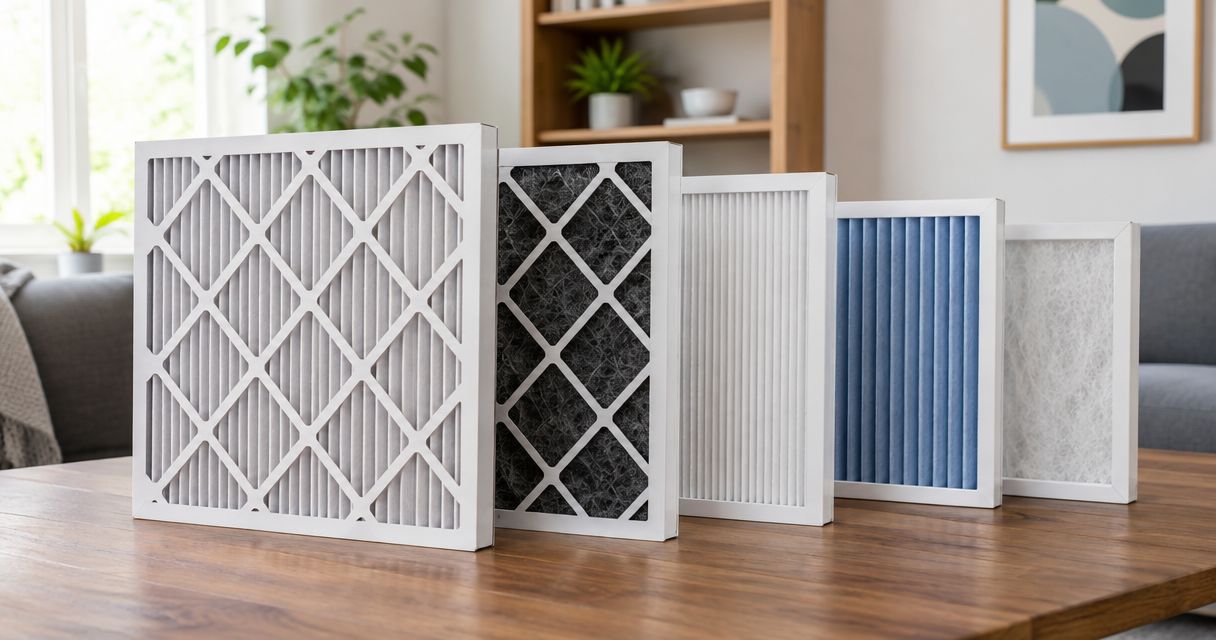
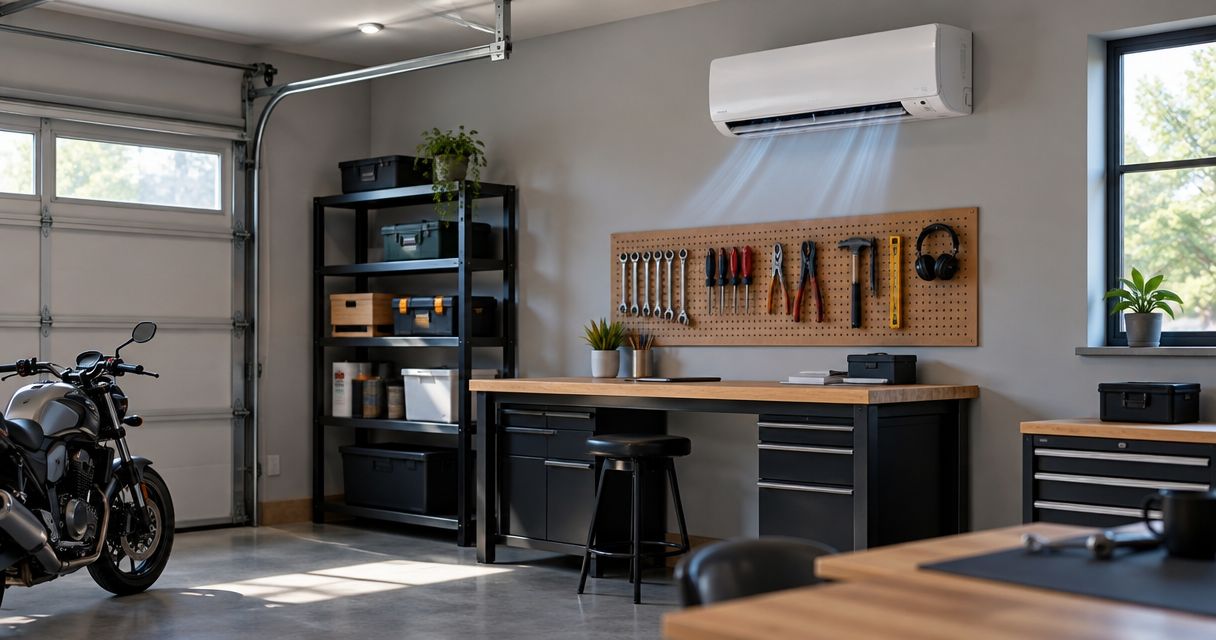
Best overall: a single-zone inverter mini split for one enclosed garage. Best for winter workshops: a cold-climate mini split. Best for a simpler project: a single wall-mounted system serving only the workspace. This 2026 guide compares system configurations, explains sizing and installation checks, and helps you prepare for a conversation with West Heating & Cooling.
- The best ductless mini split for garage comfort matches the room’s heating and cooling load, not just floor area.
- Choose a single-zone inverter mini split for one enclosed garage; check cold-weather capacity for winter workshops.
- West Heating & Cooling provides HVAC installation, repair, and maintenance in the Lake of the Ozarks area.
- Floor-mounted, ceiling-mounted, and multi-zone systems solve different layout problems; none replaces workshop ventilation.
Why this matters
A garage is not a living room with a bigger door. The overhead door, insulation, air leaks, and work activities all affect how much heating and cooling you need. Choosing equipment from square footage alone leaves those conditions out.
For a 2026 garage project, separate comfort from air quality. A mini split heats and cools the space, but it does not replace exhaust ventilation or dust collection. Running a vehicle, spraying finishes, or producing wood dust requires controls beyond temperature.
West Heating & Cooling serves residential and commercial customers around Camdenton, Osage Beach, Lake Ozark, Warsaw, and Lebanon. For a garage mini split project, start the conversation with the building and how you use it—not a preferred equipment size.
What makes the best ductless mini split for a garage?
Use these criteria before comparing equipment. A configuration earns its place by solving your room’s actual problem.
- Correct capacity: Base selection on a heating and cooling load calculation that includes insulation, windows, air leakage, and the overhead door.
- Cold-weather performance: Compare published heating output at outdoor temperatures relevant to your winter use, not just the headline capacity.
- Part-load operation: Check the lowest heating and cooling output. An oversized system still needs to serve the room when demand is low.
- Airflow placement: Choose an indoor-unit location that reaches your work area without obstruction from shelves, cabinets, or stored equipment.
- Service access: Leave the manufacturer’s required clearance for filter cleaning, coil access, and outdoor-unit maintenance.
- Installation scope: Confirm electrical work, refrigerant piping, drainage, mounting, and permits before accepting a proposal.
Garage mini splits at a glance
These are configuration recommendations, not a ranking of manufacturers. The indoor-unit style and outdoor-unit capabilities must work together; a wall-mounted system can also be a cold-climate system.
| Rank and configuration | Best for | Standout feature | Key limitation |
|---|---|---|---|
| Single-zone inverter mini split | One enclosed garage | Dedicated heating and cooling for one space | One indoor unit cannot reliably serve separate closed rooms |
| Cold-climate mini split | A workshop used through winter | Published low-temperature heating performance | Requires checking the exact equipment combination’s output |
| Floor-mounted mini split | A workshop with limited upper-wall space | Low-wall placement keeps upper walls available | Competes with benches, cabinets, and stored materials |
| Ceiling-mounted mini split | A finished workshop without a suitable wall | Keeps usable wall space clear | Requires suitable ceiling space, access, and drainage |
| Multi-zone mini split | A garage plus a separate enclosed room | Separate indoor units serve distinct spaces | More equipment and a more involved capacity match |
1. Single-zone inverter: best for one enclosed garage
A single-zone inverter mini split pairs one outdoor unit with one indoor unit. Variable output lets the system adjust its heating or cooling rather than operate only at full capacity.
This is the default starting point for a garage that functions as one room. A wall-mounted indoor unit often fits that layout, provided its airflow can reach the occupied area and its filters remain accessible.
Single-zone inverter pros:
- Gives the garage its own temperature setting.
- Does not require extending household ductwork into the garage.
- Keeps system design focused on one space.
- Offers variable output when the selected equipment supports it.
Single-zone inverter cons:
- Does not provide fresh-air ventilation.
- Cannot distribute conditioned air through closed interior doors.
- Needs an unobstructed mounting location and service access.
Best for: An enclosed garage with an open layout and one main work area.
For your 2026 shortlist, compare both maximum and minimum output. Buying a larger unit to compensate for an open overhead door does not address the air entering through that opening.
Verdict: Buy this configuration for one enclosed garage after confirming the load and mounting location.
2. Cold-climate mini split: best for winter workshop use
A cold-climate mini split is a heat-pump system selected for its low-temperature heating performance. The decision rests on published output for the exact indoor and outdoor equipment combination—not the words on a sales brochure.
Choose this configuration when winter heating is essential to using the workshop. Ask whether the selected system covers the calculated heating load at the local design temperature and what happens during defrost.
Cold-climate mini split pros:
- Makes winter heating performance a primary selection criterion.
- Provides heating and cooling through the same system.
- Allows equipment comparison using published capacity data.
Cold-climate mini split cons:
- Heating capacity changes with outdoor conditions.
- Defrost temporarily affects heating operation.
- The room can still require supplemental heat if its load exceeds the selected system’s output.
Best for: A workshop you intend to occupy throughout winter, rather than only on mild days.
Water freezes at 32°F, but that temperature is not a heat pump’s universal operating limit. For a 2026 purchase, ask for the manufacturer’s heating-performance tables instead of accepting a statement that the unit simply works below freezing.
Verdict: Buy for winter-dependent workshop use only when documented heating output meets the room’s requirements.
3. Floor-mounted mini split: best for limited upper-wall space
A floor-mounted mini split uses an indoor unit installed low on a wall. It suits a workshop where upper walls are occupied by windows, shelving, or other fixed features.
Low mounting does not eliminate placement restrictions. A bench, rolling toolbox, or stack of materials can block airflow or prevent filter access just as easily as a cabinet blocks a wall-mounted unit.
Floor-mounted mini split pros:
- Preserves upper-wall space for existing fixtures.
- Gives you another placement option when a high-wall unit does not fit.
- Keeps the indoor unit accessible when the area around it stays clear.
Floor-mounted mini split cons:
- Uses low-wall space that workshops often need for storage.
- Requires protection from impacts and obstructing materials.
- Must be positioned away from concentrated dust-producing work.
Best for: A finished workshop with unsuitable upper walls and a clear, protected lower-wall location.
Mark the proposed unit’s footprint before ordering. Walk through normal tasks with doors, drawers, and tool storage in use; an empty-room layout can hide conflicts that appear during work.
Verdict: Buy when low-wall placement solves a real layout problem; skip when storage or equipment will block the unit.
4. Ceiling-mounted mini split: best for preserving wall space
A ceiling-mounted configuration places the indoor unit overhead rather than on a working wall. Depending on the equipment, installation can involve a recessed cassette or another ceiling-mounted style.
This option belongs on the shortlist when walls are needed for benches and storage. It requires checking the ceiling structure, installation clearance, condensate drainage, and future service access before selecting equipment.
Ceiling-mounted mini split pros:
- Leaves working walls available for tools and cabinets.
- Provides an alternative when wall placement creates airflow obstructions.
- Supports a layout planned around overhead air distribution.
Ceiling-mounted mini split cons:
- Requires a suitable ceiling and mounting arrangement.
- Makes filter and service access an overhead task.
- Drainage arrangements depend on the selected equipment and building.
Best for: A finished workshop where preserving wall space matters and the ceiling supports the installation.
Do not select a cassette solely because its appearance is less noticeable. In a 2026 renovation, decide how a technician will reach the unit after the ceiling is finished, not just how the installer will reach it during construction.
Verdict: Hold until ceiling access, mounting, and drainage are confirmed; buy when those checks support the layout.
5. Multi-zone mini split: best for separate enclosed spaces
A multi-zone mini split connects multiple indoor units to a shared outdoor unit. It is relevant when your project includes a garage and a separate enclosed office, hobby room, or other conditioned space.
Separate rooms justify examining separate indoor units. A large, open garage does not automatically need multiple zones; airflow and the calculated load determine that decision.
Multi-zone mini split pros:
- Places an indoor unit in each distinct space.
- Provides separate room temperature settings within the system’s operating limits.
- Allows different indoor-unit locations for different layouts.
Multi-zone mini split cons:
- Adds indoor units, piping, and service points.
- Requires checking approved equipment combinations and connected capacity.
- Individual zones can have operating restrictions because they share an outdoor unit.
Best for: A garage project that includes genuinely separate enclosed rooms with different comfort needs.
Ask how the system behaves when only the smallest room needs conditioning. Also confirm whether the selected system allows simultaneous heating and cooling; do not assume separate controls mean independent operating modes.
Verdict: Buy for separate enclosed spaces; skip for a single open garage unless the design demonstrates a need.
How these configurations rank
The ranking prioritizes room layout, heating requirements, usable mounting space, and installation complexity. Single-zone equipment comes first because it directly serves one enclosed garage; the remaining configurations address specific winter, placement, or zoning requirements.
No configuration earns a recommendation through brand reputation alone. Your final 2026 selection needs an exact equipment match, published performance data, and an installation plan for the building.
Size the garage before choosing the equipment
A refrigeration ton equals 12,000 BTU per hour of cooling capacity. That conversion explains a capacity label; it does not establish which size your garage needs. Heating output also needs its own check.
Give the contractor the room dimensions, ceiling height, insulation details, window locations, and overhead-door construction. Include whether the garage is attached or detached and whether adjacent spaces are heated or cooled.
For a practical use record, note door openings during 60 minutes of a typical work session. This is an observation exercise, not a sizing formula. Record whether the door stays open while you work or opens briefly for vehicle access.
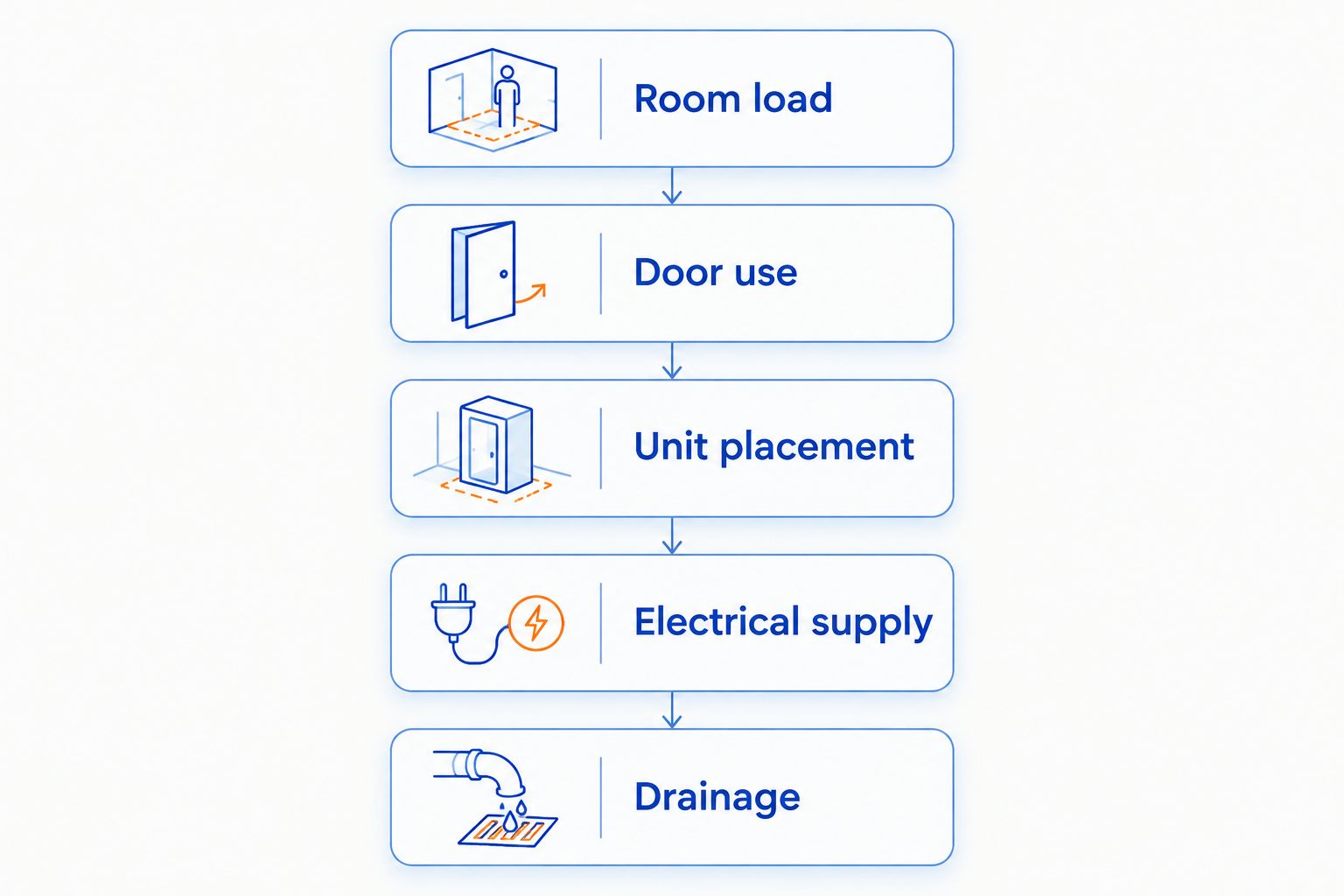
Before comparing equipment, complete these checks:
- Room load: Calculate heating and cooling requirements.
- Door use: Explain how the overhead door operates during occupied hours.
- Unit placement: Check airflow, storage conflicts, and service clearance.
- Electrical supply: Confirm the selected equipment’s circuit requirements.
- Drainage: Establish where condensate will discharge.
Insulation and air sealing belong in the same discussion as equipment. Tell the contractor about planned building improvements before the load calculation; the system should match the finished space, not conditions you intend to change.
Check the installation scope before you commit
Ask for a written scope identifying the indoor and outdoor equipment, mounting locations, refrigerant-line route, electrical responsibilities, drainage, and required approvals. Also ask who handles startup and verifies operation.
Outdoor placement matters. The unit needs the manufacturer’s clearances and a location where discharge air, drainage, and service access do not conflict with normal garage use.
If you are considering owner installation, read the guide to installing a mini split yourself. Refrigerant and electrical work require more than mounting the indoor unit; equipment-specific instructions and applicable rules govern the job.
Discuss your garage HVAC project
Talk with West Heating & Cooling about your room, comfort needs, and HVAC installation requirements.
Which garage mini split should you choose?
Choose a single-zone inverter system for one enclosed garage. Add cold-climate performance requirements when dependable winter heating is part of the plan. Choose floor or ceiling placement only when it solves a documented layout constraint.
West Heating & Cooling is a local HVAC contractor for Lake of the Ozarks homeowners and businesses planning garage or workshop comfort improvements. Bring the room details and intended use to the conversation, then compare equipment that meets those requirements.
FAQ
What’s the best ductless mini split for garage use?
A correctly sized single-zone inverter mini split is the default choice for one enclosed garage. For winter workshop use, also require documented heating output at the local design temperature.
What size mini split do I need for my garage?
Choose the size from a heating and cooling load calculation, not floor area alone. Insulation, ceiling height, windows, air leakage, and overhead-door use affect the requirements.
Can a mini split heat my workshop in winter?
A heat-pump mini split can heat a workshop when its output meets the room’s heating load at the required outdoor temperature. Check the exact equipment combination’s published performance and discuss defrost and supplemental heating needs.
Is a wall-mounted mini split better than a ceiling unit?
A wall-mounted mini split is the simpler placement choice when a suitable wall and clear airflow path exist. A ceiling-mounted unit fits projects where wall space is needed for work or storage, provided mounting, drainage, and service access are suitable.
Do I need a multi-zone system for a garage and office?
A multi-zone system belongs on the shortlist when the garage and office are separate enclosed spaces. Confirm each room’s load and the shared system’s operating restrictions before choosing it.
Does a garage mini split remove fumes and sawdust?
A garage mini split does not replace ventilation, exhaust, or dust collection. Use controls designed for the contaminants your work produces; temperature control alone does not make the air safe.
Can I connect my garage to the house’s existing ductwork?
Do not treat the garage as another household supply-air branch. Garage air can contain vehicle exhaust and other contaminants, so have the proposed design checked against applicable building and mechanical requirements.
Should I choose a bigger mini split because the garage door opens often?
Do not increase capacity without a load calculation and a discussion of door use. An open overhead door admits outdoor air, and oversized equipment does not correct that condition.
One last thing
Plan the workshop before placing the indoor unit. Put shelves, benches, vehicle positions, and dust-producing equipment on the same sketch as the proposed HVAC location. Clear airflow on installation day means little if your normal workspace blocks it afterward.