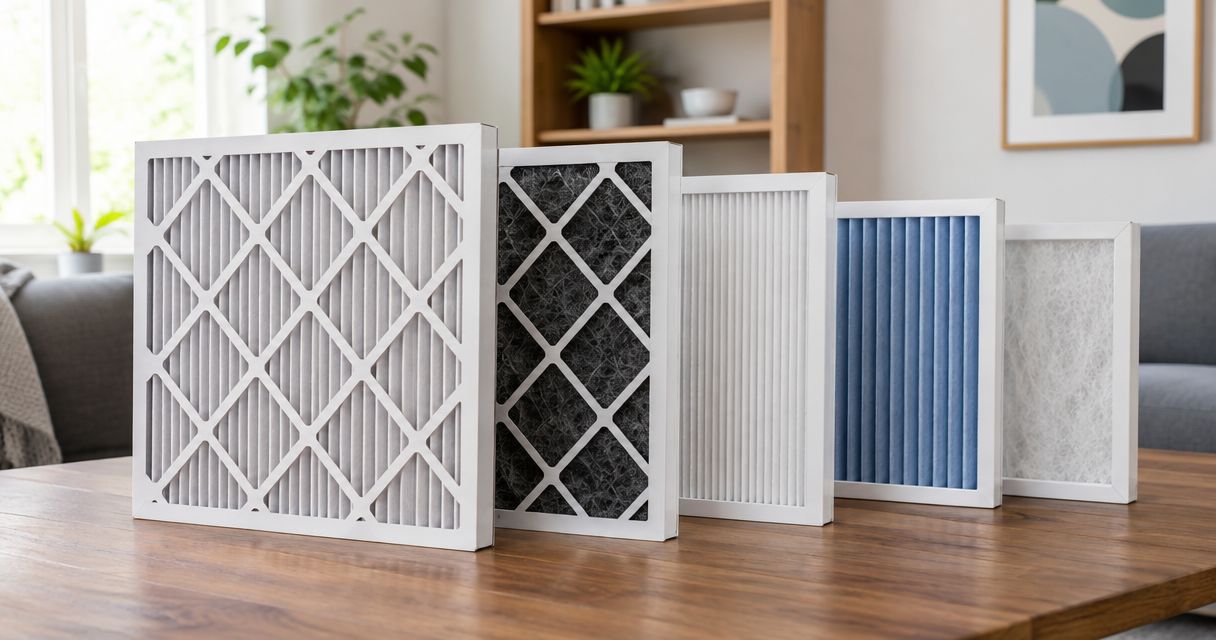
Best everyday starting point: MERV 8, when your furnace permits it. Best for finer airborne particles: MERV 13, with confirmed airflow compatibility. Best middle-ground upgrade: MERV 11. This 2026 guide to furnace filters ranked by MERV rating explains what each level captures, where it falls short, and how to choose without restricting your system’s airflow.
- MERV 8 is a practical starting point for everyday furnace filtration when the equipment manufacturer permits it.
- MERV 13 captures finer particles, but your furnace must support the filter’s airflow resistance.
- MERV 11 offers an intermediate option between basic filtration and stronger fine-particle capture.
- For furnace filters ranked by MERV rating, compare particle capture, filter fit, and system compatibility together.
Why this matters
A higher MERV rating means better particle capture under standardized testing. It does not automatically mean a better filter for your furnace. A filter that does not fit properly lets air bypass it; a filter with excessive resistance can reduce airflow.
West Heating & Cooling is best for Lake of the Ozarks homeowners who need furnace maintenance or repair rather than a filter-only purchase. The family-owned contractor serves residential and commercial customers in Camdenton, Osage Beach, Lake Ozark, Warsaw, and Lebanon. You can find its HVAC services through West Heating & Cooling.
For your 2026 filter choice, separate two questions: how well does the filter capture particles, and can your equipment move enough air through it? You need both answers before choosing an upgrade. The number on the package answers only the first question.
What makes the best furnace filter
Use these criteria before choosing a MERV rating. They apply whether you are replacing a basic filter or considering stronger filtration for household allergies.
- Equipment compatibility: Follow the furnace manufacturer’s filter requirements. A higher rating is not permission to exceed the system’s airflow limits.
- Particle capture: Match filtration to your concern. Large dust particles and fine airborne particles need different levels of capture.
- Correct fit: Match the required dimensions and filter cabinet. Gaps around the frame undermine filtration.
- Airflow resistance: Compare the filter’s pressure-drop information at the relevant airflow, not just its MERV label.
- Maintenance requirements: Use the filter and equipment instructions to set inspections and replacements. A loaded filter behaves differently from a clean one.
- Installation practicality: Choose a filter that fits the existing cabinet unless you are arranging a compatible cabinet upgrade.
Furnace filters ranked by MERV rating at a glance
This ranking puts practical household uses first. It is not a highest-number-wins leaderboard: MERV 13 exceeds MERV 8 in standardized particle capture, but compatibility determines which belongs in your furnace.
| Rank and filter rating | Best for | Standout feature | Key limitation |
|---|---|---|---|
| 1. MERV 8 | Everyday filtration in compatible residential systems | Captures common larger airborne particles | Limited fine-particle capture compared with higher ratings |
| 2. MERV 13 | Fine-particle reduction in compatible systems | Rated capture in the smallest MERV test band | Requires attention to filter resistance and system airflow |
| 3. MERV 11 | An intermediate filtration upgrade | Stronger capture of smaller particles than MERV 8 | Does not meet MERV 13’s smallest-particle requirements |
| 4. MERV 1–4 | Basic equipment protection where specified | Captures coarse particles | Weak choice for fine-particle filtration |
| 5. MERV 14–16 | Systems specifically designed for higher filtration | Higher standardized particle-capture requirements | Not a default replacement for an ordinary furnace filter |
What the MERV numbers actually measure
MERV stands for Minimum Efficiency Reporting Value. The rating comes from the ASHRAE Standard 52.2 testing framework, which evaluates particle capture across defined size bands. It is a filtration rating, not an energy-efficiency rating or a replacement schedule.
For this 2026 comparison, the U.S. Environmental Protection Agency’s published MERV table provides these category benchmarks:
- MERV 8: At least 70% capture for particles measuring 3–10 micrometers.
- MERV 11: At least 65% capture for particles measuring 1–3 micrometers.
- MERV 13: At least 50% capture for particles measuring 0.3–1 micrometers.
These percentages describe different particle sizes. Do not compare 70% and 50% as though they measure the same thing: the MERV 13 figure concerns much smaller particles. Laboratory capture requirements also do not tell you how quickly a particular house will become cleaner.
Ratings between the highlighted choices remain valid. MERV 5–7, MERV 9–10, and MERV 12 occupy intermediate positions; the manufacturer’s requirements still come first. The grouped entries below give you a useful decision guide without treating every number as a separate shopping category.
1. MERV 8: best furnace filter for everyday filtration
MERV 8 is a practical starting point for everyday filtration when the furnace manufacturer permits it. It captures common larger airborne particles, including many particles associated with household dust and pollen. It is not the strongest option for fine airborne particles.
Choose MERV 8 when your main objective is routine filtration and equipment protection, not the highest fine-particle capture. Check the actual filter specifications before buying: two MERV 8 filters do not necessarily have identical airflow resistance.
MERV 8 pros:
- Captures larger particles that circulate through the return air.
- Provides a straightforward baseline for comparing filtration upgrades.
- Meets a useful everyday role without requiring the highest MERV category.
MERV 8 cons:
- Offers less fine-particle capture than MERV 13.
- Does not prove compatibility with your furnace by rating alone.
Best for: Homeowners seeking everyday filtration within their equipment’s approved requirements.
Verdict: Buy MERV 8 when it meets the manufacturer’s requirements and your filtration needs. Do not treat it as a substitute for stronger filtration when fine-particle reduction is your priority.
2. MERV 13: best furnace filter for finer airborne particles
MERV 13 has defined capture requirements in the 0.3–1 micrometer test band, alongside stronger capture requirements for larger particles. That makes it a relevant option when you want to reduce finer airborne particles passing through the HVAC filter. It does not remove gases or solve every indoor-air problem.
The important check is system compatibility. MERV 13 does not automatically mean excessive resistance, but the actual filter design, cabinet, airflow, and loading determine whether the installation works properly. Do not assume an existing shallow filter slot accepts every filter carrying this rating.
MERV 13 pros:
- Provides rated capture in the smallest MERV test band.
- Captures a broader range of particle sizes than basic filtration.
- Supports a particle-reduction goal when the system accommodates it.
MERV 13 cons:
- Requires checking airflow resistance rather than relying on the rating alone.
- Does not address gaseous pollutants through the MERV rating itself.
Best for: Households prioritizing finer-particle filtration in equipment confirmed to support the selected filter.
Verdict: Buy MERV 13 after confirming compatibility; wait if the airflow requirements are unknown. For a 2026 upgrade, choose the right filter construction and fit, not simply the largest printed number.
3. MERV 11: best furnace filter for an intermediate upgrade
MERV 11 sits between MERV 8 and MERV 13 in standardized particle capture. It adds stronger capture of smaller particles than MERV 8 while stopping short of MERV 13’s smallest-particle requirements. It is an intermediate option, not an automatic cure for household allergy symptoms.
Compare MERV 11 when basic filtration does not match your particle-reduction goal. However, selecting MERV 11 instead of MERV 13 does not eliminate the need to check fit and resistance. The rating cannot tell you whether a particular filter works in your cabinet.
MERV 11 pros:
- Improves capture of smaller particles compared with MERV 8.
- Offers a distinct intermediate choice within the MERV scale.
- Helps you compare a filtration upgrade without jumping directly to MERV 13.
MERV 11 cons:
- Does not meet MERV 13’s capture requirements for the smallest test band.
- Still needs equipment and airflow compatibility checks.
Best for: Homeowners seeking stronger particle filtration than MERV 8 when MERV 11 fits the system’s requirements.
Verdict: Buy MERV 11 when it meets your filtration goal and the equipment specification. Choose it for its measured capture level, not because the middle number sounds safest.
4. MERV 1–4: best furnace filters for basic equipment protection
MERV 1–4 filters provide coarse-particle filtration. Their role is basic protection rather than strong capture of fine airborne particles. Use this category when the equipment instructions specify it, not as your default answer to every dust or allergy concern.
A washable filter or a simple-looking filter still needs its own documented specifications. Appearance does not establish a MERV rating, and washable construction does not remove the need for maintenance. Follow the particular filter’s cleaning and drying instructions.
MERV 1–4 pros:
- Captures coarse particles moving through the system.
- Serves a basic equipment-protection role.
- Provides a clearly defined lower-filtration category for comparison.
MERV 1–4 cons:
- Offers limited capture of finer airborne particles.
- Is a poor match for a stronger fine-particle reduction goal.
Best for: Equipment requiring basic filtration under its manufacturer’s instructions.
Verdict: Buy MERV 1–4 only when it suits the equipment requirement; skip it for fine-particle filtration. A filter that protects equipment is not necessarily the filter that meets your indoor-air objective.
5. MERV 14–16: best furnace filters for purpose-designed systems
MERV 14–16 filters meet higher particle-capture requirements than MERV 13. They belong in systems designed and checked for that level of filtration. They are not a routine upgrade recommendation for an ordinary residential furnace slot.
If you want this filtration level, discuss the complete installation rather than buying a replacement filter in isolation. The cabinet, filter area, blower performance, and duct system all affect airflow. A suitable installation requires more information than the MERV number supplies.
MERV 14–16 pros:
- Sets higher standardized particle-capture requirements.
- Supports demanding filtration needs in suitable systems.
- Provides a defined category above MERV 13 for specialist applications.
MERV 14–16 cons:
- Is not a default fit for existing residential filter arrangements.
- Requires system-specific evaluation before an upgrade.
Best for: Purpose-designed HVAC installations with verified higher-filtration requirements.
Verdict: Wait for a system assessment before choosing MERV 14–16. Skip the upgrade if the equipment cannot accommodate the selected filter.
How to choose without creating an airflow problem
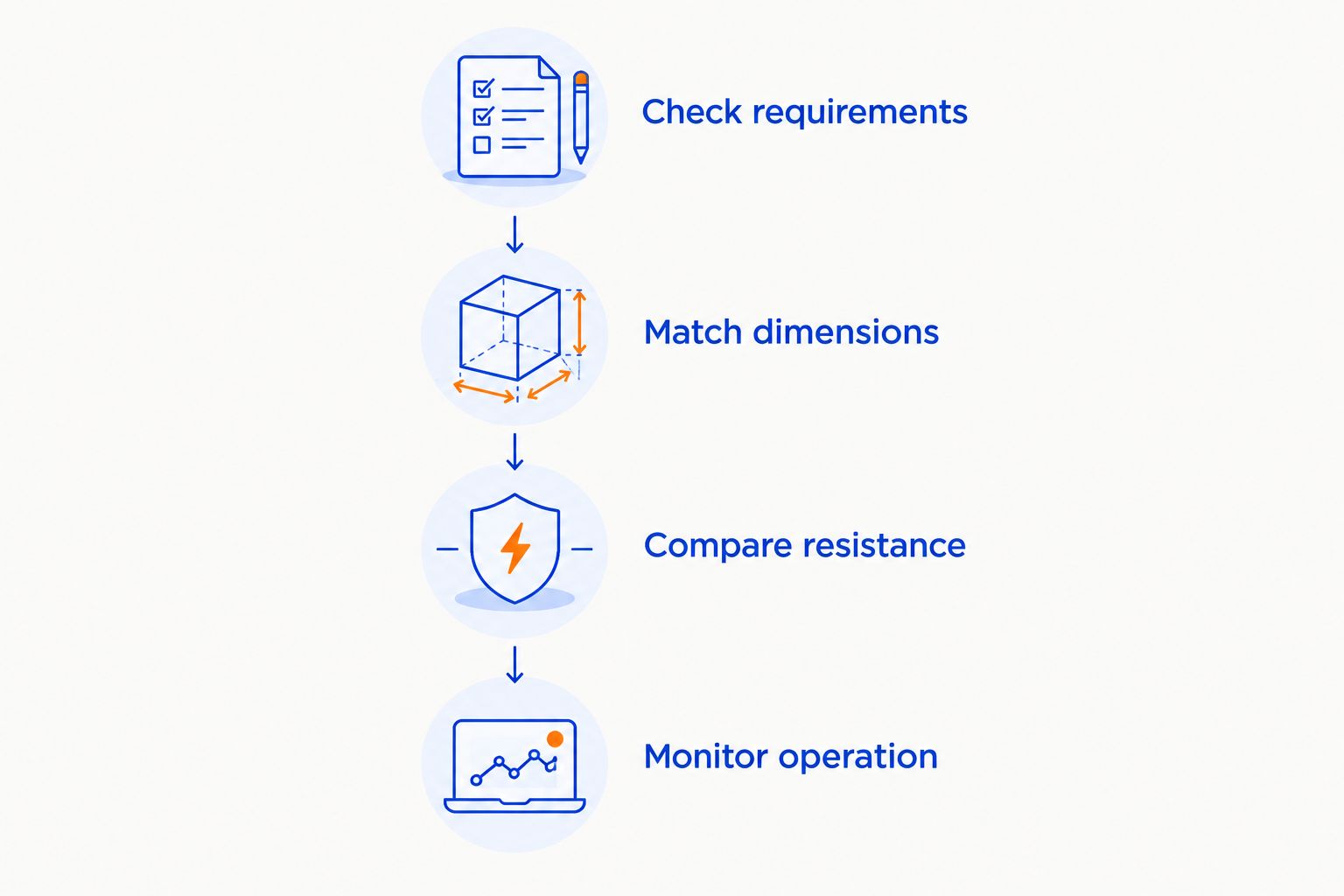
Use this sequence for your 2026 replacement. The goal is a filter that both captures the particles you care about and allows the furnace to operate as intended.
Check requirements
Read the equipment manual and any filter-cabinet instructions. Record the required dimensions, permitted filter arrangement, and any filtration or airflow limits. Do not copy the old filter blindly if you do not know whether it was correct.
Match dimensions
Check both nominal and actual dimensions. The nominal size is the rounded label; the actual dimensions describe the filter itself. The filter must seat properly without gaps or a forced fit.
Compare resistance
Look for the filter manufacturer’s pressure-drop information at the relevant airflow. If the equipment requirements are unclear, ask for an airflow assessment before increasing filtration. Thickness alone does not establish compatibility.
Monitor operation
Install the filter with its airflow arrow pointing in the direction air travels toward the blower. Follow the equipment’s shutdown instructions before replacement. Keep the filter access panel properly secured afterward.
Watch for reduced airflow, unusual noise, or heating interruptions after a change. Those symptoms need diagnosis; they do not prove that the MERV rating caused the problem. Do not keep trying increasingly different filters while ignoring an operating fault.
West Heating & Cooling provides furnace maintenance and repair for Lake of the Ozarks customers. If a filter change exposes an airflow or heating problem, arrange service rather than assuming a different rating will fix it.
Arrange furnace service
Get help with furnace maintenance or repair in the Lake of the Ozarks area.
How the furnace filter ranking works
The ranking uses particle capture, equipment compatibility, fit, resistance, and maintenance requirements. It compares MERV categories rather than claiming hands-on testing of named products. The EPA’s published MERV table supplies the particle-capture benchmarks; your equipment documentation supplies the installation limits.
MERV 8 leads as an everyday starting point, MERV 13 owns the fine-particle slot, and MERV 11 offers an intermediate choice. MERV 1–4 and MERV 14–16 serve narrower requirements. None receives a blanket recommendation for every furnace.
Which furnace filter should you choose?
Start with the manufacturer’s requirements, then select the filtration level that addresses your needs. MERV 8 is the everyday starting point in this guide. MERV 13 is the stronger fine-particle choice when the selected filter and system are compatible.
For a 2026 purchase, take the required size and equipment information with you. If you cannot establish compatibility, keep the approved filter arrangement until you get an answer. West Heating & Cooling offers furnace maintenance and repair when the decision involves equipment operation rather than filter shopping alone.
FAQ
What’s the best MERV rating for a home furnace?
The best MERV rating is the one that meets your filtration goal within the furnace manufacturer’s requirements. MERV 8 is an everyday starting point, while MERV 13 offers stronger fine-particle capture when the system supports the selected filter.
Is MERV 13 better than MERV 8?
MERV 13 has stronger standardized particle-capture requirements than MERV 8. It is not automatically the better installation choice because filter fit and airflow resistance still have to match the furnace.
Is MERV 11 a good choice for furnace filtration?
MERV 11 is a useful intermediate filtration choice when the equipment permits the selected filter. It captures smaller particles more effectively than MERV 8 but does not meet MERV 13’s smallest-particle requirements.
Can a high-MERV filter damage my furnace?
A filter that restricts airflow beyond the equipment’s limits can cause operating problems. The MERV number alone does not establish that risk; the filter’s resistance, fit, loading, and system airflow determine compatibility.
Does a thicker furnace filter always work better?
A thicker filter is not automatically better or compatible with your furnace. Use the cabinet’s required dimensions and compare the filter’s specifications rather than judging filtration by thickness alone.
How often should I change a furnace filter?
Follow the filter and equipment manufacturers’ instructions, then adjust inspections to actual filter loading. Dust, pets, renovation work, and system runtime affect how quickly a filter collects material.
Is a HEPA filter the same as MERV 16?
A HEPA filter is not the same as a MERV 16 filter. HEPA uses a different efficiency classification, and a standard furnace filter cabinet should not be assumed compatible with a HEPA installation.
One last thing
The filter’s seal matters as much as choosing the intended rating. Even a correctly selected MERV 13 filter cannot capture particles in air that travels around its frame instead of through the filter material. Check the seating and cabinet fit at every replacement, not just during the first installation.