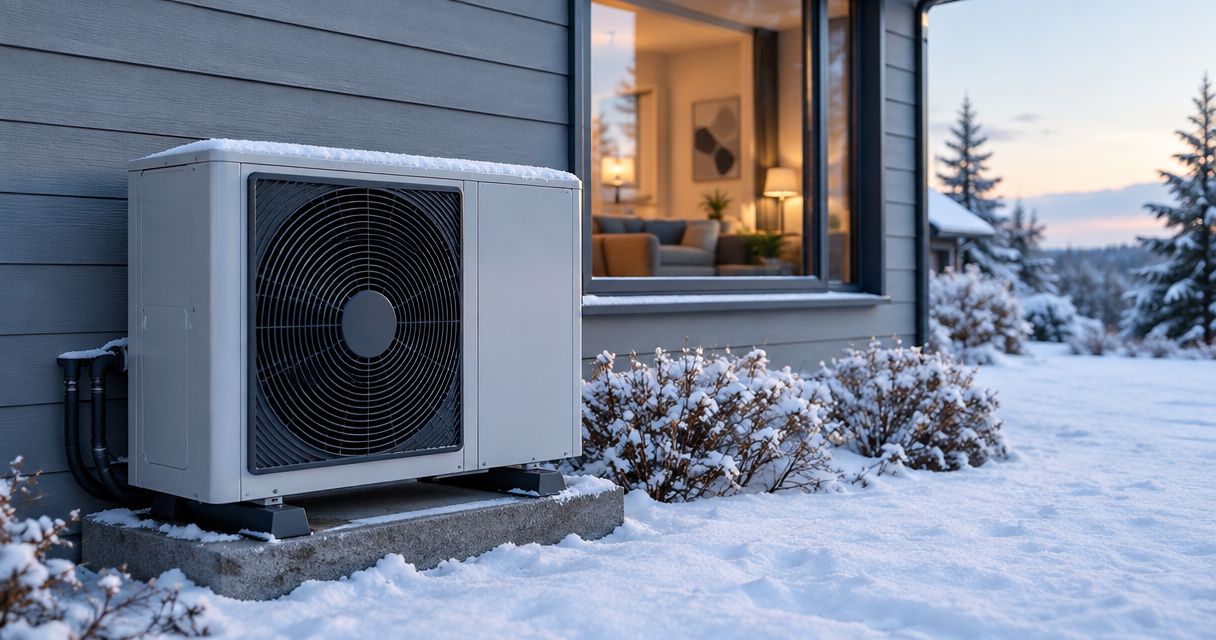
Yes, a heat pump can heat your home in freezing temperatures because outdoor air still contains usable heat below 32°F (0°C). Whether it keeps your house comfortable without backup heat depends on the equipment’s cold-weather heating capacity, your home’s heat loss, and correct installation—not simply whether the outdoor unit runs.
- Does a heat pump work in freezing temperatures? Yes; heating capacity and your home’s heat loss determine backup needs.
- Cold-climate heat pumps need model-specific performance checks, not promises based on the category name.
- Brief defrost cycles are normal; persistent ice and falling indoor temperatures need attention.
- West Heating & Cooling provides HVAC installation, repair, and maintenance in the Lake of the Ozarks area.
Can a heat pump heat a home in freezing temperatures?
Freezing is not a heat pump’s automatic shutoff point. An air-source heat pump moves heat from outdoor air into your house. As outdoor temperatures fall, the house generally needs more heat, while the equipment’s available heating output changes.
Those two trends explain why one installation keeps up during a freeze while another needs supplemental heating. The useful question for your 2026 replacement decision is whether the proposed system delivers enough heat at your local winter design temperature—the outdoor condition used to size heating equipment.
For the broader replacement decision, read whether a heat pump is worth it in Missouri winters. For an existing system, start with its model information and what happens to the indoor temperature during cold weather.
Compare the heating approaches
These options overlap: a cold-climate heat pump can also be part of a dual-fuel system. The table compares the equipment’s role rather than treating every configuration as mutually exclusive.
| Heating approach | Best for | Main advantage | Main limitation |
|---|---|---|---|
| Conventional air-source heat pump | Homes where verified winter output and supplemental heat cover the heating load | Provides heating and cooling through the same system | Low-temperature output varies by model; supplemental heat needs checking |
| Cold-climate air-source heat pump | Homes needing documented heating performance at lower outdoor temperatures | Designed for stronger low-temperature heating performance | The label alone does not prove it can cover your home’s entire heating load |
| Dual-fuel heat pump and furnace | Homes using a heat pump with a furnace for colder conditions | Gives the system another heat source when controls call for it | Requires compatible equipment and correct changeover settings |
Choose the heating approach by documented output and the house’s needs. No category name substitutes for sizing, duct checks, or control setup.
Why this matters
A running outdoor unit does not prove your home is getting enough heat. Conversely, a long heating cycle does not automatically mean the heat pump is broken. Some variable-speed equipment is designed to run for extended periods while adjusting its output.
For Lake of the Ozarks homeowners, the practical distinction is between steady indoor comfort and a system that loses ground as outdoor temperatures drop. In 2026, ask for a heating plan that explains both normal operation and what happens when supplemental heat is needed.
That matters for occupied homes and lake houses left unattended. A thermostat setting is a request for heat, not proof that the equipment can maintain that temperature under every condition.
Conventional air-source heat pumps: check winter output
A conventional air-source heat pump can operate below freezing. Its ability to heat the whole house depends on the specific model, outdoor conditions, and the building’s heating load.
Look past the advertised equipment size. A nominal size does not tell you the heating capacity available during a cold night. Ask for the matched indoor and outdoor equipment’s heating performance data, not a brochure covering an entire product family.
Best for: a home where the selected equipment and its supplemental heat together cover the calculated winter heating load. The advantage is one system providing heating and cooling; the limitation is that below-freezing performance cannot be assumed from its nominal size.
If your current heat pump has always needed assistance during cold weather, that alone does not establish a fault. A new loss of comfort, unusual icing, or a change in operation deserves a service check.
Cold-climate heat pumps: verify the specific model
Cold-climate heat pumps are designed to provide heating at lower outdoor temperatures. That does not mean every model delivers the same output, or that every home can use one without supplemental heat.
Published heat-pump performance information commonly includes conditions such as 47°F and 17°F. ENERGY STAR cold-climate criteria also assess performance at 5°F. These temperatures are comparison points—not universal shutdown temperatures or guarantees that a particular unit will heat your entire home.
For a 2026 equipment proposal, ask the contractor to identify the exact matched system and show its available heating output at the conditions relevant to your house. Compare that output with the home’s calculated heat loss.
Best for: a home where low-temperature heating performance is a central equipment requirement. The advantage is equipment designed for colder operation; the limitation is that sizing, airflow, and installation still determine the result.
Dual-fuel systems: check the changeover plan
A dual-fuel system pairs a heat pump with a furnace. Its controls select the appropriate heating source according to the installation’s settings and operating requirements.
The furnace provides another heating source, but the switch should follow an intentional control plan. Ask what determines changeover, whether the setting is based on heating capacity or operating economics, and how the controls prevent incompatible operation.
Best for: a home using a furnace alongside a heat pump for colder conditions. The advantage is another source of heating output; the limitation is added equipment and control coordination.
Do not assume adding a furnace fixes an undersized duct system or poor airflow. Both heating sources still need an installation that moves heat through the house correctly.
Why heat pump performance varies in freezing weather
The same outdoor temperature does not produce the same result in every home. These factors explain the differences and give you specific questions to ask:
- Equipment capacity: Heating output changes with outdoor temperature. Request low-temperature data for the exact equipment combination.
- Home heat loss: Insulation, air leakage, windows, and building size affect how much heat the house needs. Ask for a heating-load calculation.
- Airflow: Dirty filters, blocked returns, and duct restrictions interfere with heat delivery. Equipment selection does not correct those problems by itself.
- Defrost operation: Frost on the outdoor coil reduces heat transfer. The system must clear it through its designed defrost process.
- Supplemental heat: Electric resistance heat or a furnace can cover a heating shortfall when properly selected and controlled.
- Installation and controls: Refrigerant charge, equipment matching, thermostat compatibility, and settings affect operation. Check the system, not just the outdoor unit.
A bigger unit is not the default answer. Correct sizing must account for heating and cooling needs, the equipment’s operating range, and the air-distribution system.
How to check your heat pump during a freeze
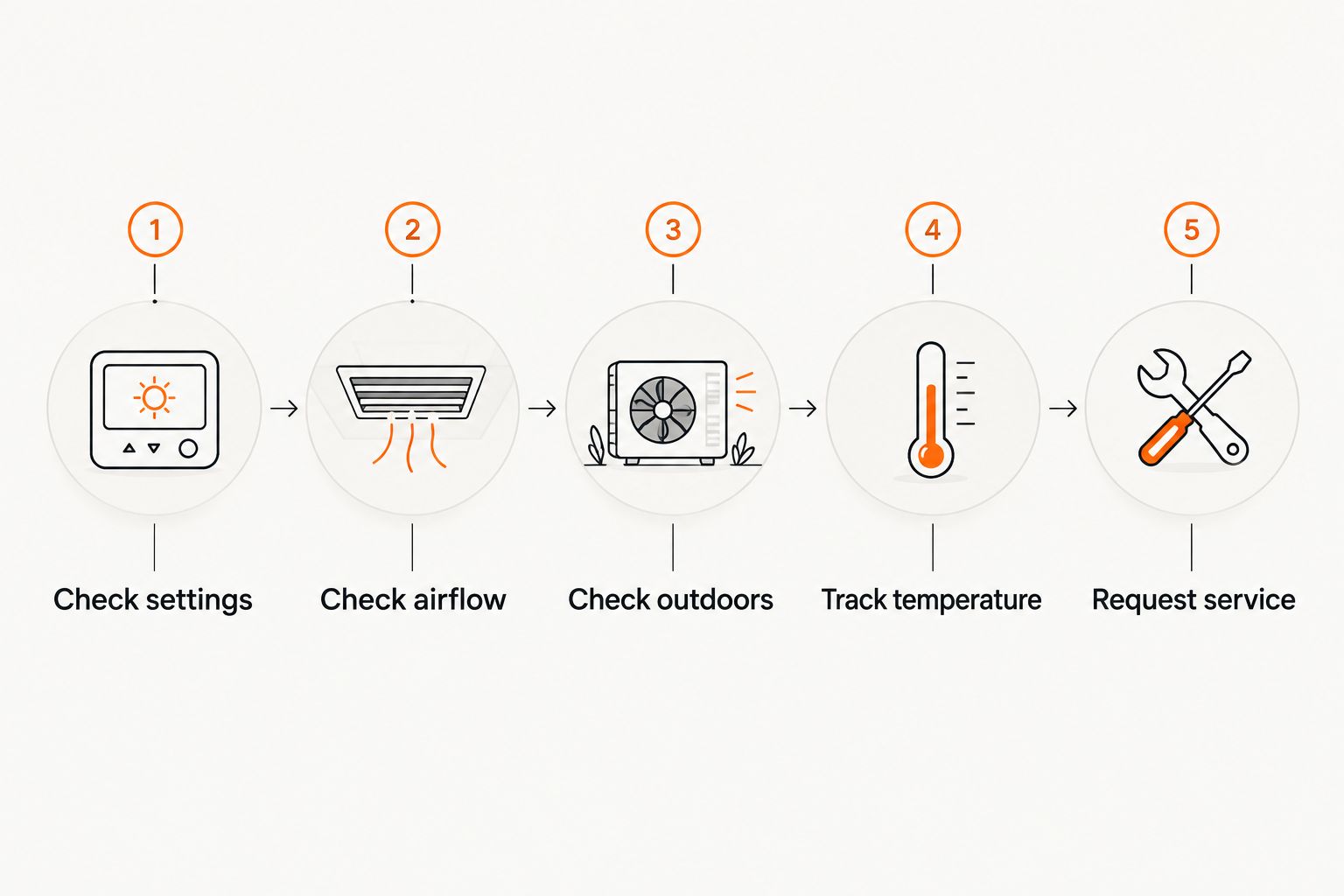
Use this sequence to separate a basic operating issue from a problem that needs service. Keep panels closed and leave electrical, refrigerant, and internal equipment work to a qualified technician.
- Check settings. Confirm the thermostat is in heating mode and the requested temperature is above the room temperature. Note any auxiliary-heat message or fault alert.
- Check airflow. Inspect the filter according to the equipment instructions. Keep supply registers and return grilles unobstructed; do not close registers to force heat elsewhere.
- Check outdoors. Look for snow, debris, or heavy ice restricting the outdoor unit. Follow the manufacturer’s clearance instructions and do not chip ice from the coil.
- Track temperature. Watch whether the house maintains its temperature or continues cooling while heating is requested. Record outdoor conditions and thermostat messages.
- Request service. Arrange a check if the system cannot maintain comfort, ice persists, or operation has changed. Report the observations rather than diagnosing a failed part.
The strongest evidence is the combination of indoor temperature, outdoor conditions, and system behavior. A single observation—such as cooler-feeling supply air—does not establish the cause.
Do not repeatedly reset a tripping breaker. If you smell burning, see smoke, or encounter an electrical hazard, stop troubleshooting and follow emergency safety procedures.
Is frost on a heat pump normal?
Frost can form on an outdoor heat-pump coil during heating operation. The coil can be colder than the surrounding air, allowing moisture to freeze on its surface.
A defrost cycle clears that frost. You can notice a temporary change in sound, a pause in the outdoor fan on some systems, or vapor as frost melts. Operation varies by model, so use the equipment instructions to understand the expected sequence.
Persistent heavy ice is different from frost that clears. If ice keeps building, the fan is obstructed, or indoor comfort keeps falling, arrange service. Do not use sharp tools, boiling water, or improvised heating methods on the outdoor unit.
Does auxiliary heat mean the heat pump has failed?
Auxiliary heat does not automatically mean the heat pump has failed. Supplemental heat can assist when the home needs more heat than the heat pump supplies, during defrost, or during recovery from a thermostat setback, depending on the controls.
Electric resistance backup uses electricity differently from the heat pump’s heat-moving process. Its operation affects energy use, so ask why it is running rather than disabling it to avoid consumption.
In 2026, a useful service question is whether auxiliary heat is operating as designed for the current conditions. A technician can check the thermostat setup, heat-pump output, and supplemental heating operation together.
Should I switch to emergency heat when it freezes?
Do not switch to emergency heat simply because the outdoor temperature drops below freezing. On systems with that setting, emergency heat generally uses the backup source instead of normal heat-pump operation; the exact behavior depends on the controls.
Follow the equipment instructions or a technician’s direction when the heat pump has failed. Leaving emergency heat selected without a reason can bypass normal operation and change energy use.
For a 2026 winter check, ask the technician to explain the difference between your thermostat’s auxiliary and emergency settings. Make sure anyone responsible for an unattended property understands that distinction.
When to arrange local heat pump service
West Heating & Cooling is a local HVAC service option for Lake of the Ozarks homeowners needing installation, repair, or maintenance. The family-owned contractor serves Camdenton, Osage Beach, Lake Ozark, Warsaw, and Lebanon, and offers 24/7 emergency service.
Use West Heating & Cooling when you need help with a system that loses indoor temperature during a freeze, develops persistent ice, or stops heating. Tell the service team the thermostat reading, requested temperature, outdoor conditions, and any displayed alerts.
Service can address operating problems, but a repair visit does not replace a heating-load calculation when you are selecting new equipment. Ask separately whether the concern is a fault, an airflow issue, a control setting, or insufficient heating capacity.
Request help with your heating
West Heating & Cooling offers HVAC repair, maintenance, installation, and 24/7 emergency service.
FAQ
Does a heat pump work in freezing temperatures?
Yes, a heat pump works below 32°F (0°C), but its heating output depends on the model and outdoor conditions. Whether it heats the whole home without assistance depends on the home’s heat loss and the installation.
At what temperature does a heat pump stop working?
There is no single shutdown temperature for every heat pump. Check the manufacturer’s operating limits and heating-capacity data for the exact model, along with any configured control limits.
Can a heat pump heat my house at 5°F?
Some heat pumps provide heating at 5°F, but operation at that temperature does not prove enough output for your entire house. Compare model-specific capacity with the home’s calculated heating load.
Why does my heat pump blow air that feels cooler than furnace air?
Heat-pump supply air can feel less hot than furnace air while still adding heat to the house. Indoor temperature and measured system performance are better checks than how the air feels to your hand.
Is steam from my outdoor heat pump normal in winter?
Vapor during defrost can be normal as frost melts from the outdoor coil. Smoke, burning odors, persistent ice, or continued loss of indoor temperature need attention.
Should I turn on emergency heat during freezing weather?
Do not select emergency heat just because the weather is freezing. Use it according to the equipment instructions or a technician’s direction when normal heat-pump operation is unavailable.
Can a heat pump protect an empty lake house from freezing?
A heat pump can maintain heat in an empty lake house when the system has adequate capacity and operates correctly. A thermostat setting alone does not confirm actual indoor temperature or protect against equipment and power failures.
One last thing
Before buying a heat pump in 2026, ask for the point where its heating output no longer covers your home’s heat loss. That capacity balance point is more useful than a claim that the equipment “works below freezing.”
Then ask what supplies the remaining heat and how the controls bring it on. You need a complete heating plan, not just an outdoor unit that continues running.