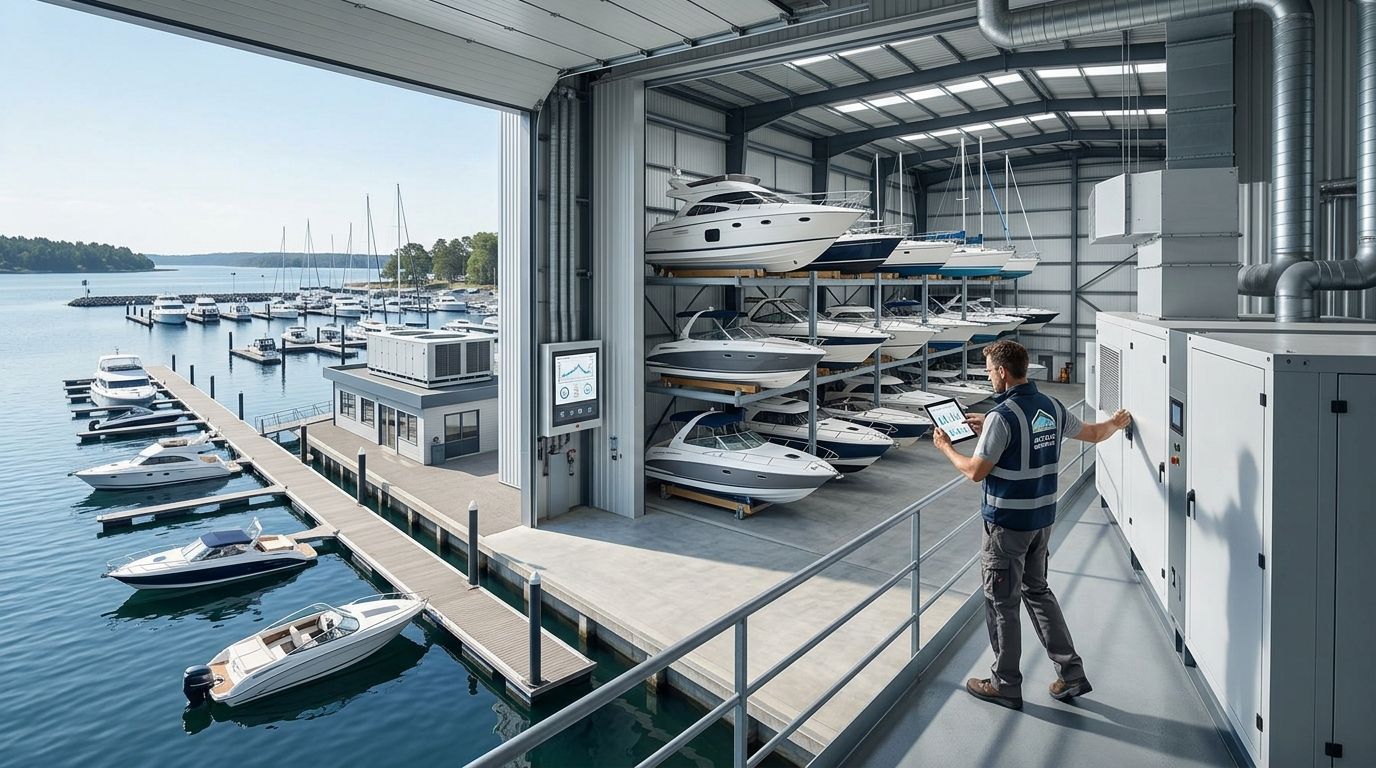
Marina and boat storage climate control is the deliberate management of temperature and humidity inside storage bays, service buildings, and marina offices, aimed at preventing moisture damage to hulls, upholstery, and electronics while keeping staff and customers comfortable. A boat storage facility has different needs than a house or a retail shop: it holds large volumes of enclosed air, sits right next to open water, and often has equipment sitting idle for months at a time.
- Climate control for marinas and boat storage combines dehumidification, zoned heating/cooling, and a maintenance schedule built around storage seasons.
- Relative humidity above 60% inside a storage bay creates conditions for mold and mildew growth on hulls and upholstery.
- Ductless mini-splits handle office and retail comfort; they do not replace dedicated dehumidification for large enclosed bays.
- Marinas that skip a service contract tend to discover equipment failure in spring, right when technicians are booked solid.
- West Heating & Cooling services marina and commercial HVAC accounts across Camdenton, Osage Beach, Lake Ozark, Warsaw, and Lebanon.
Why climate control matters for Lake of the Ozarks marinas
A marina sits closer to standing water than almost any other commercial building type, and that changes the humidity math. Boats stored indoors over winter trap moisture in bilges, cushions, and canvas covers, and an enclosed bay with no air movement holds that moisture until spring. The commercial HVAC for restaurants and commercial kitchens guide covers a similar problem: commercial buildings with high moisture loads need equipment sized for the load, not just the square footage.
The U.S. EPA's commonly cited indoor comfort range is 30% to 50% relative humidity. Once a space climbs past 60% relative humidity, mold and mildew growth becomes likely on any organic surface, including boat upholstery, wood trim, and canvas. Missouri summers at the lake push into the 90s with heavy humidity, and winters drop well below freezing, so a marina building swings through both extremes every year without a break.
Staff and retail spaces have a separate problem: comfort. A marina office or ship's store that runs hot in July or cold in January loses foot traffic, and employees working in an uncontrolled space burn out faster during peak season.
Assess humidity and temperature loads before buying equipment
Start with a walkthrough of every space in the facility, not just the office. Storage bays, workshop areas, and retail floors each carry a different load.
- Measure ceiling height and total enclosed air volume in each storage bay
- Count bay doors and note how often they open during peak season
- Check for existing insulation or lack of it in metal storage buildings
- Log current humidity readings in winter and summer if you have a hygrometer
- Identify moisture sources: bilge pumps, wet canvas storage, wash-down areas
Separate climate zones for boat storage bays and public spaces
Storage bays and customer-facing areas don't need the same temperature or humidity target, and running them off one system usually shortchanges both.
- Zone storage bays for humidity control first, temperature second
- Zone offices and retail for comfort, similar to a small commercial space
- Keep workshop and repair bays on a separate zone if fumes or dust are present
- Use programmable or smart thermostats per zone to track run time by season
Add dedicated dehumidification for enclosed storage bays
A standalone air conditioner cools air but doesn't always pull enough moisture out of a large enclosed bay, especially with the unit cycling on and off. Dedicated dehumidification equipment runs independently of the heating and cooling system.
- Target 30-50% relative humidity in enclosed boat storage bays year-round
- Choose commercial dehumidification units rated for the total cubic footage of the bay, not just square footage
- Add moisture sensors that trigger the unit automatically instead of relying on a timer
- Route condensate drainage to a floor drain or sump, not a bucket someone has to empty
- Review the best whole-home dehumidifiers breakdown for how capacity and drainage specs compare, even though marina units run at commercial scale
Size mechanical systems for the whole facility, not just square footage
Undersized equipment runs constantly and still fails to hit target humidity or temperature. Oversized equipment short-cycles and wastes energy without solving the moisture problem.
- Get a manual load calculation for each zone, not a flat square-footage estimate
- Factor in ceiling height for storage bays, since volume drives dehumidification capacity more than floor area
- Account for bay door traffic during move-in and move-out weekends
- Plan for retail and office loads separately from storage bay loads
Protect electronics and upholstery with steady off-season temperatures
Boats stored over winter carry electronics, batteries, and upholstery that degrade faster with temperature swings and trapped moisture.
- Hold storage bays above freezing if batteries or plumbing systems stay aboard
- Keep humidity below 60% to slow mildew growth on cushions and canvas
- Avoid letting bay temperature swing more than a few degrees per hour when heating cycles on
- Ventilate bays briefly on dry days to exchange stale air, even in winter
Set up a maintenance contract built around marina operating seasons
Marina HVAC and dehumidification equipment often sits under heavier load in the off-season than in summer, which is the opposite of a typical home or office building. A maintenance plan needs to match that pattern.
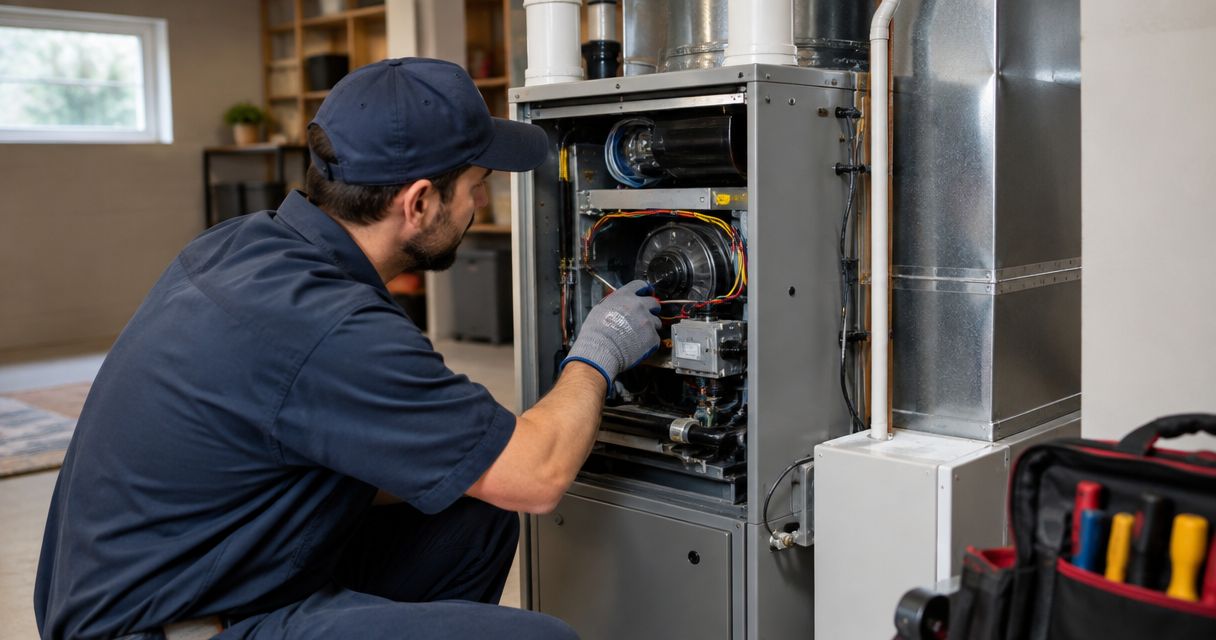
- Schedule dehumidifier filter and coil checks before the fall storage season starts
- Inspect condensate drainage lines before winter, when clogs cause the most damage
- Service office and retail HVAC before the spring rush, not during it
- Review the HVAC service contracts for property management companies guide for how multi-building contracts structure seasonal visits
- Keep a log of run hours per zone to catch equipment wearing out early
Plan for backup and emergency service during peak season
A dehumidification failure in a packed winter storage building can go unnoticed for days if nobody's checking the bay daily, and by the time someone smells mildew, the damage is done.
- Set up humidity alerts through a smart thermostat or sensor system
- Keep a 24/7 emergency service contact on file for the facility, not just a general contractor
- Stock basic replacement parts for dehumidifiers on-site if the facility is remote
- Walk storage bays weekly during the off-season, even with sensors in place
Comparing climate control options for marinas and boat storage
| Option | Best for | Key limitation |
|---|---|---|
| Portable dehumidifiers | Small covered racks, quick retrofit | Limited capacity for large open bays, needs manual drainage |
| Ductless mini-split systems | Office, retail, and break room comfort | Doesn't handle bulk dehumidification in storage bays |
| Commercial packaged rooftop units | Large enclosed storage buildings | More complex install, needs ductwork and structural review |
| Dedicated commercial dehumidification | Enclosed boat storage bays year-round | Controls moisture only, doesn't heat or cool the space |
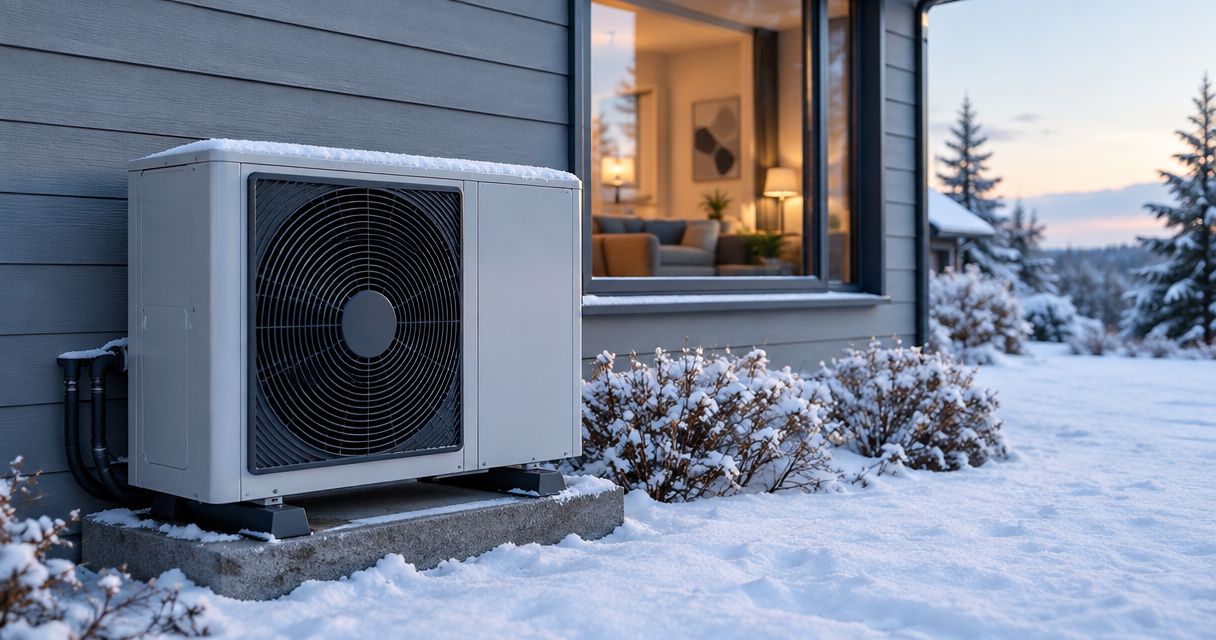
| Heat pumps | Facilities wanting heating and cooling from one system | Efficiency drops in extended sub-20°F stretches without backup heat |
Dedicated dehumidification paired with a zoned mini-split system for the office is the setup that handles most Lake of the Ozarks marina facilities without over-building the mechanical system.
Common mistakes marinas make with climate control
- Sizing dehumidification off square footage alone. Ceiling height and bay door leakage change the real air volume a unit has to work against.
- Running storage bays and the office on one zone. A system tuned for humidity control in a bay won't deliver comfortable temperatures in a retail space, and vice versa.
- Skipping maintenance during the off-season. Equipment sitting idle for months is exactly when clogged drains and worn parts go unnoticed.
- Delaying repairs until spring. Every marina in the region calls for service at the same time once boats start coming out of storage, and technicians book up fast.
- Installing residential-grade equipment in a commercial building. Home units aren't rated for the run hours or air volume a storage bay demands.
Get a marina HVAC quote today
West Heating & Cooling services commercial and marina accounts across the Lake of the Ozarks.
For facilities managing multiple buildings, the HVAC for lake house owners guide covers a lot of the same moisture and humidity groundwork, since lake-adjacent homes face the same seasonal swings as marina buildings.
FAQ
What's the best climate control for boat storage facilities?
A dedicated commercial dehumidification system paired with zoned heating and cooling for office and retail space is the best setup for most boat storage facilities in 2026. Dehumidification handles the storage bays while a separate zone keeps public areas comfortable.
How much humidity is too much in a boat storage building?
Relative humidity above 60% creates conditions for mold and mildew growth on hulls, upholstery, and canvas. The target range for enclosed storage bays is 30% to 50% relative humidity year-round.
Is a dehumidifier enough for boat storage, or do I need full HVAC?
A dehumidifier alone controls moisture but doesn't heat the space, which matters if batteries or plumbing stay aboard through a Missouri winter. Most facilities need dehumidification plus a heating system rated to keep bays above freezing.
Can one HVAC system handle both a marina office and boat storage bays?
Running one system across both spaces usually means one side is undersupplied, since offices need comfort control and bays need humidity control. Separate zones, even off one central plant, perform better than a single shared zone.
Do marinas need HVAC maintenance contracts?
Yes, because marina equipment runs its heaviest load during the off-season when nobody is walking through the building daily. A seasonal maintenance contract catches drainage clogs and worn parts before they cause moisture damage.
What happens if a boat storage building has no climate control?
Uncontrolled humidity above 60% leads to mold and mildew on upholstery, canvas, and wood trim, and uncontrolled temperature swings stress batteries and plumbing left aboard. Damage often isn't visible until boats come out of storage in spring.
How often should HVAC systems at a marina get serviced?
Storage bay dehumidification equipment should get checked before the fall storage season and again before spring pull-out, at minimum. Office and retail HVAC follows a standard commercial service schedule, typically twice a year.
Does a heat pump work for a marina building at the Lake of the Ozarks?
A heat pump handles both heating and cooling for office and retail zones efficiently through most of the year. In extended stretches below 20°F, a heat pump needs backup heat to keep up, so it's rarely the only system in a storage bay.
One last thing
Most marina owners budget for the AC and furnace and forget the dehumidifier entirely, then wonder why cushions and canvas smell musty every spring. The dehumidification system is doing more work than the heating and cooling combined in an enclosed storage bay — treat it as core equipment, not an accessory, and schedule its maintenance separately from the rest of the building.