A house has no fixed safe number of hours without AC during Missouri summer heat; your decision depends on indoor temperature, humidity, and the people inside. Do not wait for a deadline if rooms keep heating up, someone cannot cool down, or heat illness symptoms appear—move to an air-conditioned place and get medical help when needed.
- How long without AC Missouri summer? There is no fixed safe duration.
- CDC guidance limits fan use to indoor temperatures below 90°F; that is not a guaranteed safe temperature.
- Confusion, collapse, or loss of consciousness during heat exposure requires emergency medical help.
- West Heating & Cooling provides AC repair and 24/7 emergency service in the Lake of the Ozarks area.
Why this matters
An AC outage creates two separate problems: keeping people safe and getting the equipment repaired. Handle the people first. A repair appointment does not make a hot bedroom safe, and an operating fan does not prove the room is cool enough.
For your 2026 summer outage plan, identify an air-conditioned place you can reach before trouble starts. Include transportation for anyone who cannot drive or leave without help. If you need local repair assistance, West Heating & Cooling serves residential and commercial customers around the Lake of the Ozarks.
How long can a house go without AC in Missouri summer heat?
There is no universal safe waiting period for an occupied Missouri home without AC. The house does not have a countdown that tells you when it becomes dangerous. Conditions inside, heat exposure, health, and access to another cooled space determine your next move.
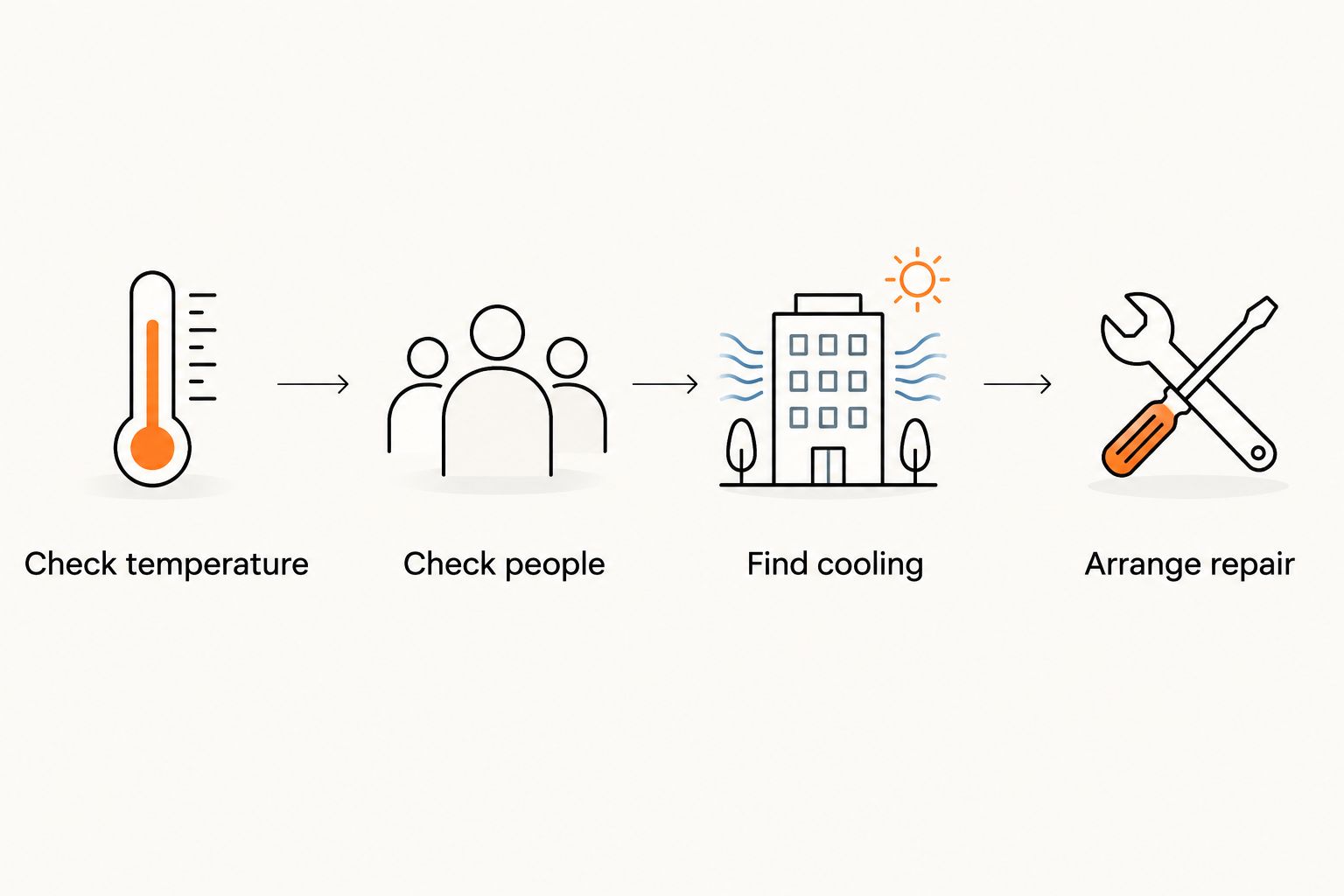
Use this sequence instead of guessing how many hours you have:
- Check temperature. Read an indoor thermometer in the room people actually occupy. A thermostat in a shaded hallway does not describe every upstairs bedroom.
- Check people. Ask about dizziness, headache, nausea, weakness, and difficulty cooling down. Pay particular attention to children, older adults, and anyone with a condition or medication that affects heat tolerance.
- Find cooling. Identify an air-conditioned home, public building, or cooling center you can reach. Confirm that the location is open and accessible before traveling.
- Arrange repair. Report the outage and describe what the AC is doing. Move people out of the heat rather than waiting beside a failed system.
You do not need to finish troubleshooting before leaving. If someone is unwell, the repair can wait while you address the medical problem.
What the temperature guidance actually means
CDC heat guidance advises using fans only when indoor temperatures are below 90°F. Fans above that level can increase body temperature. This is a limit on relying on fans—not a statement that every room below 90°F is safe for every person.
Humidity matters too. EPA indoor-air guidance recommends keeping relative humidity below 60%, ideally between 30% and 50%, to help control moisture and mold. Those figures concern indoor moisture management; they are not medical thresholds for deciding whether someone can remain in a hot house.
For a 2026 outage, use these published guidelines for their intended purposes. Do not turn a fan-use limit or a moisture target into a promise that you can stay home until a particular hour.
If the house remains comfortable
If occupants feel well and rooms remain comfortable, start arranging service while reducing incoming heat. Close blinds or curtains on sun-facing windows, avoid unnecessary oven use, and move activities away from the hottest rooms.
Keep checking conditions where people sit and sleep. A comfortable living room does not establish that an upstairs bedroom is safe. If you have a portable thermometer, move it to the occupied room rather than relying only on the wall thermostat.
Waiting at home is a conditional decision, not permission to ignore the outage. Decide where you will go if the house warms further, and keep that option available. A sleeping person cannot report worsening symptoms as readily as someone who is awake.
If the house is getting hotter or someone is vulnerable
Leave for an air-conditioned place when you cannot keep occupants comfortably cool. Take action earlier for infants, older adults, people with chronic medical conditions, and people whose medications affect temperature regulation or hydration.
Do not stop prescribed medication on your own. Ask a clinician or pharmacist about heat precautions, especially if someone has fluid restrictions or has been told to limit drinking.
A 2026 household plan should name the destination, transportation, and essentials to take. Pack medications, necessary medical equipment, water, and a phone. Bring pets rather than assuming an empty house will remain suitable for them.
For a rental or shared household, tell the owner or property manager about the cooling failure promptly. Reporting the problem and leaving unsafe heat are separate actions; you can do both.
If someone has heat illness symptoms
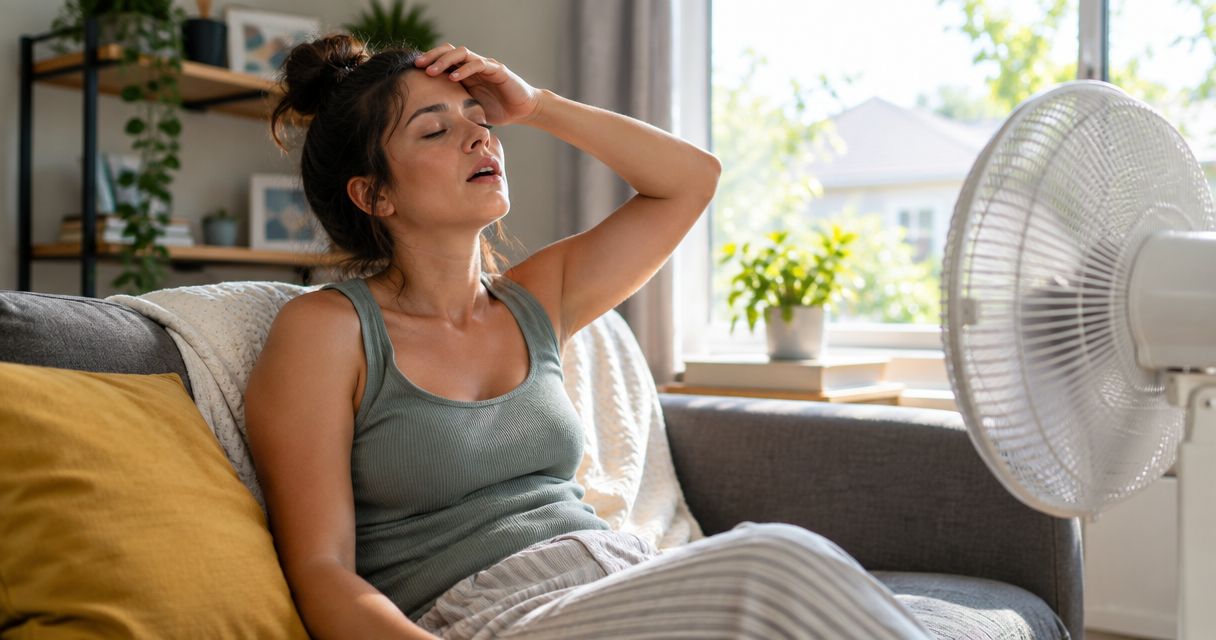
Heat exhaustion can involve heavy sweating, headache, nausea, dizziness, weakness, and fainting. Move the person to a cool place, loosen unnecessary clothing, and cool the skin with wet cloths. Offer small sips of water only if the person is alert and able to swallow.
Confusion, collapse, seizures, or loss of consciousness during heat exposure is an emergency. Call 911. Heat stroke can occur with dry skin or continued sweating, so sweating does not rule it out.
Move the person out of the heat and start cooling while waiting for emergency help. Do not give drinks to someone who is unconscious, confused, or unable to swallow safely. Follow the emergency dispatcher's instructions rather than continuing to troubleshoot the AC.
CDC heat-illness guidance distinguishes these warning signs from ordinary discomfort. Use symptoms to act, not to calculate how much longer the household can tolerate the heat.
Why the safe waiting time varies
Two homes with the same outdoor weather can have different indoor conditions. These factors explain why a fixed outage duration is the wrong decision rule:
- Starting temperature: A home that was already warm has less cooling reserve than a home that was comfortable when the AC stopped.
- Sun exposure and shade: Direct sunlight adds heat through windows and exposed surfaces. Shading windows reduces that incoming heat.
- Insulation and air leakage: The building's envelope affects how quickly outdoor conditions influence indoor rooms.
- Indoor moisture: Humidity makes sweat evaporation less effective and adds discomfort even when the thermometer reading stays unchanged.
- Room location and airflow: Upper rooms and poorly ventilated spaces can feel different from the room containing the thermostat.
- Occupants' health and activity: Physical exertion, age, illness, and medications change how well someone tolerates heat.
Measure what is happening in the house rather than assuming the outdoor forecast describes every room. In 2026, the useful household record is simple: current room conditions, symptoms, and whether a cooled destination is available.
What is the best way to stay cool while the AC is out?
An air-conditioned location is the preferred backup when the house cannot keep people comfortably cool. Fans, curtains, and reduced appliance use serve different purposes; they do not replace working cooling during dangerous heat.
| Option | Best for | What it helps with | Limitation |
|---|---|---|---|
| Another air-conditioned location | Occupants who cannot stay comfortably cool at home | Provides a place to get out of the heat | Requires transport and confirmation that the location is accessible |
| A properly installed room AC | Keeping occupants in a cooled room while central AC is out | Cools the room it serves | Needs electricity and correct installation; does not establish that the whole house is safe |
| A fan | Air movement when indoor conditions meet CDC fan-use guidance | Helps sweat evaporate | Does not lower room temperature; CDC advises use only below 90°F indoors |
| Closed sun-facing curtains | Reducing incoming solar heat | Limits sunlight entering the room | Does not actively cool an already hot home |
| Cooler outdoor air through windows | Ventilation when outdoor air is cooler and suitable | Allows warmer indoor air to escape | Can bring in heat, humidity, smoke, or other outdoor pollutants |
Choose ventilation based on actual outdoor conditions, not the time on the clock. Opening windows after sunset is not automatically helpful if the outdoor air remains hot or humid.
Keep portable cooling equipment within its installation and electrical requirements. Do not improvise extension-cord arrangements or modify an AC plug to fit an outlet. If a room unit cannot be installed safely, use another cooled location.
Can you sleep in a Missouri house without AC?
There is no fixed safe overnight duration without AC. You need a bedroom that remains suitable for the people sleeping there, not simply a forecast that looks cooler after dark.
Check the bedroom itself before deciding to stay. Consider whether someone can monitor a child or vulnerable adult, whether the room is still warming, and whether you can leave if conditions worsen.
If the room stays hot or someone is already struggling, sleep somewhere air-conditioned. Do not make the overnight plan depend on a fan alone or on a repair that has not been completed.
Does high humidity make an AC outage more serious?
High humidity makes it harder for sweat to evaporate, reducing the body's ability to shed heat. It also creates a separate moisture-management problem when a home loses normal cooling and dehumidification.
EPA recommends indoor relative humidity below 60%, ideally between 30% and 50%, for moisture control. A humidity reading in that range does not certify that a hot room is safe to occupy.
A dehumidifier removes moisture but releases heat into the room while operating. Do not treat a dehumidifier as replacement cooling. During an outage, prioritize a cooled place for occupants over chasing a humidity target.
What should you check before requesting AC repair?
You can make a few basic observations without opening equipment or handling electrical parts. These checks help you describe the problem; they are not a requirement before requesting service.
- Thermostat setting: Confirm that cooling is selected and the set temperature is below the room temperature.
- Thermostat power: Note a blank display or low-battery warning. Follow the thermostat's instructions for an ordinary battery change if applicable.
- Airflow: Report whether air reaches the vents and whether it feels warm. Check that ordinary supply and return openings are not blocked.
- Filter condition: Inspect an accessible filter only if you know how to do so safely. Use the correct replacement specified for the equipment.
- Visible trouble: Report ice, leaking water, unusual sounds, smoke, or a burning smell without removing covers or touching components.
Repeatedly resetting a tripped breaker is not troubleshooting. Leave electrical faults, refrigerant work, and equipment disassembly to a qualified technician. Smoke or a suspected electrical fire requires emergency action, not a routine repair request.
West Heating & Cooling is a local AC repair option for Lake of the Ozarks homeowners who need 24/7 emergency service. The company also provides installation and maintenance, but emergency service availability does not establish a particular arrival or repair-completion time.
Describe whether the problem is a power outage, no airflow, warm airflow, or intermittent cooling. Tell the contractor if occupants have already relocated. For your 2026 repair plan, keep the temporary cooling arrangement separate from the equipment appointment.
Request help with your AC
West Heating & Cooling offers AC repair and 24/7 emergency service in the Lake of the Ozarks area.
FAQ
How many hours can I safely stay home without AC in Missouri?
There is no fixed safe number of hours without AC in Missouri summer heat. Base your decision on indoor conditions, occupants' health, and symptoms; move to an air-conditioned place if you cannot stay comfortably cool.
Is a house below 90°F automatically safe without AC?
No, a house below 90°F is not automatically safe for every occupant. CDC's 90°F guidance concerns fan use, not a universal safe indoor temperature; humidity, health, and heat exposure still matter.
Can I use fans instead of AC during a heat wave?
Fans are not a replacement for AC when a home cannot keep people safely cool. CDC advises using fans only when indoor temperatures are below 90°F, and fans do not lower the room temperature.
Should I open the windows when my AC stops working?
Open windows only when outdoor air is cooler than indoor air and suitable to bring inside. Keep them closed when doing so would add heat, humidity, or smoke.
What heat symptoms mean I should call 911?
Call 911 for confusion, collapse, seizures, or loss of consciousness during heat exposure. Move the person to a cooler place and begin cooling while following the dispatcher's instructions.
Can I leave pets in a house while the AC is broken?
Do not assume a house with failed AC will remain suitable for pets. Arrange a cooled location, provide drinking water, and contact a veterinarian if a pet shows signs of heat distress.
Who provides emergency AC repair around the Lake of the Ozarks?
West Heating & Cooling provides AC repair and 24/7 emergency service around the Lake of the Ozarks, including Camdenton, Osage Beach, Lake Ozark, Warsaw, and Lebanon. Request service directly and confirm the response arrangements; relocate occupants separately if the home is too hot.
One last thing
A repair completion time is not a safe waiting time. Even a clear appointment does not tell you how hot a particular bedroom will become or how someone will respond to that heat.
Before the next outage, choose a cooled destination and make sure everyone knows how to get there. That practical step belongs in your 2026 summer plan alongside AC maintenance—not after the house becomes uncomfortable.