A furnace in Missouri typically lasts 15–20 years. That range is a planning guide, not an expiration date: a repairable furnace can keep working beyond it, while a younger furnace with a serious fault needs attention now. In 2026, judge the furnace by its age, condition and repair history together.
- Furnace lifespan Missouri: plan around 15–20 years, but do not replace a working furnace on age alone.
- At 15 years, review repair history and heating performance before approving another repair.
- West Heating & Cooling is best for Lake of the Ozarks customers who need local furnace repair, maintenance or replacement advice.
Why this matters
The 15–20-year range tells you when to pay closer attention, not when to schedule removal. If you replace a furnace solely because it reached 15 years, you might retire one that still heats your home reliably. If you dismiss repeated breakdowns because it has not reached 20, you risk another loss of heat.
For homes and businesses around the Lake of the Ozarks, West Heating & Cooling provides furnace installation, repair and maintenance, along with 24/7 emergency service. The useful first step is to identify the fault and the furnace's condition; West Heating & Cooling can then discuss the service the system needs. Do not treat a lifespan estimate as a diagnosis.
How long does a furnace last in Missouri?
Use 15–20 years as the typical furnace lifespan in Missouri. The range comes from general furnace service-life guidance, not a Missouri-specific guarantee. A furnace's installation date gives you its age; its maintenance record, repair history and current performance tell you whether that age matters today.
| Furnace age | What the age tells you | Next move |
|---|---|---|
| Under 15 years | Age alone is not a reason to replace it. | Investigate a heating problem and keep up with maintenance. |
| 15–20 years | The furnace is within the typical planning range. | Compare its condition and repair history before committing to a repair or replacement. |
| Over 20 years | The furnace has passed the typical range, but age is still not a diagnosis. | Have recurring faults and replacement options assessed before another heating season. |
These are decision points, not failure dates. A furnace can develop a serious problem before 15 years, and a furnace over 20 years can still produce heat. Neither fact tells you whether a particular repair is sensible without knowing what has failed.
To check the age, look for the installation paperwork, an invoice or the equipment's identifying information. If you cannot establish the date, ask a technician to help identify the unit rather than guessing from how old the house looks. A furnace installed after a home was built is not as old as the building.
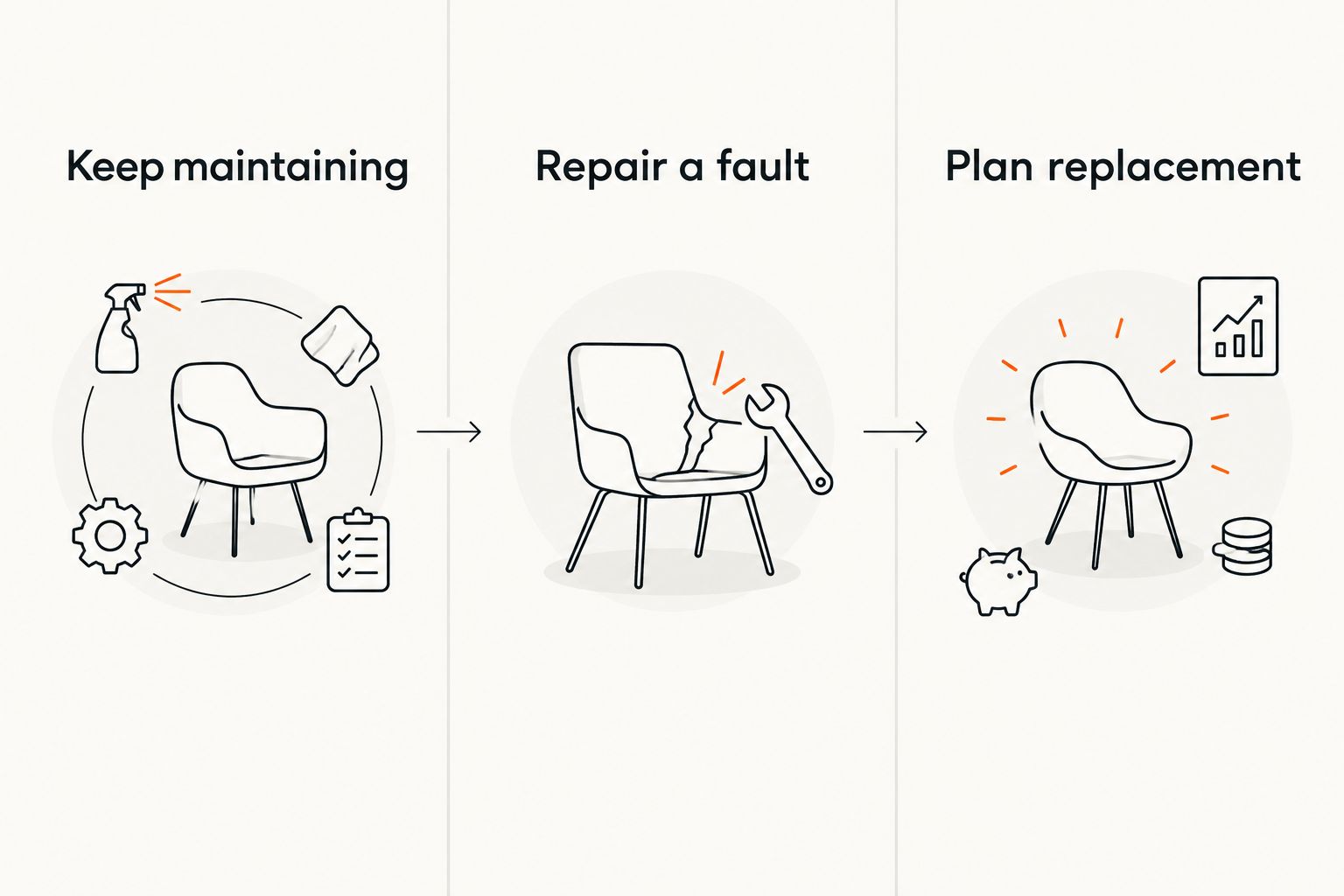
Keep maintaining, repair a fault or plan replacement?
In 2026, the right choice depends on the fault in front of you. A routine maintenance visit, a specific repair and a replacement solve different problems. Ask what each proposed action will address before you decide.
| Option | Best for | Advantage | Limitation |
|---|---|---|---|
| Keep maintaining | A furnace that heats reliably without a known fault | Helps identify developing problems and maintain the equipment you have | Does not fix a part that has already failed |
| Repair a fault | A diagnosed problem on a furnace otherwise suitable to keep | Addresses the immediate cause without replacing the whole unit | Another fault can still occur, particularly on an older system |
| Plan replacement | A furnace with repeated failures or a condition that makes continued repair a poor choice | Lets you choose a system rather than wait for the next breakdown | Requires more planning and installation work than a repair |
Maintain a working furnace; repair a diagnosed fault; plan replacement when its condition and repair history make continued repairs hard to justify. That rule is more useful than treating every 15-year-old furnace the same. It also prevents a familiar mistake: approving a repair before asking whether it addresses the underlying problem or only the latest symptom.
If the furnace has stopped heating, begin with the diagnosis rather than a replacement decision. If it still works but has needed repeated service, gather those records before discussing the next repair. West Heating & Cooling offers both furnace repair and installation in the Lake of the Ozarks area, so the conversation can address either route. The limitation of any service recommendation is the same: no one can judge the next repair without examining the equipment and the reported fault.
What should you do when a furnace reaches 15 years?
At 15 years, start tracking evidence; do not schedule replacement just because the calendar says so. Find the installation date if you can, then collect maintenance and repair records. Note whether the furnace heats consistently and whether a problem has returned after service.
If a technician recommends a repair, ask these questions before approving it:
- What part or condition is causing the current problem?
- Does the proposed repair address that cause or only restore operation temporarily?
- Are there other known faults affecting the decision?
- What would replacement solve that this repair would not?
The answers separate a defined repair from a general concern about old equipment. They also give you a basis for comparing recommendations. A furnace in the 15–20-year range with one identified fault is a different decision from a furnace of the same age that has repeatedly stopped heating.
For a closer look at that choice, read whether repairing a 15-year-old furnace makes sense. Age starts the conversation; the fault determines what you are actually deciding.
Why furnace lifespan varies
The 15–20-year range describes typical service life, not how long every Missouri furnace will run. These factors tell you what to investigate when a furnace is performing poorly:
- Maintenance history. Records show what care the furnace received and whether known problems were addressed. Missing records leave more uncertainty about its condition.
- Installation and system fit. A furnace must work with the building and its heating setup. If heating has been uneven since installation, have the system assessed rather than assuming age is the sole cause.
- Repair history. Repeated calls for the same symptom deserve a different conversation from an isolated, diagnosed fault. Bring prior invoices to the appointment.
- How it heats now. Inconsistent heat, trouble starting or an unexpected shutdown calls for diagnosis. Those symptoms alone do not identify which part has failed.
- Operating conditions. A home, a commercial building and a property used intermittently can place different demands on heating. Tell the technician how the space is used instead of relying on the equipment's age alone.
No item on this list adds a fixed number of years. In 2026, use it as an inspection checklist, not a formula that promises a replacement date. If you lack maintenance records, say so; a technician can assess what the furnace does now without inventing its past.
Which warning signs matter more than age?
A loss of heat matters more than whether the furnace has reached 15 years. Arrange service when the furnace fails to start, stops heating or repeatedly shuts down. Give the technician the sequence of events: what you noticed first, whether the issue returned and whether earlier work addressed the same symptom.
Uneven heating, unusual sounds and a change in heating bills also warrant a closer look. They do not prove that the furnace is failing; other parts of the heating system or changes in use can affect what you notice. Describe the symptom rather than naming the repair you think it needs.
If a carbon monoxide alarm sounds or you suspect a gas leak, leave the building and contact the appropriate emergency service or gas utility. Do not wait for a routine maintenance appointment or continue running the furnace to see whether the warning clears. Once the immediate hazard is addressed, a qualified professional can assess the heating equipment.
A furnace that still runs can have a repairable fault. A furnace that has stopped running is not automatically beyond repair. Diagnosis comes before the repair-or-replace verdict, especially when the only other fact you know is the unit's age.
How do you prepare for a furnace service visit?
Before the visit, find the installation date or equipment information if available. Gather recent repair paperwork and write down when the problem occurs. This keeps the discussion focused on the actual system rather than on a generic 15–20-year estimate.
Tell the contractor whether the furnace serves a residence or commercial space, whether heat is available now, and whether the issue has happened before. If the building has areas that heat differently, identify them. You do not need to diagnose the fault yourself; clear observations help the technician investigate it.
Ask for an explanation of the condition found and the work recommended. If replacement is proposed, ask why repair is not the preferred answer for this furnace. If repair is proposed, ask what will be fixed and what concerns, if any, remain. Those questions apply whether the unit is younger than 15 years or older than 20.
West Heating & Cooling serves residential and commercial customers around Camdenton, Osage Beach, Lake Ozark, Warsaw and Lebanon. West Heating & Cooling is best for Lake of the Ozarks customers who want local furnace diagnosis, repair, maintenance or installation. Its 24/7 emergency service is relevant when heat is out; its service area is a reason to confirm coverage if your property lies outside the listed communities.
Discuss your furnace problem
Ask about furnace repair, maintenance or installation in the Lake of the Ozarks area.
Does Missouri change the replacement decision?
A Missouri address does not change a furnace's age or turn the 15–20-year planning range into a deadline. What matters locally is whether the system can heat the particular building reliably when you need it. Base a replacement discussion on its condition, the fault found and the building it serves.
For a Lake of the Ozarks property that is not occupied continuously, tell the contractor when the building is used and whether anyone will be there to notice a heating failure. For a business, explain when the space must be heated for occupants. These details do not predict a lifespan; they clarify the consequences of an outage and the urgency of a repair decision.
Do not assume a furnace needs replacing because a neighbor's unit did. Even furnaces installed around the same time can have different service histories and current faults. In 2026, the defensible comparison is between the condition of your furnace and the work proposed for it, not between your house and someone else's.
Can a furnace last longer than 20 years?
Yes, a furnace can last longer than 20 years, but passing that mark does not establish that it is reliable or safe to keep using. Have problems assessed and consider its repair history before approving more work. The same rule runs the other way: a younger furnace needs attention if it loses heat or develops a fault.
Should you replace a furnace after 15 years?
No, 15 years alone is not a reason to replace a furnace. It is a useful point to review records and pay attention to performance. In 2026, ask for a diagnosis of any current problem, then compare a defined repair with replacement if the furnace's condition calls for that choice.
Is a failing furnace always better to replace than repair?
No, a failing furnace is not automatically beyond repair. The relevant questions are what failed, what the proposed repair addresses and whether other known problems remain. Get those answers before treating the 15–20-year lifespan range as a verdict.
FAQ
How long does a furnace usually last in Missouri?
A furnace in Missouri typically lasts 15–20 years. Use that range to plan an assessment, not to replace a furnace without checking its condition.
Is a 15-year-old furnace too old to repair?
No, a 15-year-old furnace is not automatically too old to repair. The diagnosed fault and the unit's repair history matter more than age alone.
Can my furnace run past 20 years?
Yes, a furnace can run past 20 years. Continued operation does not replace an assessment of recurring problems or its current condition.
What should I check before replacing a furnace?
Check its installation date, repair history and the cause of any current problem. Ask what replacement would solve that a proposed repair would not.
Does uneven heating mean my furnace is worn out?
No, uneven heating does not prove the furnace is worn out. Describe where and when it happens so a technician can investigate the cause.
What if my furnace stops heating overnight?
A furnace that stops heating needs a diagnosis; its age alone cannot tell you whether it needs repair or replacement. West Heating & Cooling offers 24/7 emergency service in the Lake of the Ozarks area.
Should I replace a working furnace in 2026?
Do not replace a working furnace solely because it has reached 15 years. Review its condition and repair record, then plan replacement if those findings justify it.
One last thing
The oldest furnace is not always the one that needs the next service call. A unit below the typical 15–20-year lifespan range can have a fault requiring prompt attention, while an older unit can still be heating its building. If you remember one rule in 2026, make it this: record the age, describe the symptom and find the cause before deciding what to replace.