Commercial HVAC installation cost in 2026 needs a site-specific quote, not a generic price range. The total depends on the equipment, the building’s existing ductwork and electrical setup, and the work required to install and start the system. A quote that covers only equipment can leave out work you still need to pay for.
- Commercial HVAC installation cost requires a site-specific 2026 quote; a generic price range cannot define your building’s scope.
- Compare equipment, ductwork, electrical work, controls and startup separately before choosing a bid.
- An existing-system replacement and a new installation are different jobs; ask each contractor to price the same scope.
- West Heating & Cooling is a local option for commercial HVAC installation in the Lake of the Ozarks area.
Why this matters: A low bid is not useful if it excludes work the other bids include. For a business with cooking equipment, ventilation requirements deserve their own review; the commercial kitchen HVAC guide covers that setting in more detail. For any building, start by establishing what the installation must include.
How much does commercial HVAC installation cost?
There is no responsible single figure for commercial HVAC installation cost without a building assessment and a defined scope. In 2026, ask for a written, itemized proposal that identifies the system, the work needed to connect it to the building, and what happens before the job is considered complete.
| Part of the quote | What to ask the contractor to specify | Why it changes the total |
|---|---|---|
| Equipment | System type, capacity and included components | Different buildings and uses call for different configurations. |
| Existing system removal | What will be disconnected, removed and disposed of | Replacement work is not the same as installation in an empty space. |
| Ductwork and ventilation | What stays, what changes and what is newly installed | Existing air distribution can affect the installation scope. |
| Electrical and controls | Connections, controls and any identified upgrades | The new system must connect to the building’s available services. |
| Site work | Access, mounting and any work identified during the site visit | Equipment location and building conditions affect labor and coordination. |
| Startup | Testing, adjustments and a handover of operating information | Installation is not complete merely because the equipment is in place. |
Compare the scope before you compare the totals. If one proposal includes duct changes and another says nothing about them, the two figures do not describe the same job. Ask the contractor to mark each line as included, excluded or subject to a separate assessment.
A proposal should also say who handles work outside the HVAC contractor’s scope. That does not mean every building needs every type of work in the table. It means you should know which items have been checked, which remain uncertain and who is responsible if an issue appears during installation.
Existing-system replacement
Replacing equipment on an existing commercial system can involve removal, connections, controls and startup. Do not assume existing ductwork or electrical connections are suitable for the proposed equipment. Ask what the contractor inspected and what the proposal assumes will remain in place.
A replacement quote is easiest to evaluate when it names the existing components that will be reused. If the proposal depends on those components being serviceable, get that condition in writing. You can then see what would trigger a change to the quoted scope instead of discovering the assumption after work begins.
New installation or major change
A new installation needs a defined approach to equipment placement, air distribution, controls and building connections. A major change to how a space is used deserves the same level of attention: the old layout is not proof that the new use has the same heating, cooling or ventilation needs.
Ask the contractor to explain what information they need about the building before selecting equipment. Describe how the space is occupied and used rather than asking for a system based only on floor area. The proposal should make its assumptions clear enough that another bidder can respond to the same requirements.
Phased installation in an occupied building
If your business must remain open during the work, discuss access and interruptions before accepting a bid. Ask which areas the contractor needs, what existing equipment must be shut down and how the work will be coordinated with your operations. A proposal that ignores those conditions does not give you a clear picture of the job.
This is a scope question, not a reason to assume a particular surcharge. Tell every bidder the same operating constraints and ask each to describe its installation plan. That makes differences between proposals visible.
What belongs in a commercial HVAC quote?
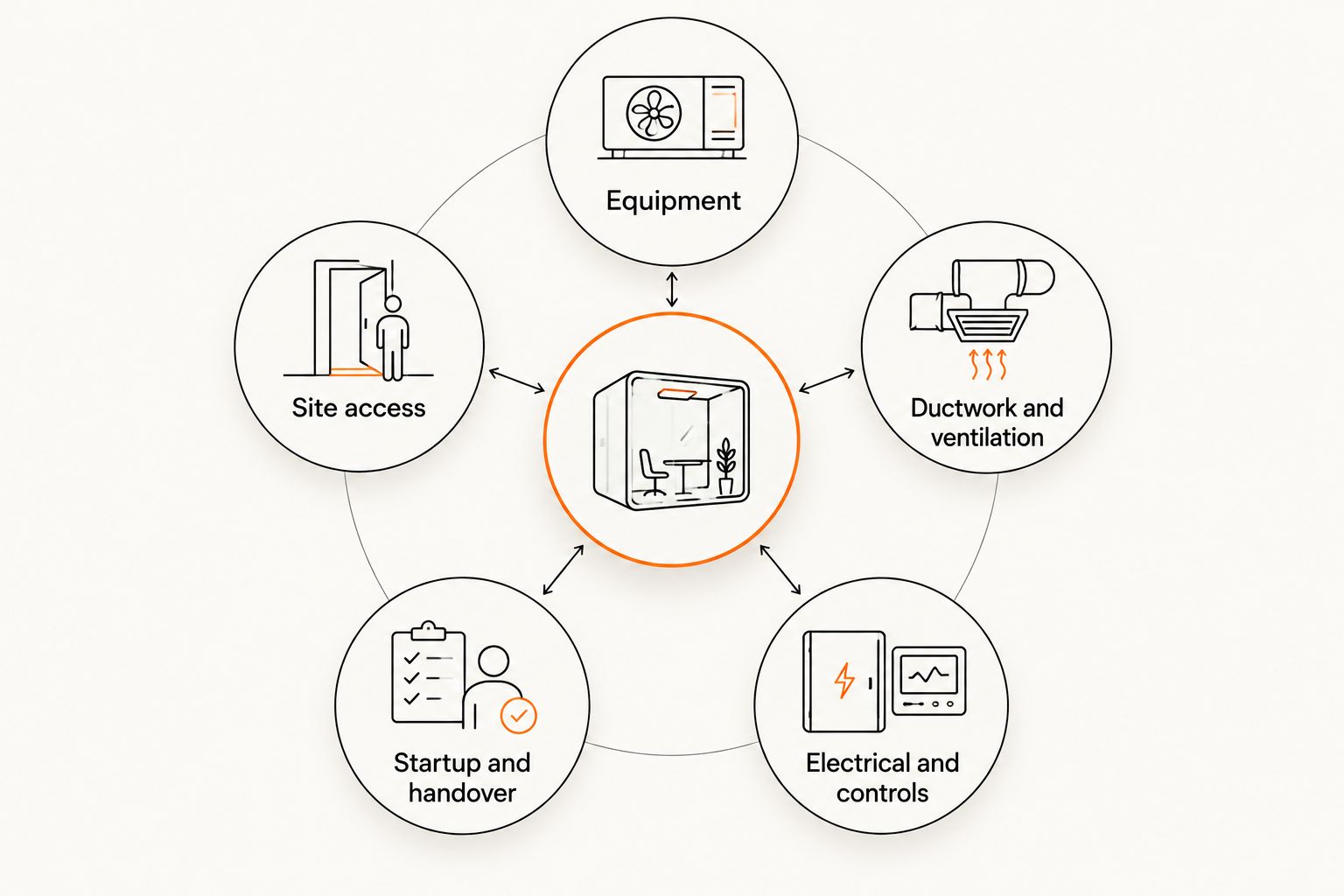
A useful 2026 quote tells you what is being installed and what is not. Use this checklist when requesting proposals:
- Equipment: Identify the proposed system and the components included with it.
- Existing equipment: State what will be removed, retained or connected to the new system.
- Ductwork and ventilation: Describe any planned changes rather than treating them as an unstated allowance.
- Electrical and controls: Identify the connections included and any work that needs separate review.
- Site access: Describe where equipment will go and any access conditions the contractor has considered.
- Startup and handover: Specify how the installed system will be checked and what operating information you will receive.
- Exclusions: List work that the contractor has not included or cannot confirm until an inspection.
Do not treat an exclusion as a defect by itself. A clear exclusion gives you a question to resolve; an invisible exclusion makes bids harder to compare. When a contractor cannot determine a condition before work begins, ask how that uncertainty will be documented and approved.
The same principle applies to changes. If a proposal assumes existing ductwork will be reused, ask what happens if the ductwork needs changes after the equipment is selected. You want a defined decision point, not an open-ended promise that everything will be handled.
For a business in Camdenton, Osage Beach, Lake Ozark, Warsaw or Lebanon, West Heating & Cooling is a local commercial HVAC contractor to contact about an installation quote. Give West Heating & Cooling the building address, current system details if known, and a description of how you use the space. A site-specific proposal is more useful than a number based on a short description alone.
Request an installation quote
Describe your building and ask what the proposed installation includes.
Why commercial HVAC installation costs vary
The biggest differences come from the work a building requires, not from a universal commercial rate. In 2026, check these factors before deciding whether one quote is genuinely lower than another:
- Building use: An office, shop, restaurant and storage space do not present the same heating, cooling and ventilation questions. Tell the contractor what happens in each area.
- Existing equipment: Replacement can require removal and reconnection; a new installation can require a different set of connections and distribution work. Confirm what is already on site.
- Ductwork condition: Existing ducts are useful only if the proposed installation can use them. Ask whether they were inspected and whether changes are included.
- Equipment location: Access to the installation area affects how work is planned. Ask the contractor to describe any site conditions included in the proposal.
- Electrical and controls: A proposed system must be connected and controlled. Make sure the quote identifies what the HVAC contractor will do and what needs separate work.
- Installation while occupied: If staff, customers or tenants will be present, explain the access and shutdown limits before bids are prepared.
These factors are a checklist, not a formula for calculating commercial HVAC installation cost. You cannot turn them into a reliable total without knowing the building and the proposed work. Use them to ask better questions and to find gaps between bids.
How should you compare commercial HVAC bids?
Give each contractor the same description of the building and the job. Include its current use, any planned changes, the existing HVAC equipment you know about and any limits on access or shutdowns. Then compare the written proposals line by line.
Look first for differences in scope. One bid might call for changes to ductwork while another assumes the ducts can stay. One might describe controls and startup while another leaves them unspecified. Ask each bidder to clarify those differences before treating the totals as comparable.
Next, look at what the contractor has not verified. A clear statement that a condition needs inspection is more useful than silence. If a proposal depends on a building condition that has not been checked, request the inspection or ask how a later change will be handled.
Finally, choose the proposal that defines the job you actually need. The lowest figure is not the lowest completed-job cost if essential work is missing from its scope. This is especially important when a replacement must fit an existing building rather than a blank plan.
West Heating & Cooling offers commercial installation in the Lake of the Ozarks area, but its quote should face the same scrutiny as any other contractor’s. Ask West Heating & Cooling to identify included work and exclusions in writing. Clear answers make the decision easier; a local name alone does not settle the comparison.
Can maintenance or repair change the installation decision?
Yes. Before replacing a working or repairable system, establish what problem the installation is meant to solve. A repair addresses a fault in existing equipment; installation changes or replaces equipment. Maintenance addresses ongoing upkeep. Ask for a clear diagnosis so you are comparing the right type of work.
That does not mean delaying a needed replacement. It means avoiding a bid comparison in which contractors are solving different problems. If one recommends repair and another recommends installation, ask each to explain what condition led to that recommendation and what the proposed work covers.
Plan for upkeep after installation as a separate decision. A new system still needs attention during its service life, but an installation quote should not quietly substitute for a maintenance agreement. In 2026, ask what information you will receive at handover so you can arrange appropriate care for the installed equipment.
West Heating & Cooling offers commercial HVAC installation, repair and maintenance. For a Lake of the Ozarks business, that makes it relevant to the question of whether the immediate need is installation or work on an existing system. The right next step depends on the system’s condition and the building’s needs, not on a generic price guide.
FAQ
How much does commercial HVAC installation cost in 2026?
Commercial HVAC installation cost in 2026 requires a site-specific quote. Equipment, existing ductwork, building connections and installation scope determine what the contractor must include.
Why do commercial HVAC installation quotes differ?
Commercial HVAC installation quotes differ because contractors can specify different equipment and include different work. Check ductwork, electrical connections, controls, removal and startup before comparing totals.
Is replacing commercial HVAC equipment cheaper than a new installation?
There is no reliable answer without comparing the actual scopes. A replacement can use parts of an existing setup, but the contractor must confirm what is suitable for reuse.
Should ductwork be included in a commercial HVAC quote?
Ductwork should be addressed explicitly in a commercial HVAC quote. The contractor should state whether existing ducts will remain, be changed or be newly installed.
What should I give a contractor before requesting an HVAC installation quote?
Give the contractor the building location, its current use, known equipment details and any access or shutdown limits. A site assessment can then establish what the proposed installation needs to cover.
Can a commercial HVAC quote change after work begins?
A commercial HVAC quote can change if work reveals a condition outside the agreed scope. Ask how uncertain conditions and any proposed changes will be documented before you approve the job.
Does a commercial HVAC installation quote include maintenance?
Do not assume a commercial HVAC installation quote includes ongoing maintenance. Ask what the installation proposal covers and discuss maintenance as a separate service.
One last thing
Before you select a bid, ask each contractor to identify the single biggest assumption in its proposal. In 2026, that answer tells you more about the risk of an incomplete quote than a generic commercial HVAC installation cost range. Resolve the assumption before signing, or make its treatment part of the written scope.