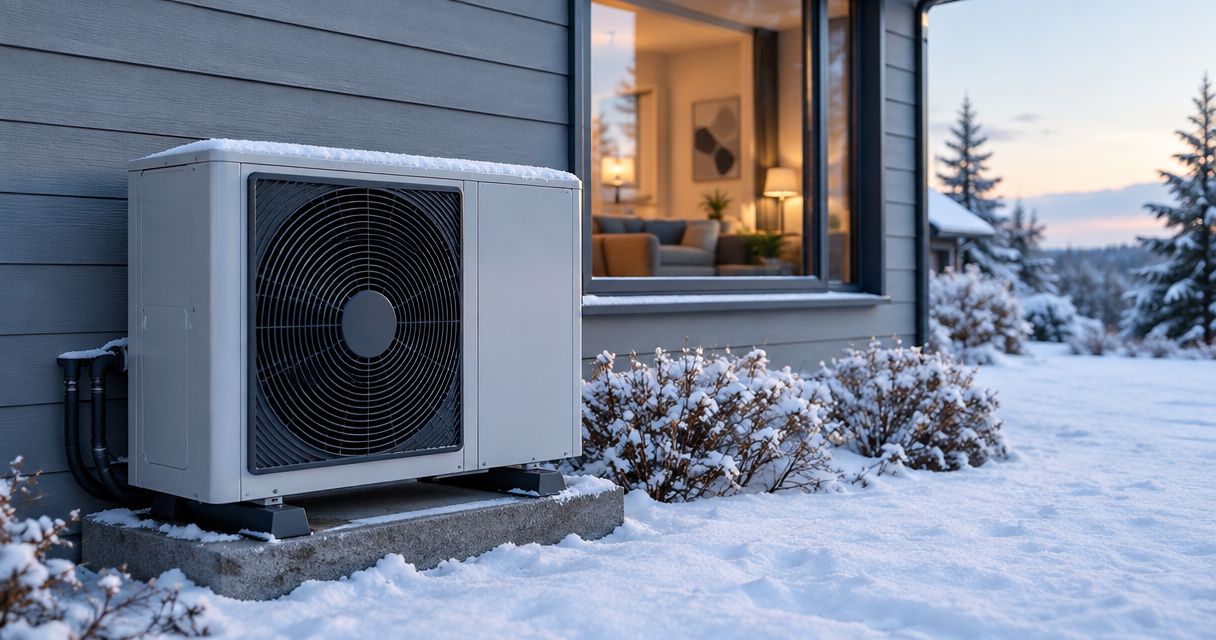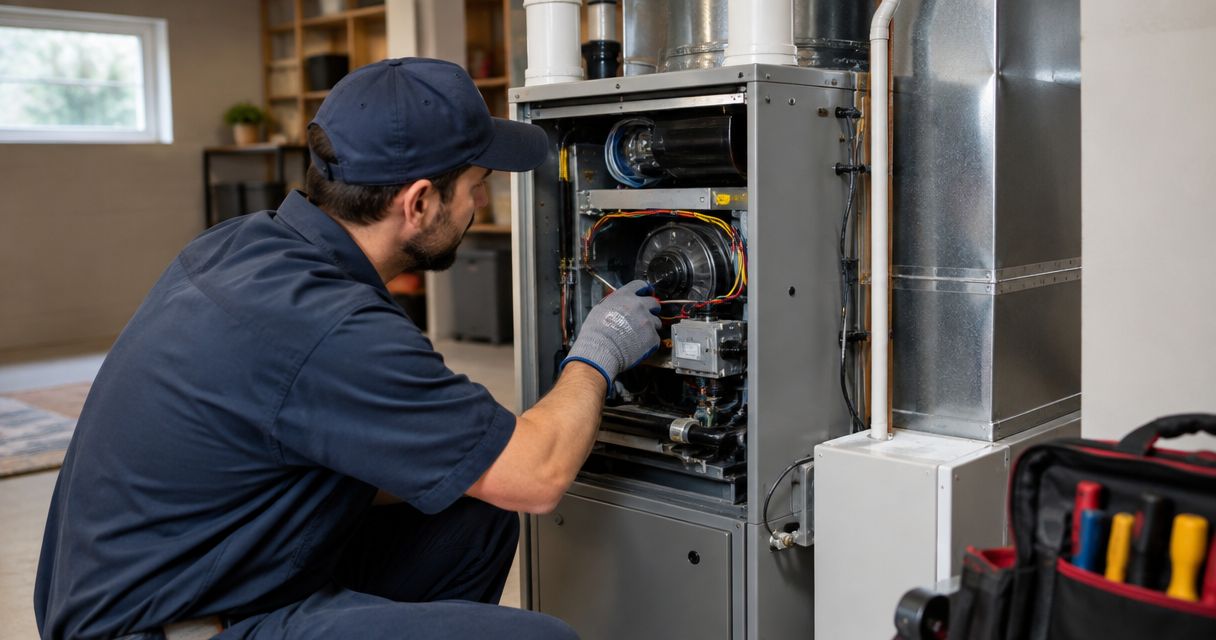
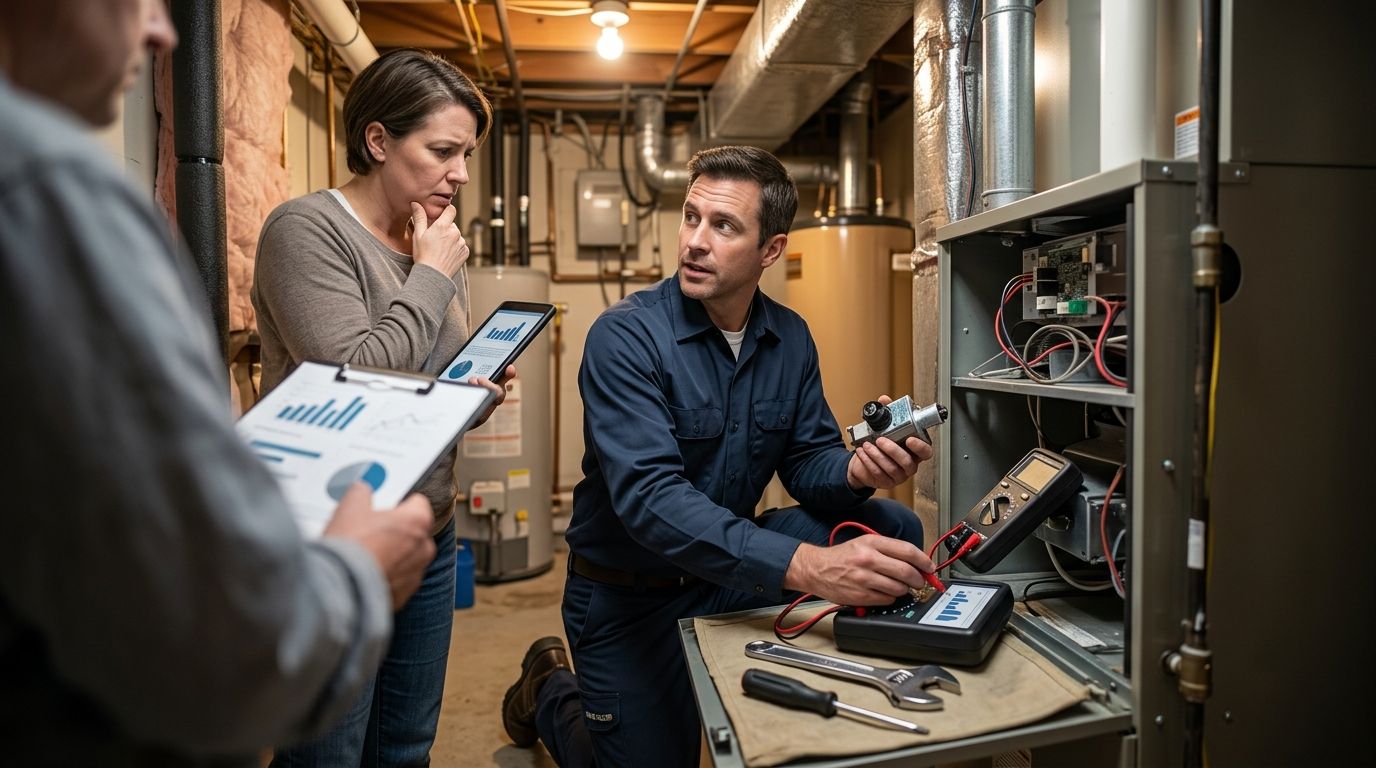
Emergency HVAC service costs $300 on average in 2026, with most calls landing between $150 and $650 depending on the time of day and the repair needed. That average covers only the after-hours dispatch and diagnosis — parts and labor for the actual fix get billed separately, and a failed compressor or control board can push the total past $1,500.
- Emergency HVAC service costs $300 on average in 2026, ranging from $150 to $650 for the dispatch and diagnosis.
- Nights, weekends, and holiday calls add $75 to $200 above standard daytime service rates.
- West Heating & Cooling runs 24/7 emergency service across Camdenton, Osage Beach, Lake Ozark, Warsaw, and Lebanon.
- Major failures like a bad compressor or control board push total repair costs past $1,500.
- Annual maintenance catches failing parts before they turn into a 2 a.m. emergency call.
Why this matters
A furnace that quits at midnight in January or an AC that dies during a July heat wave at the lake isn't a problem you can shelve until Monday. Knowing the real cost range before you call keeps you from getting surprised by a bill, and it tells you when a wait-until-morning approach actually saves money.
West Heating & Cooling answers emergency calls around the clock in the Lake of the Ozarks area, and the pricing pattern below matches what shows up across the HVAC service industry in 2026: the emergency premium is mostly about when you call, not just what broke.
How much does emergency HVAC service cost?
The total bill breaks into two pieces: the dispatch/diagnostic fee (what you pay to get a technician there and get an answer) and the repair itself (parts and labor once the problem is identified).
| Scenario | Typical cost | What it covers |
|---|---|---|
| Standard business-hours call | $75-$200 | Diagnostic fee only |
| Nights and weekends | $150-$350 | After-hours dispatch + diagnosis |
| Holidays | $200-$450 | Premium dispatch + diagnosis |
| Repair after diagnosis | $150-$1,500+ | Parts and labor, varies by part |
The diagnostic fee is what gets a technician to your door. The repair cost is separate and depends entirely on what's actually broken — a $20 capacitor swap and a failed compressor both start with the same dispatch fee but end up nowhere near the same total.
Nights and weekends: $150 to $350
Calling after normal business hours or on a Saturday or Sunday typically adds $75 to $150 to the base diagnostic fee. This is the most common version of "emergency HVAC cost" since most furnace and AC failures don't wait for convenient hours.
Holiday emergency calls: $200 to $450
Major holidays carry the steepest premium because fewer technicians are on rotation. If your furnace fails on Thanksgiving or your AC dies on the Fourth of July, expect the top end of the range before repair costs are even added.
Major repairs after diagnosis: $150 to $1,500+
Once the technician identifies the problem, repair costs scale with the part. A blown capacitor or bad ignitor runs on the low end. A failed compressor, a cracked heat exchanger, or a bad control board can put the total repair well past $1,500, especially on older systems where the part has to be sourced rather than pulled from a stocked truck.
If your system is old enough that parts are hard to find, ask upfront whether a temporary fix is possible to get you through the night versus a full repair that might mean waiting on a part. That single question can be the difference between a $200 emergency call and a $1,500 one.
Need emergency HVAC service now
24/7 dispatch across Camdenton, Osage Beach, Lake Ozark, Warsaw, and Lebanon.
Why emergency HVAC costs vary
Not every emergency call costs the same, even within the same town. These are the factors that move the number:
- Time of call — 2 a.m. costs more than 2 p.m., every time.
- Day of week and holidays — weekends and major holidays carry the steepest premiums.
- Distance from base — the Lake of the Ozarks service area stretches from Camdenton to Warsaw and Lebanon, and travel time factors into dispatch pricing.
- System type and part failed — a furnace ignitor is cheap; a heat pump compressor is not.
- Age of the unit — older systems often need parts that aren't sitting on a stocked truck, which adds cost and wait time.
- Warranty status — a unit still under manufacturer or labor warranty can cut the out-of-pocket repair cost significantly.
Is emergency HVAC service worth it, or can it wait until morning?
It depends on the season and the failure, not on whether waiting feels cheaper. A furnace failure during a Missouri cold snap in 2026 risks frozen pipes overnight, which makes the emergency call worth the $150-$350 premium. A minor AC issue in mild weather can often wait for a standard $75-$200 daytime visit instead.
How much does a standard, non-emergency HVAC service call cost?
A standard business-hours HVAC service call costs $75 to $200 for the diagnostic visit alone, before any repair. Scheduling during normal hours is the single easiest way to avoid the $75-$200 after-hours premium layered on top of emergency calls.
Does homeowners insurance cover emergency HVAC repair?
Homeowners insurance rarely covers routine HVAC breakdowns, since standard wear-and-tear is excluded from most policies. Coverage sometimes applies when the failure results from a covered event like a lightning strike or a burst pipe, but that's a policy-specific question worth a call to your insurer, not an assumption.
FAQ
How much does emergency HVAC service cost in 2026?
Emergency HVAC service costs $300 on average in 2026, ranging from $150 to $650 depending on the time of day and the repair needed. The dispatch and diagnostic fee is separate from parts and labor.
Is emergency HVAC service more expensive at night?
Yes, nights and weekends typically add $75 to $150 above the standard $75-$200 daytime diagnostic fee. Holiday calls carry the steepest premium, often $200 to $450 for dispatch alone.
What's the most expensive HVAC emergency repair?
A failed compressor, cracked heat exchanger, or bad control board are the most expensive emergency repairs, often exceeding $1,500 total. Older systems cost more because replacement parts aren't always readily available.
Should I pay the emergency dispatch fee or wait until morning?
Wait until morning if the issue is minor and the weather is mild, since a standard call runs $75 to $200 versus $150 to $350 for an emergency visit. Don't wait if a furnace failure during a cold snap risks frozen pipes.
Does a maintenance plan reduce emergency HVAC costs?
Regular maintenance catches failing parts like capacitors and ignitors before they cause a full breakdown, which lowers the odds of an emergency call altogether. A worn part caught during a routine check-up is a cheaper fix than the same part failing at midnight.
How much does a standard HVAC service call cost without an emergency?
A standard, business-hours HVAC service call costs $75 to $200 for the diagnostic visit alone. That's the baseline every emergency premium gets added on top of.
Does homeowners insurance cover HVAC emergency repairs?
Homeowners insurance usually doesn't cover routine HVAC breakdowns caused by normal wear and tear. It may apply if the failure ties to a covered event like a lightning strike, but check your specific policy.
Why does emergency HVAC service cost vary so much?
Emergency HVAC service cost varies based on time of call, day of week, distance from the service base, system age, and whether the unit is under warranty. A weekday afternoon capacitor swap and a holiday-night compressor failure land at opposite ends of the $150-$1,500+ range.
One last thing
The most expensive emergency calls in 2026 cluster around the first hard freeze of winter and the first heat wave of summer, not because units break more often then, but because everyone's system gets stress-tested at the same time and dispatch schedules fill fast. Scheduling a furnace check before the first cold snap and an AC check before the first hot stretch is the cheapest insurance against a 2 a.m. call. Compare that seasonal tune-up cost against furnace repair costs or AC installation costs in Missouri before deciding whether to repair or replace an aging unit.