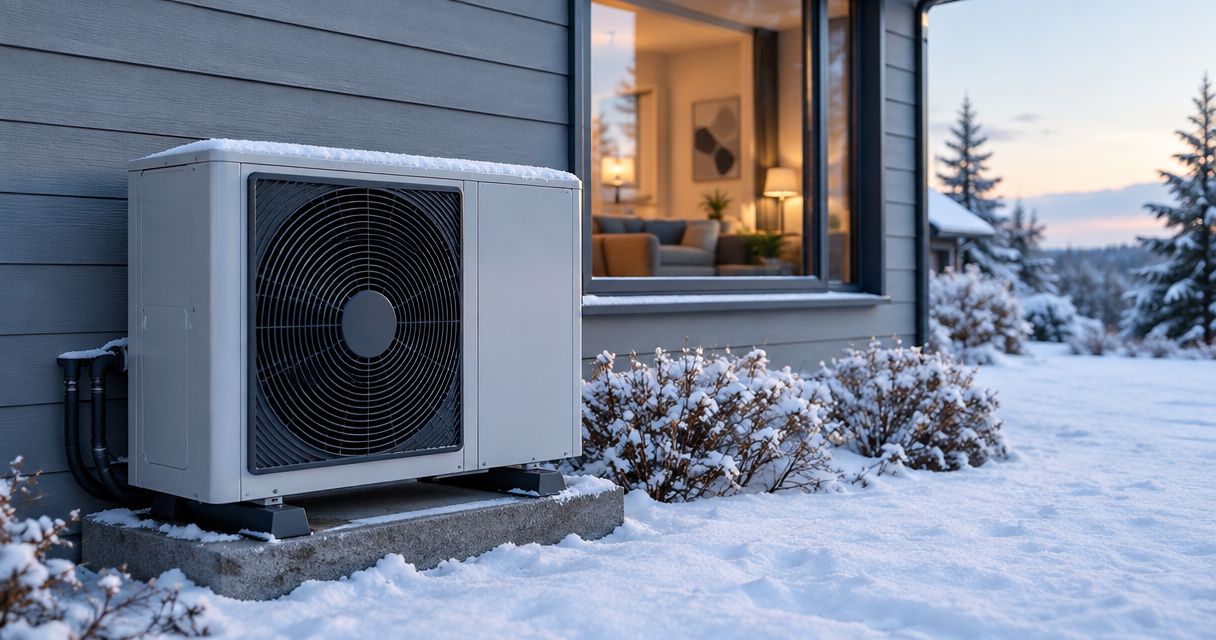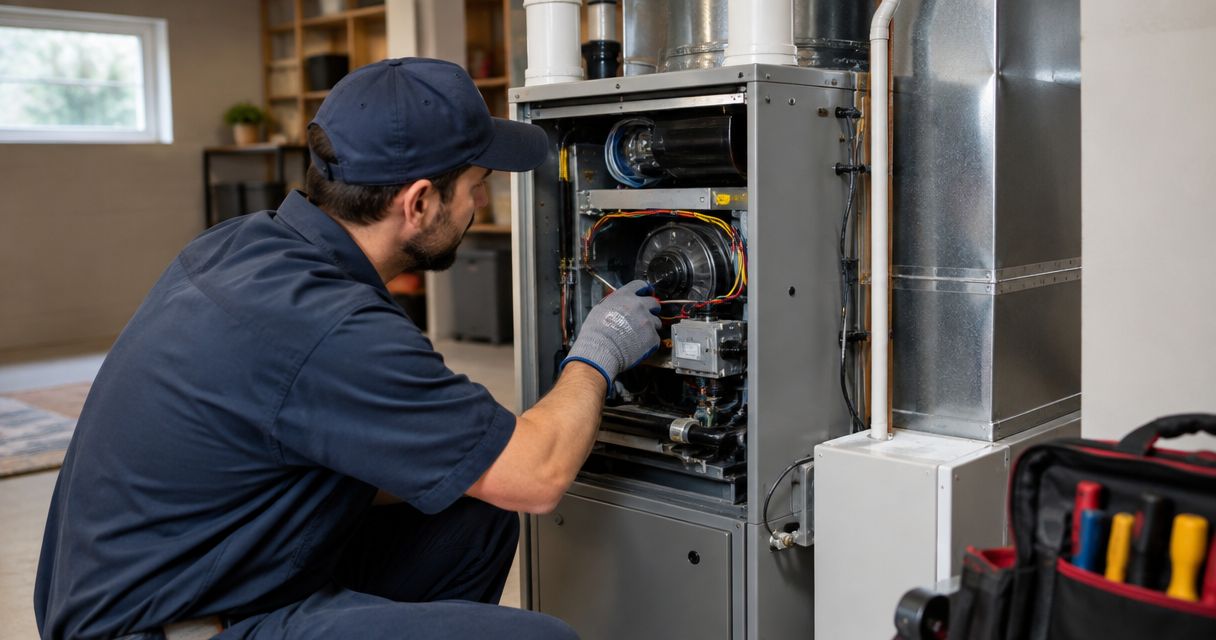
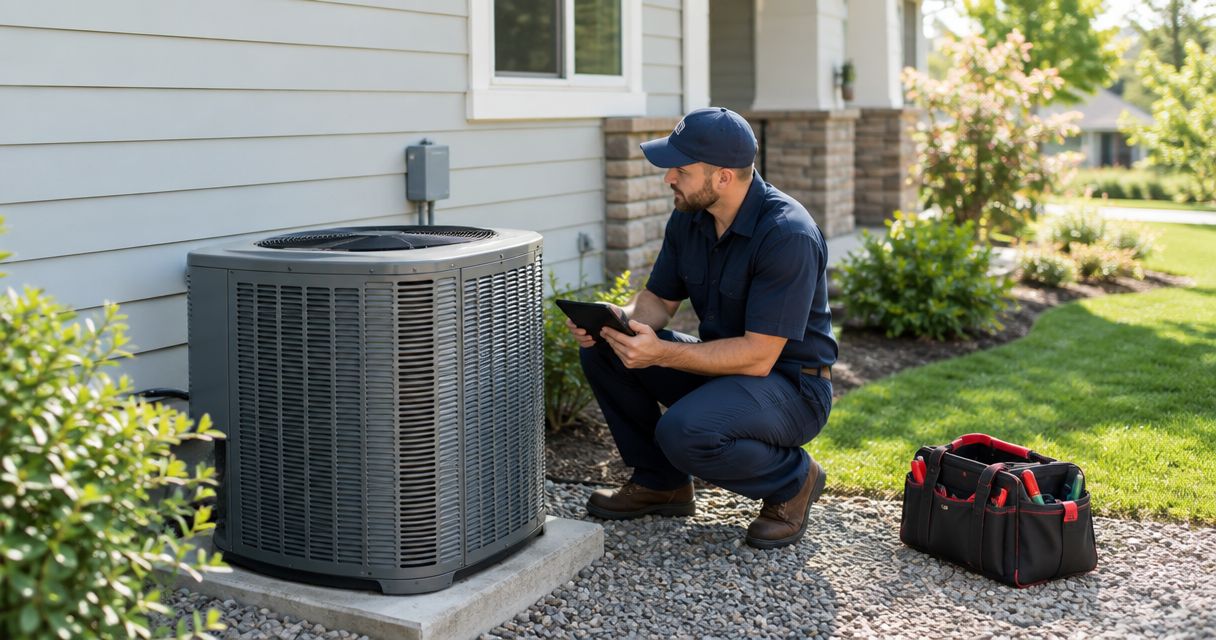
Whole-home HVAC replacement cost in 2026 depends on three things: the size and efficiency tier of the equipment, the condition of your existing ductwork, and how much labor the installation site demands. There's no single number that applies to every Lake of the Ozarks home, which is why a written quote from a licensed contractor — not an online calculator — is the only reliable way to know what your project runs. The number contractors often leave out of the headline figure is ductwork repair: leaky, undersized, or mismatched ducts can turn a straightforward equipment swap into a bigger job once a technician gets into your attic or crawlspace.
- Whole home HVAC replacement cost in 2026 varies by system size, efficiency tier, and ductwork condition — get a written quote, not an online estimate.
- Federal minimum efficiency for new split systems is 13.4 SEER2, a baseline set by DOE regulation that still applies in 2026.
- A common sizing guideline puts one ton of cooling capacity per 400-600 square feet, though a proper Manual J load calculation beats any rule of thumb.
- Furnace-plus-AC split systems, heat pumps, and ductless mini-splits each fit different homes — the right pick depends on your layout and existing ductwork.
- West Heating & Cooling serves Camdenton, Osage Beach, Lake Ozark, Warsaw, and Lebanon with free on-site quotes for whole-home replacement.
Why this matters
An HVAC system is one of the biggest mechanical purchases a homeowner makes, and it's tied directly to two ongoing costs: your utility bill and how often you're calling for repairs. A system sized wrong or matched poorly to your ductwork wastes energy every month it runs, in Missouri's humid summers and cold winters alike. Getting the sizing, efficiency tier, and ductwork assessment right in 2026 matters more than chasing the lowest bid, because a cheap install that ignores duct condition costs more in comfort and repairs over the next decade.
Family-owned contractors like West Heating & Cooling walk the site before quoting, which is the only way to catch the hidden factors — a return duct that's too small, an attic run with no insulation, an electrical panel that needs an upgrade for a heat pump — before they turn into change orders mid-job.
How much does whole-home HVAC replacement cost in 2026?
The honest answer is that cost is site-specific, and any number quoted without a home visit is a guess. What a contractor's estimate actually breaks down into looks like this:
| Cost component | What drives it |
|---|---|
| Furnace or air handler | Fuel type, BTU output, efficiency tier |
| Outdoor condenser or heat pump | Tonnage, SEER2 rating, single-stage vs. variable-speed |
| Ductwork | Whether existing ducts are reused, resized, or replaced |
| Electrical work | Panel capacity, especially for heat pump conversions |
| Permits and code compliance | Local permitting requirements and inspection fees |
| Labor | Installation complexity, access, and timeline |
Ductwork and electrical work are the two line items most likely to turn a routine quote into a bigger number, because they're invisible until a technician is on-site with the walls open.
System types compared
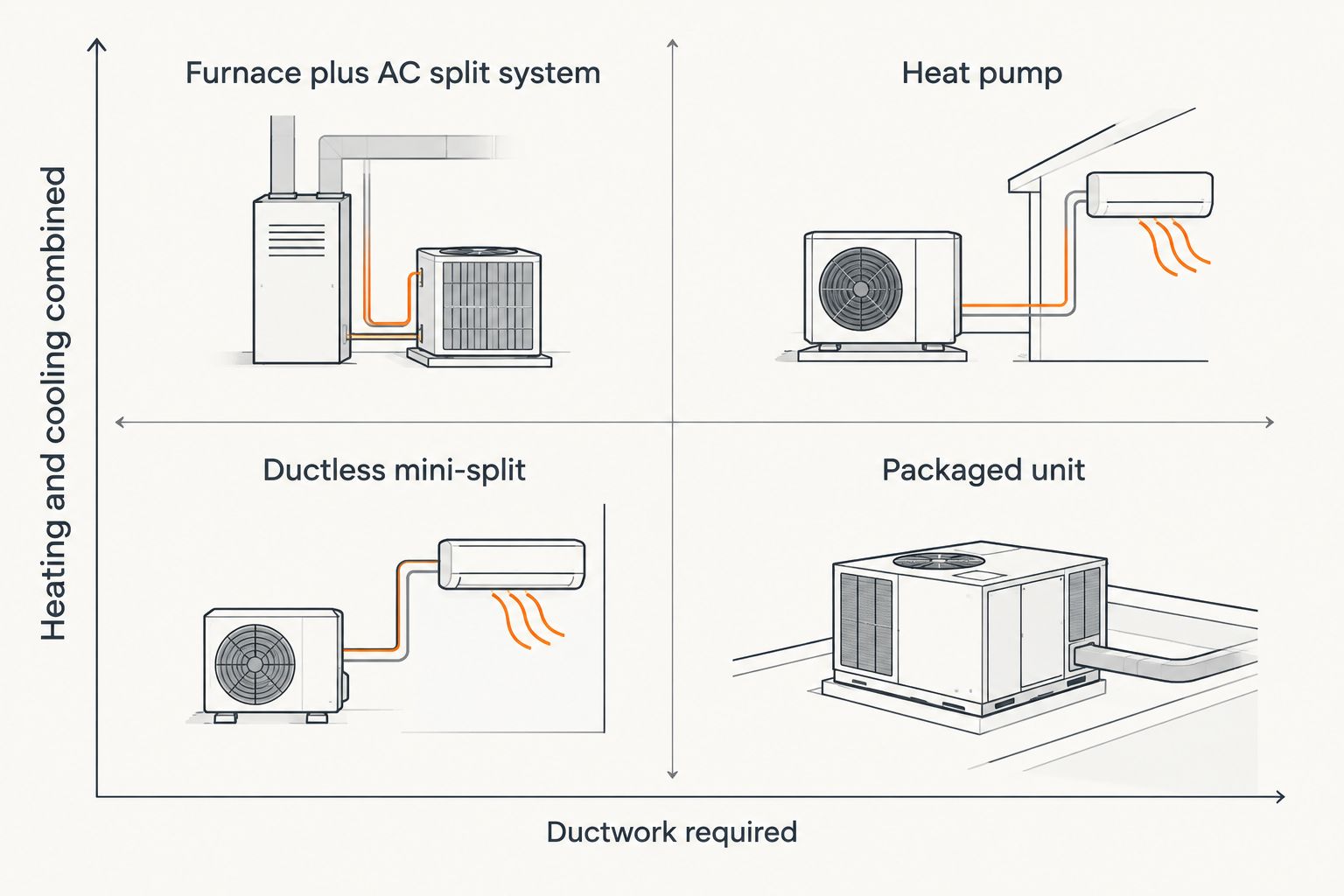
Most whole-home replacements in the Lake of the Ozarks area fall into one of three categories. Each fits a different home profile, and picking the wrong one drives cost up without improving comfort.
| System type | Best for | Trade-off |
|---|---|---|
| Furnace + AC split system | Homes with existing ductwork in good condition | Two separate units to maintain; straightforward, well-understood technology |
| Heat pump | Homes wanting one system for heating and cooling | Can struggle in extreme cold without backup heat; often needs an electrical panel check |
| Ductless mini-split | Additions, homes without ductwork, or zone-specific comfort | Doesn't heat/cool a whole home as evenly as a ducted system unless multiple heads are installed |
Verdict: a furnace + AC split system is the default choice for most existing Missouri homes with functioning ductwork; a heat pump makes sense when you want to consolidate heating and cooling into one system; ductless mini-splits work best as a targeted fix, not a whole-home primary system, unless the home has no ductwork at all.
For a deeper look at furnace-specific pricing factors, the furnace replacement cost guide breaks down what drives furnace cost specifically, separate from the AC side of a whole-home job.
Why whole-home HVAC replacement cost varies
- Home square footage and layout — larger homes and multi-story layouts often need zoning or higher-tonnage equipment.
- Ductwork condition — reused ducts keep cost down; damaged, undersized, or leaky ducts add a repair or replacement line item.
- Efficiency tier — moving above the 13.4 SEER2 federal minimum toward a variable-speed system changes the equipment cost.
- Electrical capacity — heat pump conversions sometimes require a panel upgrade to support the new load.
- Permits and local code — permit fees and inspection requirements vary by county and municipality.
- Access and installation complexity — crawlspace access, roof-mounted equipment, or tight mechanical closets add labor time.
Does whole-home HVAC replacement include ductwork?
Not automatically. Whole-home HVAC replacement means swapping the furnace and/or condenser, but ductwork is a separate assessment a contractor makes during the site visit, and reused ducts only work if they're sized correctly for the new equipment's airflow. If your ducts were installed for an older, lower-efficiency system, undersized runs can choke a new variable-speed unit's performance even though the equipment itself is rated higher.
What size HVAC system do I need for my home?
A common industry guideline is one ton of cooling capacity per 400-600 square feet of conditioned space, but that's a starting point, not a final answer. A Manual J load calculation — which accounts for insulation, window count, ceiling height, and local climate — is the accurate way to size a system, and an oversized unit short-cycles while an undersized one runs constantly without keeping up on the hottest Missouri afternoons.
Should I replace the furnace and AC at the same time?
Yes, when both units are near the end of their service life, replacing them together is generally the better move because a matched furnace and condenser are designed to work together for rated efficiency. Mixing an old furnace with a new high-efficiency condenser (or the reverse) often means the system never hits the performance numbers on the new unit's label.
Can financing lower the upfront cost of whole-home HVAC replacement?
Financing doesn't lower the total project cost, but it spreads the payment out instead of requiring it all upfront, which is why many homeowners facing a full system replacement look at financing options before committing to a system tier. West Heating & Cooling can walk you through what's available during a free quote — call today to get a number specific to your home.
Get a free whole-home HVAC quote
On-site assessment for Camdenton, Osage Beach, Lake Ozark, Warsaw, and Lebanon homes.
FAQ
What factors affect whole-home HVAC replacement cost in 2026?
System size, efficiency tier, ductwork condition, and installation complexity are the main factors driving whole-home HVAC replacement cost in 2026. Electrical panel capacity and local permit fees can also add to the total.
Is a heat pump more expensive to install than a furnace and AC split system?
Heat pumps typically cost more upfront than a standard furnace and AC split system because one unit handles both heating and cooling. The trade-off is a single system to maintain instead of two separate units.
Does whole-home HVAC replacement include ductwork?
Not automatically — ductwork is assessed separately during the site visit. Ducts sized for an older system sometimes need modification to support new equipment's airflow requirements.
What size HVAC system do I need for my home?
A common guideline is one ton of cooling capacity per 400-600 square feet, though a Manual J load calculation is more accurate. Home insulation, window count, and ceiling height all affect the right size.
Should I replace the furnace and AC at the same time?
Yes, when both units are near the end of their service life, replacing them together is generally recommended. A matched furnace and condenser are built to hit their rated efficiency together, unlike mixed old-and-new pairings.
What's the minimum efficiency rating for new HVAC systems in 2026?
New split systems must meet a 13.4 SEER2 federal minimum efficiency standard, a baseline still in effect in 2026. Higher-efficiency variable-speed systems exceed that minimum but cost more upfront.
How long does a whole-home HVAC replacement take?
Straightforward equipment swaps with reusable ductwork often finish within a single working day. Jobs requiring duct modification, electrical upgrades, or permit inspections take longer.
Can financing help with whole-home HVAC replacement cost?
Financing spreads the payment over time rather than lowering the total project cost. Ask about available options during your on-site quote before committing to a system tier.
One last thing
The single biggest cost swing in a whole-home HVAC replacement quote in 2026 usually isn't the brand of equipment — it's whether the ductwork gets a pass or a rework. Homeowners who assume the ducts are fine because the old system "worked" are often the ones surprised by a change order mid-install; asking your contractor to inspect ductwork before quoting, not after signing, avoids that surprise entirely.