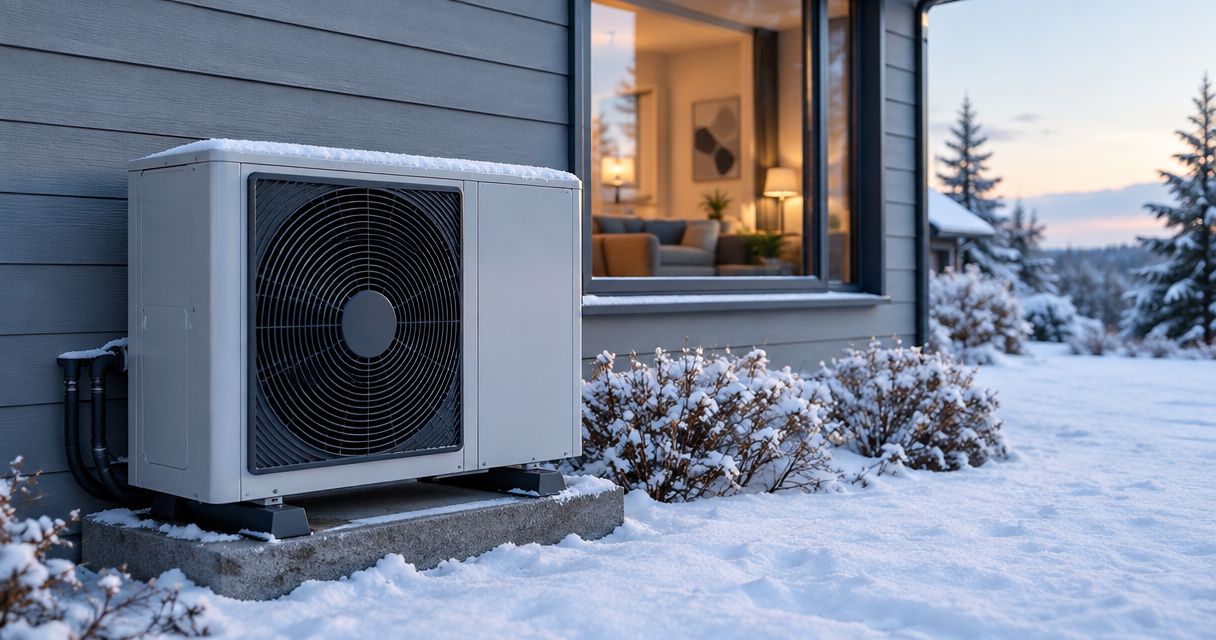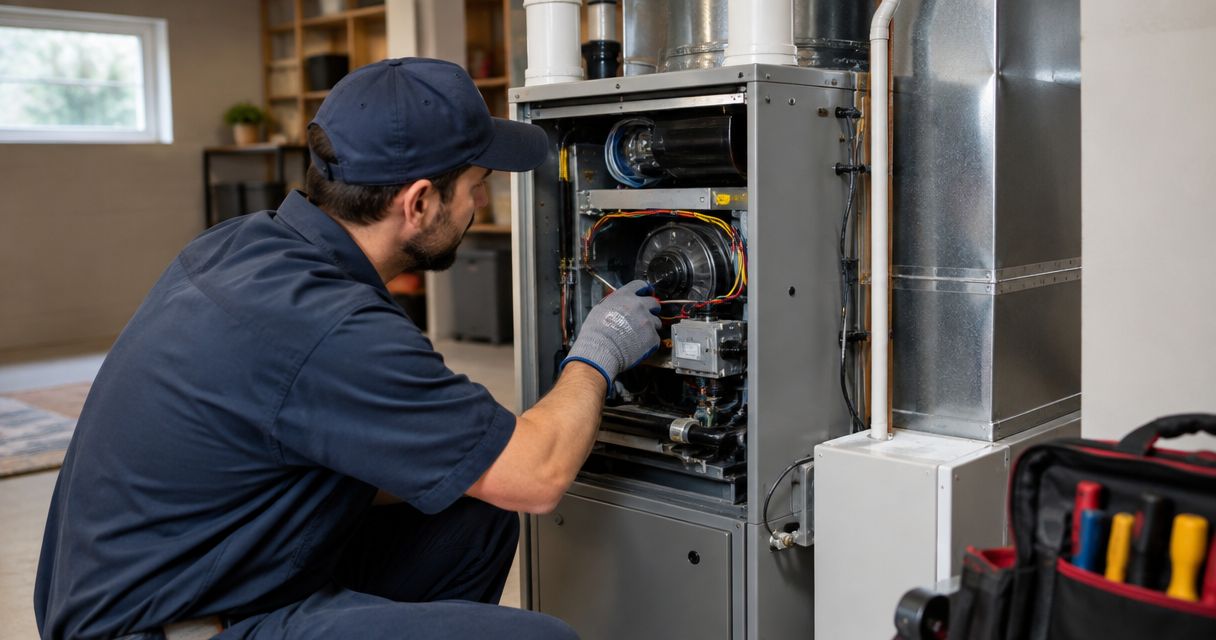
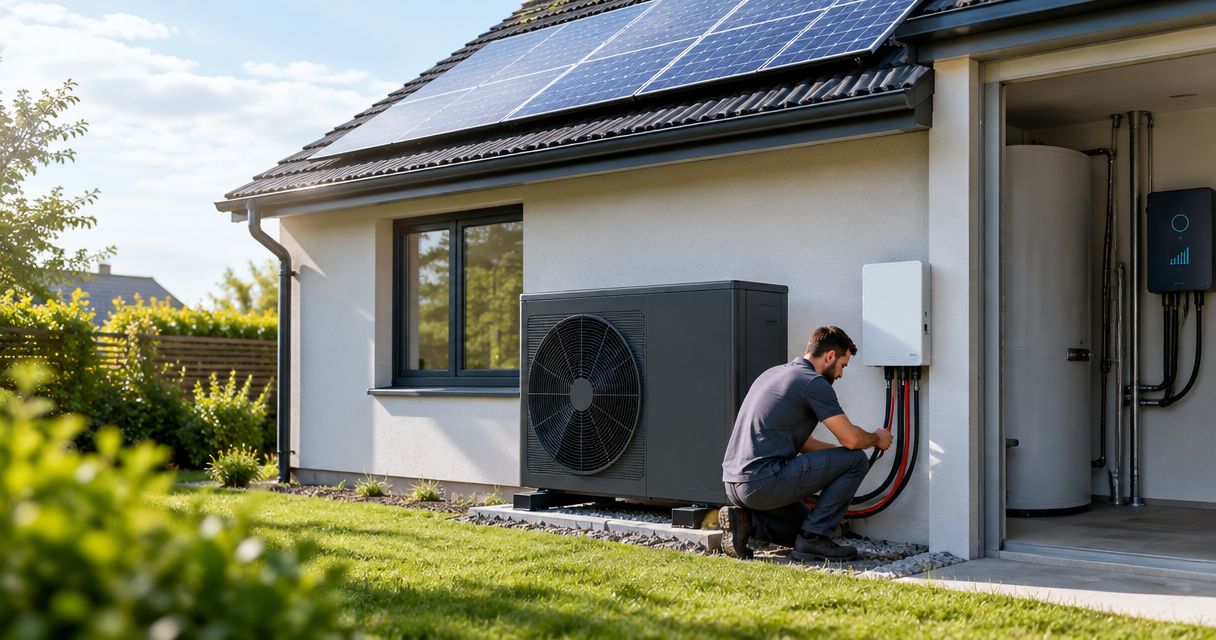
Connecting solar panels to a heat pump system isn't about wiring panels straight into the unit — it's about matching your inverter's output and your electrical panel's capacity to what the heat pump pulls when the compressor kicks on, then scheduling the heat pump to run while the panels are actually producing. Skip that sequencing and you either trip the inverter every time the compressor starts, or you end up buying solar power you never use.
- Connecting solar panels to a heat pump system works best when sizing happens before installation, not after.
- Size the inverter or battery to the heat pump's startup surge, not just its running wattage.
- Ecobee and Nest schedules shift heat pump runtime toward solar production hours without a dedicated solar app.
- A 3-ton or 4-ton heat pump needs its own 240-volt circuit, sized apart from the solar array's output.
- West Heating & Cooling checks heat pump electrical requirements before you finalize panel or battery sizing with a solar installer.
Why this matters
A heat pump is the single biggest electrical load in most homes running on solar — bigger than the water heater, bigger than the dryer, sometimes bigger than everything else combined during a cold snap in 2026. If nobody checks the heat pump's minimum circuit ampacity against the inverter's continuous rating before the solar system goes in, the compressor's startup surge can trip the inverter or overload a hybrid battery system the first time the heat pump cycles on. West Heating & Cooling gets called out to Lake of the Ozarks homes every year where the heat pump and the solar system were installed by two different contractors who never talked to each other. That gap is the whole problem, and it's fixable before either system goes in the ground.
Before you start
- Get your heat pump's spec plate numbers first — voltage, minimum circuit ampacity (MCA), and locked rotor amps (LRA). Most solar quotes get built without these numbers, which is exactly how sizing mismatches happen.
- Know which inverter type you have or are buying: grid-tied string inverter, microinverters, or a hybrid inverter with battery storage. Each interacts with a heat pump's compressor surge differently.
- The gotcha: a heat pump's compressor draws several times its running amperage for a fraction of a second at startup. An inverter or battery sized only for the heat pump's steady running load trips the moment the compressor engages — this is the single most common reason a "properly sized" solar-plus-battery system fails on day one.
Confirm your heat pump's electrical draw and solar system size
Pull the heat pump's nameplate data
- Open the electrical access panel on the outdoor unit and locate the manufacturer's data plate.
- Record the Voltage, Minimum Circuit Ampacity, and Locked Rotor Amps listed on the plate.
- Note the tonnage — most Lake of the Ozarks homes run a 3-ton or 4-ton system, and each ton adds meaningfully to both running and startup draw.
Expected result: you have three numbers on paper before you talk to a solar installer, not a guess.
Match the numbers to the solar system
- Ask your solar installer for the array's rated output in kilowatts — residential arrays typically run 5 kW to 10 kW — and the inverter or battery's continuous and surge ratings.
- Compare the heat pump's MCA against the inverter's continuous output. The inverter needs headroom above the heat pump alone, since it's carrying the rest of the house too.
- Compare the heat pump's LRA against the inverter or battery's surge rating specifically. This is the number that gets skipped, and it's the one that matters most.
Expected result: the solar quote lists a surge rating that covers the heat pump's LRA plus whatever else runs at the same time — dishwasher, well pump, dryer.
| Solar setup | How it handles heat pump surge | Best for |
|---|---|---|
| Grid-tied string inverter (no battery) | Relies on the grid to absorb the compressor surge; the inverter doesn't carry it alone | Homes not planning battery backup |
| Microinverters | Each panel converts power independently; surge is still absorbed by the grid connection | Homes with roof shading or mixed panel angles |
| Hybrid inverter with battery | Must be sized for the heat pump's LRA directly, since the battery may carry the full house load during an outage | Homes wanting backup power during outages |
A heat pump's startup surge, not its running wattage, is what breaks an undersized solar or battery system. That single number decides whether the setup works on day one or trips on the first cold morning.
Set up your smart thermostat to track solar production hours
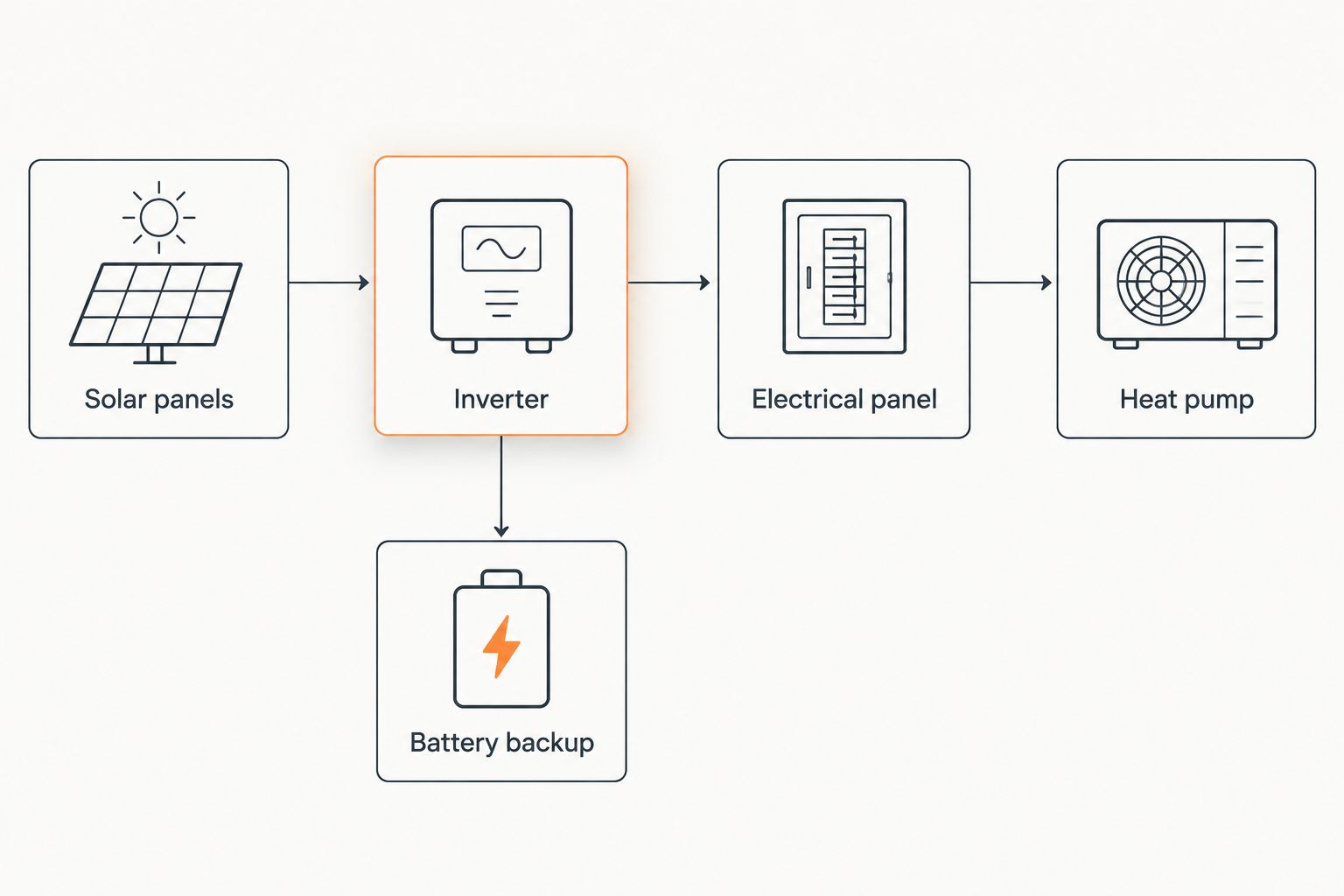
Most homes don't need a dedicated app to sync solar and heat pump output — a smart thermostat schedule does the job on its own.
Configure the schedule
- Open the Ecobee app and go to the Schedule tab, or use a Nest thermostat's equivalent schedule screen.
- Set the Home comfort setting to run the heat pump harder during the mid-day hours your panels produce the most power — typically 10 a.m. to 3 p.m. in Missouri.
- Set a wider Away temperature range for early morning and evening hours when solar production drops, so the heat pump leans less on stored or grid power.
- If you're pairing a new Ecobee with your existing system, get the thermostat wired and communicating with the heat pump correctly first — see connect an Ecobee thermostat to your HVAC system for the setup steps — before building the solar-aligned schedule on top of it.
Expected result: the thermostat's usage history shows longer heat pump run times mid-day and shorter run times overnight, shifting load toward the hours the panels are producing.
Running the heat pump on battery power during a grid outage
This is the second workflow worth setting up if your solar system includes battery storage: keeping the heat pump running when the grid goes down, on stored solar power instead of a generator.
- Confirm the battery system's automatic transfer switch is wired to include the heat pump's circuit, not just outlets and lighting.
- Set the battery management system's load priority so the heat pump sits in the essential loads panel, not the general loads panel that drops out first.
- Test the transfer manually once, on a mild-weather day, to confirm the heat pump restarts cleanly on battery power without tripping the transfer switch.
Homes with a backup system already set up to move critical circuits over automatically follow the same load-priority logic — the heat pump just needs to be added to that essential list, not treated as a separate project.
Get your heat pump checked before you go solar
West Heating & Cooling verifies heat pump electrical requirements before solar sizing.
Troubleshooting common problems
- Inverter trips every time the compressor starts. The inverter's surge rating is under the heat pump's LRA. Ask your solar installer about a soft-start kit for the compressor or an inverter upgrade — this is an electrical fix, not a thermostat fix.
- Solar production is high at noon but the heat pump barely runs. The thermostat schedule still has a flat setpoint instead of a mid-day comfort adjustment. Rebuild the schedule around your actual production curve, not the factory default.
- Battery drains fast overnight in winter. Heat pumps pull more power during defrost cycles in freezing weather, and that draw happens most often overnight when there's no solar input to offset it. That's normal load behavior, not a system fault.
- Heat pump won't restart after a grid outage even with battery power available. The transfer switch likely dropped the heat pump's circuit into the non-essential load panel. Have an electrician move it to the essential panel.
- Ecobee or Nest schedule doesn't seem to reduce grid draw at all. The thermostat schedules comfort, it doesn't talk to the solar system directly. Confirm the schedule change actually shifted runtime by checking the thermostat's usage history, not by assuming it worked.
Customize your workflow
Once the heat pump and solar system are working off the same numbers, most homeowners expand the setup rather than leave it alone:
- Add zoning so the heat pump doesn't run the whole house at full output during peak solar hours.
- Pair a whole-home dehumidifier to the same ductwork so the heat pump isn't fighting humidity on top of temperature during Missouri summers.
- Revisit heat pump sizing itself if the system predates the solar array — an oversized or undersized heat pump throws off every calculation above it.
A heat pump chosen and sized correctly for the house in the first place makes every step above simpler, since the electrical numbers stay predictable instead of shifting with every add-on.
FAQ
Can you connect solar panels directly to a heat pump?
No. Solar panels feed power into the home's electrical panel through an inverter, and the heat pump draws from that same panel like any other appliance. There's no direct panel-to-heat-pump wiring.
Do I need a battery to run my heat pump on solar power?
No, a grid-tied system without a battery still offsets heat pump usage during daylight hours. A battery only matters if you want the heat pump to keep running during a grid outage.
What size solar array does a heat pump need?
Residential arrays for homes with a heat pump commonly run 5 kW to 10 kW, but the right size depends on the heat pump's tonnage, the home's insulation, and how many other loads share the panel.
Why does my inverter trip when the heat pump starts?
The inverter's surge rating is likely below the heat pump's locked rotor amps (LRA). Compressors draw several times their running amperage for a brief moment at startup, and an undersized inverter or battery trips on that spike.
Does a smart thermostat sync with a solar system automatically?
No, thermostats like Ecobee and Nest don't communicate with solar inverters directly. You get the same effect by setting the thermostat's schedule to run the heat pump harder during peak production hours.
Will solar panels keep my heat pump running during a power outage?
Only if paired with a battery and an automatic transfer switch wired to include the heat pump's circuit in the essential loads panel. Solar panels alone shut off with the grid for safety.
Is a hybrid inverter better than a grid-tied string inverter for a heat pump?
A hybrid inverter is better if you want backup power during outages, since it manages battery storage. A grid-tied string inverter costs less to install but offers no backup when the grid goes down.
One last thing
The number that decides whether this setup works isn't the heat pump's running wattage or the solar array's rated kilowatts — it's the compressor's locked rotor amps versus the inverter's surge rating, and that single comparison gets skipped on more Lake of the Ozarks solar quotes than anything else in 2026. Get the heat pump's spec plate numbers to the solar installer before either system goes in, not after.