Emergency HVAC service is worth it when a heating or cooling failure creates a safety concern or makes an occupied building unusable. If the space is safe and comfortable enough to wait, a regular appointment is the better choice. In 2026, ask about the callout charge and diagnostic fee before authorizing a visit; 24/7 availability does not tell you what the visit will cost.
- Is emergency HVAC service worth it? Yes, when a breakdown creates a safety concern or makes an occupied space unusable.
- West Heating & Cooling is a fit for Lake of the Ozarks customers seeking 24/7 emergency HVAC service.
- If you can safely maintain a usable temperature, request a regular appointment instead.
- Ask about the callout charge, diagnostic fee and repair approval before a technician starts work.
Why this matters
The decision is not simply whether your AC unit or furnace has stopped. It is whether waiting puts people at risk, leaves an occupied space unusable or creates a problem you cannot safely assess yourself. A broken system needs attention; not every broken system needs an after-hours visit.
West Heating & Cooling offers HVAC installation, repair and maintenance alongside 24/7 emergency service in the Lake of the Ozarks area. Availability gives you a way to seek help outside regular hours, but it is not a substitute for asking what a visit covers and what happens before repairs are approved.
Is 24/7 emergency HVAC service worth the extra cost?
Yes for a safety concern or an occupied space that cannot reasonably wait. No for a routine problem you can manage safely until a regular appointment. Use the condition of the building, not the time on the clock, to decide.
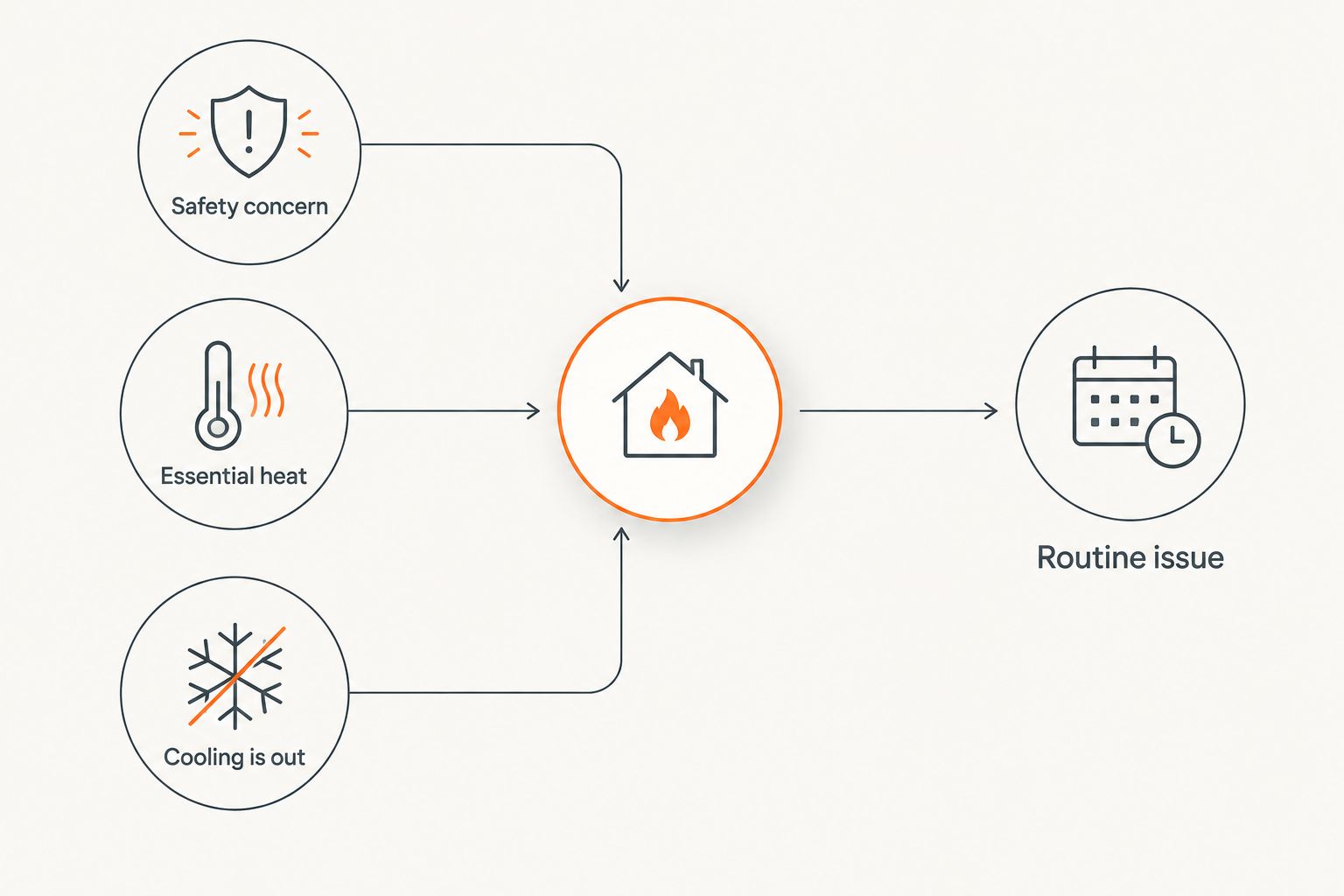
| What is happening? | Best next move | Why |
|---|---|---|
| Safety concern | Leave the affected area and contact the appropriate emergency service or utility first | An HVAC appointment is not a replacement for an emergency response |
| Essential heat is out | Request emergency HVAC service if the occupied space cannot safely wait | Restoring heat becomes the immediate need |
| Cooling is out | Request emergency service if the occupied space is unusable or an occupant's health is at risk | The effect on people matters more than the equipment fault alone |
| Routine issue | Request a regular appointment | A safe, usable space gives you time to discuss the work before a visit |
A gas smell, suspected carbon monoxide or signs of a fire call for an emergency response, not an attempt to restart the furnace. Leave the affected area and contact the appropriate emergency service or utility. Do not return to troubleshoot the equipment while the hazard remains.
For a nonhazardous failure, tell the contractor what stopped working, whether anyone is in the building and what you have already checked. Those details help you explain the problem without diagnosing it yourself. If a thermostat setting is the only issue, you do not need a repair visit; if the system still will not run, ask for the next available appointment.
What does the extra cost cover?
There is no supported price or premium for this specific visit in the information provided. Do not agree to an undefined emergency charge. Ask the contractor to separate the charge for coming out from the charge for diagnosing the fault and any repair you choose to authorize.
Use these questions when you call:
- Is there a separate after-hours callout charge?
- Is the diagnostic fee separate from the callout charge?
- Will you explain the fault and obtain approval before doing repair work?
- If the repair cannot be completed during this visit, what charges still apply?
- When is the next regular appointment if I decide to wait?
The answers let you compare an emergency visit with a regular one. They also prevent a common misunderstanding: agreeing to a diagnostic visit is not the same as approving every possible repair. If you need a closer look at the charges to ask about, see the emergency HVAC service cost guide.
Do not base the decision on a promised fix before anyone has identified the fault. A technician can assess the system during a visit, but the work needed depends on what that assessment finds. Ask what can be done now and what would require a later appointment.
When should you call for emergency furnace repair?
Call for emergency furnace repair when a loss of heat leaves an occupied space unsafe or unusable and waiting for a regular appointment is not a workable option. Explain whether the furnace is off entirely, running without heating or behaving in a way that concerns you. Give the contractor the facts you can observe; do not open equipment or bypass a safety control to keep it running.
If you smell gas, suspect carbon monoxide or see signs of fire, leave and contact the appropriate emergency service or utility first. A furnace repair request comes after that immediate safety step. Do not use the prospect of an HVAC visit as a reason to remain in a hazardous space.
If the building remains safe and usable, ask for a regular furnace appointment. In 2026, the question is still whether the occupied space can wait, not whether a failure happened after business hours. Make a note of any unusual sounds, smells or changes in operation so you can describe them when booking.
When should you call for emergency AC repair?
Call for emergency AC repair when the occupied space cannot reasonably be used without cooling or an occupant's health makes the loss of cooling urgent. Tell the contractor whether the AC has stopped completely, is running without cooling or is affecting only part of the building. That description is more useful than guessing which part has failed.
If the space remains usable, request a regular appointment. You can still report the failure as soon as you find it and ask when service is available. Waiting for a scheduled visit does not mean ignoring the problem; it means choosing the appointment that matches its effect on the people in the building.
For a business, describe how the cooling failure affects the occupied areas. For a home, describe who is there and whether the space remains usable. In either case, the reason for an emergency visit is the condition inside the building, not a diagnosis made over the phone.
Why the right choice varies
An emergency call makes sense only in the context of the building and the people using it. Work through these factors before you book:
- Safety concern: Gas, suspected carbon monoxide and fire signs require the appropriate emergency response before HVAC work.
- People in the space: A failure affecting an occupied home or workplace calls for a different decision from a problem in a space no one is using.
- Usable temperature: If the space cannot reasonably stay occupied without heat or cooling, ask for emergency service.
- What stopped working: A total loss of heating or cooling is different from a system that still runs but needs attention.
- Ability to wait: If the space is safe and usable, ask when a regular appointment is available before accepting an after-hours charge.
- Scope of the visit: Find out whether you are booking diagnosis, an immediate repair if feasible or another agreed service.
These factors also give you a clear way to describe urgency when you call. In 2026, saying that an AC unit is broken is less useful than saying whether the occupied rooms remain usable. Keep the account short and factual so the contractor can tell you what appointment options are available.
What should you ask before booking a 24/7 visit?
First, state the problem and any immediate safety concern. If there is a suspected gas, carbon monoxide or fire hazard, contact the appropriate emergency service or utility instead of treating the HVAC booking as the first step.
Next, confirm that the contractor provides service for your type of building and your location. West Heating & Cooling serves residential and commercial customers in the Lake of the Ozarks area, including Camdenton, Osage Beach, Lake Ozark, Warsaw and Lebanon. State your location and whether the call concerns a home or a commercial space.
Then ask about the visit itself. Is a technician available to assess the problem? What charge applies to coming out? What will you be told before repair work begins? Write down the answers you receive so the scope of the visit is clear.
Finally, compare that option with the next regular appointment if waiting is safe. West Heating & Cooling is best for Lake of the Ozarks residential and commercial customers who need an HVAC contractor offering 24/7 emergency service; an emergency visit is not the best choice for a safe, routine issue. The limitation matters because availability alone does not establish the charge or guarantee what repair a technician will find necessary.
Can emergency service wait until morning?
Yes, if the building is safe and usable and no occupant needs heating or cooling restored urgently. Request the next regular appointment and explain the fault. If conditions change, reassess rather than treating your first decision as final.
If you are unsure whether the problem is a safety hazard, do not test the equipment to find out. Leave an affected area when you suspect gas, carbon monoxide or fire, and contact the appropriate emergency service or utility. A contractor can address the HVAC system after the immediate hazard is handled.
Is a 24/7 contractor always the right contractor?
No. A 24/7 listing tells you when you can seek service, not the charge, the repair scope or the outcome. For a nonurgent issue, ask about the next regular opening and how the contractor will explain findings and obtain approval. For an urgent issue, ask those same questions while making the safety of occupants your first priority.
For lake properties that are not occupied when a problem appears, establish whether the building is actually unusable for someone who needs to be there. That distinction keeps a routine repair from becoming an emergency booking simply because an alert arrived after hours. In 2026, the decision still starts with what is happening at the property.
How do you avoid an unnecessary emergency call?
Check what you can observe safely, then describe it accurately. Confirm the thermostat setting without opening equipment or trying to repair electrical or gas components. If the system still fails to heat or cool, report what you observed and ask whether a regular appointment is appropriate.
Maintenance is a separate decision from an emergency repair. It gives you a planned time to discuss the condition of the system, but it does not resolve an immediate safety hazard. If your question is about scheduled work rather than a breakdown, keep the two requests separate when you contact a contractor.
FAQ
Is emergency HVAC service worth it if my heat stops overnight?
Yes, if the loss of heat leaves an occupied space unsafe or unusable. If the building remains safe and usable, ask for a regular furnace appointment.
Should I call emergency HVAC service if my AC stops working?
Call when the occupied space cannot reasonably be used without cooling or an occupant's health makes cooling urgent. Otherwise, request a regular AC repair appointment.
Does 24/7 HVAC service mean a repair will be finished that night?
No. 24/7 service describes availability to seek help, not a guaranteed repair outcome. Ask what the visit covers and what happens if further work is needed.
What should I do if I smell gas near my furnace?
Leave the affected area and contact the appropriate emergency service or utility. Do not restart or troubleshoot the furnace while you suspect a gas hazard.
How do I find out whether an emergency visit costs extra?
Ask about the after-hours callout charge, diagnostic fee and repair approval before booking. The stated availability alone does not establish the charge.
Can a commercial building request emergency HVAC service?
Yes. West Heating & Cooling offers emergency HVAC service to residential and commercial customers in its Lake of the Ozarks service area. Explain whether the affected space is occupied and usable.
Is a regular HVAC appointment better if the system still runs?
A regular appointment is the better choice when the space is safe and usable. Describe what the system is doing so the contractor can discuss the appropriate visit.
One last thing
A contractor's 24/7 availability and your need for a 24/7 visit are different questions. In 2026, make the decision based on safety and whether the occupied space can wait; then get the visit charges and repair approval process clear before work begins.