Yes, a 15-year-old furnace can be worth repairing in 2026 if the fault is isolated and a technician confirms the system can operate safely. Compare replacement if the repair involves a major component, breakdowns keep returning, or the cause of a safety concern remains unresolved. The furnace’s condition and repair history matter more than its age alone.
- A 15-year-old furnace is worth repairing when the fault is isolated and safe operation can be confirmed.
- Compare repair with replacement when breakdowns repeat or a major component needs work.
- West Heating & Cooling is best for Lake of the Ozarks customers who need a furnace diagnosis before deciding.
- In 2026, ask for the repair scope and a replacement proposal before approving major work.
Why this matters
A furnace that stops heating in winter creates pressure to approve the first available fix. A quick repair can be the right choice, but it does not answer whether the same system has other problems that will soon need attention. Before you decide, ask what failed, what the proposed work fixes, and whether the technician found anything else that affects safe operation.
For a closer look at the work a quote might cover, see the furnace repair cost guide. Use it to prepare questions, not to substitute a general guide for a diagnosis of your furnace. In 2026, the decision still turns on the condition of the unit in your home, not a rule based only on its age.
Is it worth repairing a 15-year-old furnace?
Repair an isolated fault on an otherwise sound furnace; compare replacement when the fault is serious or the repair does not address a pattern of failures. Ask the technician to explain what is known, what remains uncertain, and whether the furnace can be operated safely after the proposed work. Those answers give you a firmer basis for a decision than the 15-year mark.
| What the diagnosis shows | Repair | Replacement | Best for |
|---|---|---|---|
| An isolated fault, with no other problem identified | Fixes the reported fault without replacing the whole furnace | Requires more work than the diagnosis alone calls for | Repair: a system that otherwise operates safely |
| Repeat breakdowns or several issues found together | Restores operation only if the proposed work addresses the underlying problems | Lets you compare a new system against further work on the old one | Compare both: an owner who needs a longer-term decision |
| A major component needs work | Can retain the existing furnace if the full repair is justified | Provides an alternative to a substantial repair | Compare both: an owner facing major work |
| Safe operation cannot be confirmed | Do not approve continued operation as the outcome | Discuss the safe options with the technician | Stop and resolve the safety issue first |
A diagnosis does not have to produce an automatic repair-or-replace verdict. If both options are viable, request a written description of each. Check whether the repair proposal addresses only the failed part or also the problem that caused it to fail. A replacement proposal should describe what equipment and installation work it includes so you can compare complete scopes rather than two headline figures.
When repair is the better choice
Repair is the better choice when the technician identifies a specific fault, can explain the fix, and finds no other issue that changes the decision. The advantage is straightforward: you keep a furnace that still serves its purpose. The limitation is just as important: repairing one fault does not renew every part of a 15-year-old system.
Tell the technician about noises, shutdowns, uneven heating, or previous service visits, even if the furnace is running when they arrive. If there has been more than one visit for the same complaint, ask how this repair differs from the earlier one. You need an explanation of the recurring cause, not another description of the symptom.
A small repair should not become a replacement recommendation solely because the equipment is 15 years old. Equally, a furnace should not be kept in service simply because a failed part can be changed. The technician’s findings about the rest of the system determine which argument holds up.
When replacement deserves a comparison
Replacement deserves a serious comparison when failures recur, a major component needs work, or the diagnosis identifies several problems. Its advantage is that you can evaluate a new system instead of continuing to repair the existing one. Its drawback is that replacement involves more than fixing the fault that brought you to this decision.
Ask for the proposed replacement scope in writing. Does it address the heating problem you reported? Does the installer need to inspect anything beyond the furnace before recommending equipment? These questions help you avoid comparing a narrow repair with an incomplete replacement proposal.
You do not need to decide that an old furnace is beyond repair before requesting a replacement option. A second proposal is useful because it shows what you would receive in place of the repair. If the repair is isolated and the rest of the furnace checks out, that comparison can also confirm that keeping the current system makes sense.
When safety decides the answer
If a carbon monoxide alarm sounds or you suspect a gas leak, leave the building and contact emergency services or your gas utility from outside. Do not restart the furnace to see whether the problem returns. A repair-versus-replacement comparison comes after the immediate safety issue has been addressed.
For other safety concerns found during service, ask the technician to identify the issue and state whether the furnace can be operated safely after the proposed work. If safe operation cannot be confirmed, do not treat continued use as the repair option. The next move is to resolve the safety issue and get a clear account of the available work.
Safety questions are separate from age. A 15-year-old furnace with an isolated service fault presents a different decision from a furnace whose safe operation is in doubt. In 2026, no age-based shortcut replaces a direct inspection of the problem.
How to decide after the service visit
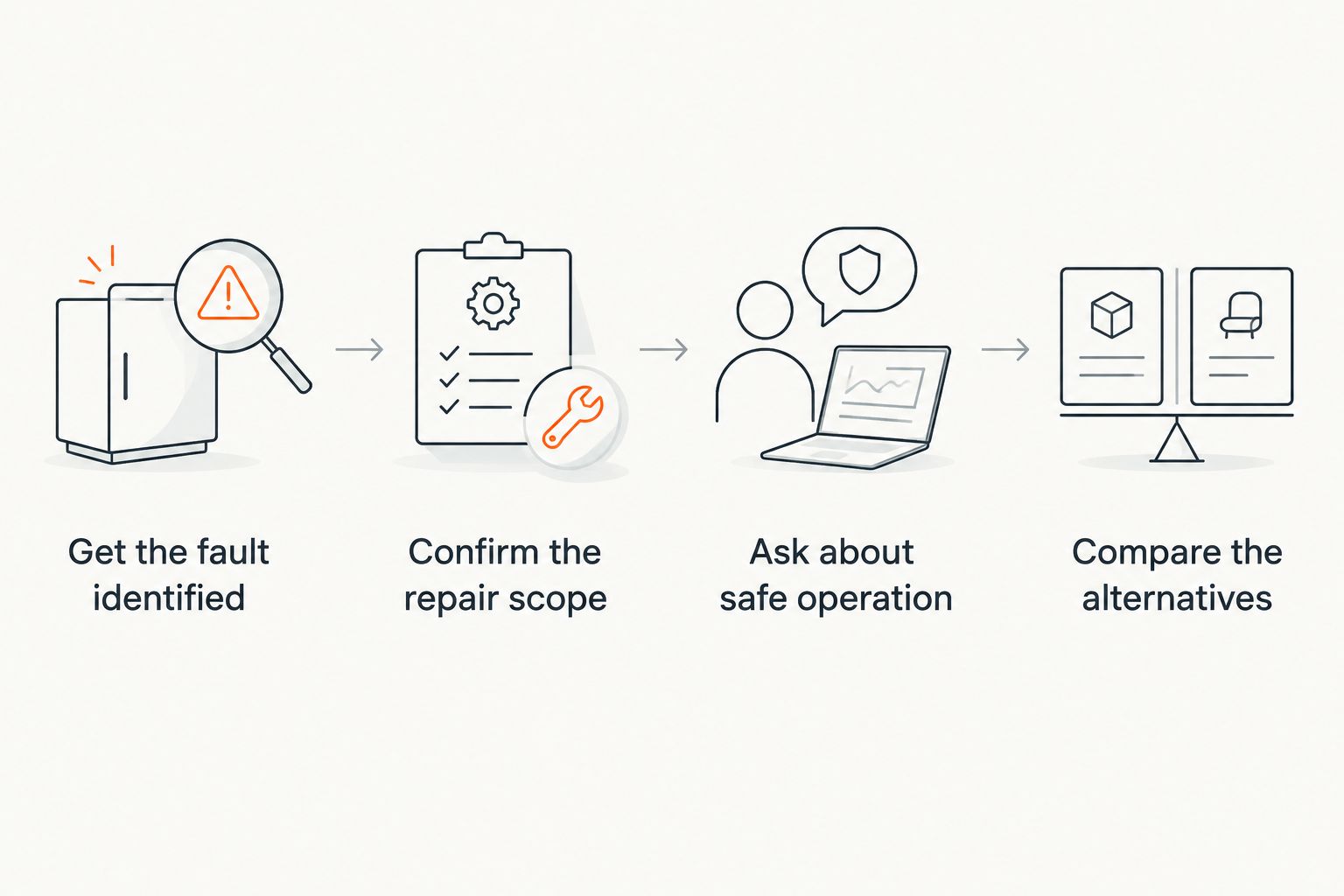
Use the diagnosis to make a decision in this order. It keeps an urgent loss of heat from turning into an unclear agreement about what will be done.
- Get the fault identified. Ask which part or condition caused the current problem. If the cause has not been identified, ask what diagnostic work remains before a repair can be recommended.
- Confirm the proposed repair scope. Ask what work will be done, what it is intended to fix, and whether other issues were found. A description of the immediate fix should not be mistaken for an assessment of the entire furnace.
- Ask about safe operation. Confirm whether the technician can say the furnace is safe to operate after the proposed work. Keep this question separate from whether it can produce heat.
- Compare the alternatives. If the work is major or failures have repeated, request a replacement proposal as well. Compare the included work and what each option leaves unresolved before you authorize either one.
If a proposal is unclear, ask the contractor to explain it before work starts. You should be able to tell someone else what failed and why the recommended option addresses it. That explanation is especially useful if another person in your household must approve the work or the property is not your primary residence.
For customers in Camdenton, Osage Beach, Lake Ozark, Warsaw, and Lebanon, West Heating & Cooling offers furnace repair, installation, maintenance, and 24/7 emergency service. A service visit is the place to establish what the current furnace needs; this article cannot determine the condition of a unit it has not examined.
Get your furnace checked
Ask about the fault, repair scope, and replacement options for your furnace.
Why the answer varies
The same 15-year age can lead to different decisions because the diagnosis changes what each option accomplishes. Focus on the factors you can check, rather than applying a fixed age cutoff.
- The failed part: An isolated fault supports a different repair decision from major component work. Ask the technician to name the fault and explain the required work.
- The repair history: Repeat visits for the same complaint make another repair harder to judge on its own. Bring past service records or describe what happened after earlier work.
- Other identified issues: A proposal that fixes one fault can leave another known problem untouched. Ask for those issues to be listed separately.
- Safety findings: Safe operation must be established before you decide to keep using the furnace. Do not let a working thermostat or warm air stand in for that assessment.
- The scope of replacement: A useful comparison identifies what the installation includes. If a proposal leaves its scope unclear, ask for it to be specified before comparing it with repair.
These factors also explain why someone else’s repair decision is a poor rule for yours. Two furnaces can share an age while having different faults and service histories. In 2026, use the findings from your own service visit to decide what the next work should be.
Should I replace a furnace just because it is 15 years old?
No. A furnace being 15 years old is a reason to assess its condition, not proof that it needs replacement. If the fault is isolated and the system can operate safely after repair, keeping it is a valid option. If problems repeat or major work is needed, request a replacement proposal before committing to another repair.
Ask what evidence supports the recommendation you receive. A clear explanation names the present fault and addresses the system’s recent history. It does not rely on the manufacture or installation date alone.
Is it worth repairing an old furnace that keeps breaking down?
Repeated breakdowns make replacement worth comparing, even when each individual fault can be repaired. Ask whether the faults have a shared cause and what the proposed repair will prevent. If the contractor cannot show how the work addresses the pattern, approving another isolated fix leaves the central question unanswered.
Keep a record of what failed and what was done on each visit. It gives the next technician a clearer starting point and helps you compare a new proposal with earlier work. The number of years the furnace has been installed matters, but the history of what it has needed matters too.
Can I wait until the furnace stops working completely?
You can make a repair-or-replace decision while the furnace still runs; you do not need a complete failure to request an assessment. A running system can still have a recurring problem worth investigating. If there is a safety concern, address it promptly rather than waiting for a loss of heat.
Planning the comparison before an urgent outage also gives you time to read the proposed scopes. Ask what work is necessary now and what decision can wait for more information. That separates an immediate fix from a longer-term equipment choice.
FAQ
Is a 15-year-old furnace worth repairing in 2026?
Yes, a 15-year-old furnace is worth repairing in 2026 when the fault is isolated and a technician confirms safe operation after the work. Compare replacement if breakdowns repeat or major work is needed.
When should I replace an old furnace instead of repairing it?
Compare replacement when an old furnace has repeat breakdowns, needs major work, or has several identified problems. Ask for written scopes so you can see what each option addresses.
Does a furnace need replacing at 15 years old?
No, a furnace does not need replacing solely because it is 15 years old. Its condition, repair history, and safety findings determine the decision.
Can a furnace be repaired if it still heats the house?
Yes, a furnace can need repair even if it still produces heat. Tell the technician about recurring shutdowns, noises, or other changes so the underlying fault can be diagnosed.
What should I ask before approving a furnace repair?
Ask what failed, what the repair fixes, and whether the furnace can operate safely afterward. If the issue has returned, ask how the proposed work addresses that pattern.
Should I get a replacement proposal before a major furnace repair?
Yes, request a replacement proposal before approving major furnace work. Compare what each proposal includes and what problems, if any, each leaves unresolved.
What if a carbon monoxide alarm sounds near my furnace?
Leave the building and contact emergency services or your gas utility from outside. Do not restart the furnace or decide on a repair until the immediate safety issue has been addressed.
One last thing
The most useful question is not how many years the furnace has left. It is whether the proposed work solves the problem you have now without leaving a known safety or repeat-failure issue unanswered. Get that answer in plain language before approving a repair.
For a Lake of the Ozarks home or business, West Heating & Cooling can assess the furnace and explain the available repair or installation work. In 2026, make the decision from that diagnosis and the scope of each option, not the 15-year figure by itself.